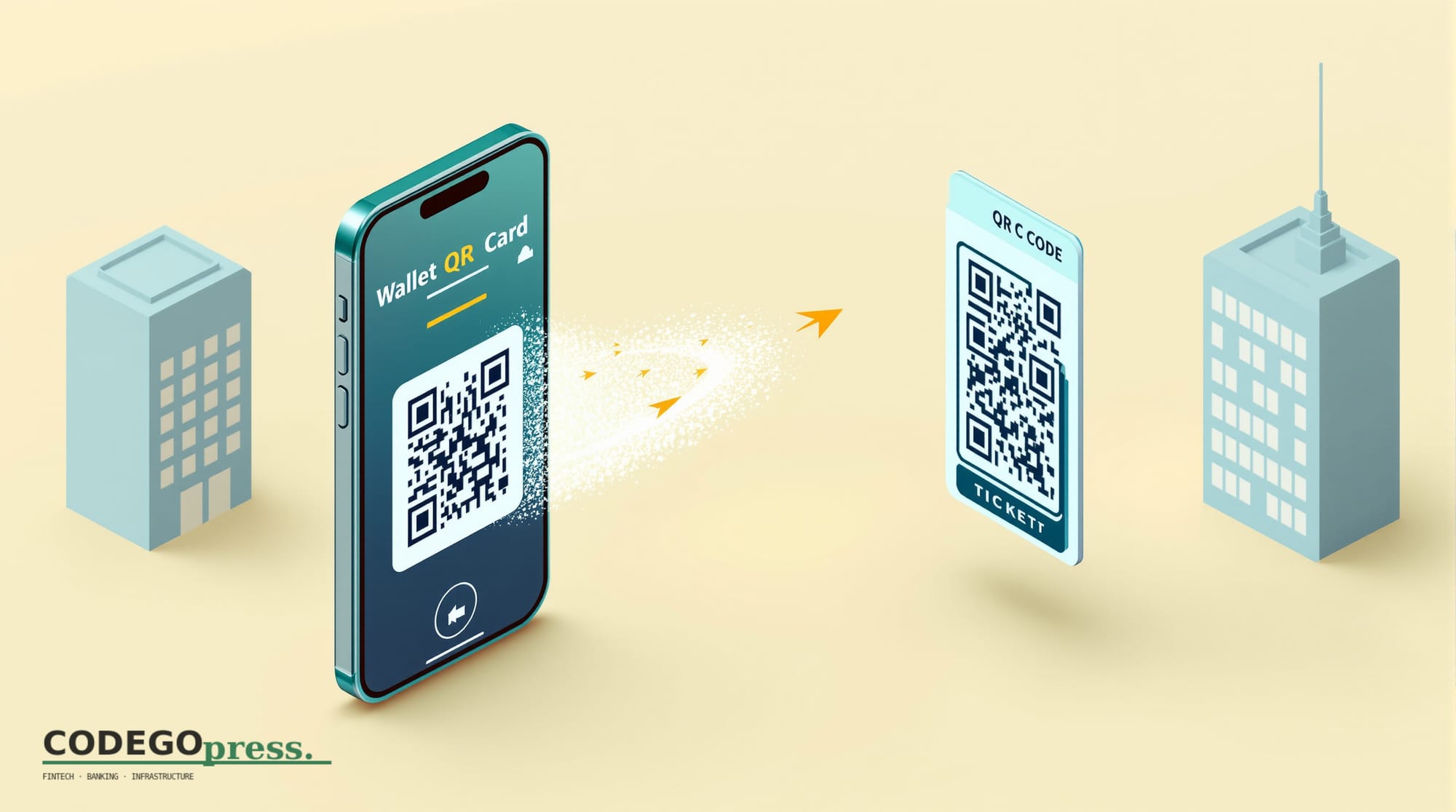
Apple is preparing to consolidate yet another layer of the consumer payments ecosystem under its Wallet umbrella. According to reporting this week, the company plans to introduce a "Create a Pass" feature in an upcoming iPhone software update that would allow users to convert any QR code—regardless of issuer support for Apple's native Wallet format—into a saved digital pass. The capability represents a subtle but significant shift in how Apple approaches mobile commerce infrastructure, moving from partnership-dependent integrations toward user-generated standardization. For fintech operators, payment networks, and retail infrastructure providers, the implications merit closer examination.
The mechanics of the feature are straightforward. A merchant, venue, or service provider distributes a QR code for entry, ticketing, or promotional purposes, but has not built integrations with Apple Wallet. Rather than requiring the end user to maintain separate apps, screenshots, or browser bookmarks for each such code, the new tool would permit iPhone users to capture the QR code image and generate a Wallet pass on demand. That pass would then appear alongside existing boarding passes, concert tickets, loyalty cards, and payment instruments in the unified Wallet interface. The feature collapses friction—the sort of papercut-sized convenience that Apple has historically weaponized to deepen ecosystem lock-in.
What makes this move strategically potent is its implicit acknowledgment of a fragmented reality. Despite nearly two decades of smartphone adoption and billions invested in mobile payment infrastructure by Apple, Google, and numerous regional players, the QR code remains the lowest common denominator of mobile commerce. Merchants in food service, ticketing, parking, and hospitality continue to issue QR codes because QR codes require no server-side integration, no app installation, no API negotiation. They are the digital equivalent of a printed receipt—universally scannable, technically frictionless, and compatible across all devices. The persistence of QR codes despite Apple's dominance is itself a failure of proprietary standardization. The "Create a Pass" feature does not resolve that failure so much as it renders it irrelevant from Apple's vantage point. By letting users manually funnel any QR code into Wallet, Apple converts a merchant's choice not to integrate with Wallet into a user-side workaround that still benefits Apple.
The broader context matters. Apple Wallet already hosts a constellation of payment and identity functions: credit and debit cards, transit passes, event tickets, boarding passes, identity documents in certain jurisdictions, and health credentials. The service is designed to be the authoritative repository for anything a user might need to produce at point of sale, entry gate, or document inspection. Each additional category of pass strengthens the network effects around that ecosystem. If a user perceives Wallet as the comprehensive wallet—containing 95 percent of the documents and credentials she regularly carries—then friction around the remaining 5 percent becomes intolerable. She becomes willing to manually convert third-party QR codes rather than toggle between apps or rely on screenshots. That habituation deepens over time, making Wallet indispensable.
From an infrastructure perspective, the feature also quietly inverts the negotiating dynamic between Apple and merchants. Historically, when a retailer or service provider chooses not to support Apple Wallet, that merchant accepts a customer experience penalty: some users will find the lack of native integration inconvenient. Apple frames this as the merchant's loss. With "Create a Pass," however, that penalty is substantially reduced. The merchant's decision to avoid integration costs and complexity no longer creates a meaningful barrier to Wallet adoption. Users can self-serve the integration, which is to say that Apple has effectively commodified the integration task itself. The merchant loses any leverage derived from the QR code ecosystem's fragmentation. This is classic platform strategy: absorb externalities that constrain your growth, then use that absorption as leverage in subsequent market phases.
There are legitimate pro-consumer arguments to advance here. If the feature functions as described, it does reduce friction in daily digital commerce. A user carrying a single, unified wallet for tickets, credentials, and promotional codes is objectively more convenient than managing a portfolio of apps and browser bookmarks. The feature is not forced adoption; it is optional tooling that users activate on demand. And Apple's closed-loop approach to Wallet—with strong cryptographic standards, privacy commitments, and liability frameworks—may be preferable to the fragmented, often-negligent security posture of third-party QR code ecosystems operated by small merchants and startups.
Yet the consolidation effects warrant scrutiny. As Apple's Wallet ecosystem encompasses more categories of consumer documents, credentials, and pass types, the company moves closer to becoming the single authoritative interface for consumer-merchant interaction in certain markets. That concentration of touchpoints between consumer and commerce is valuable to Apple—for data, for retention, for payment flow visibility. It may also create a regulatory pressure point. The European Commission and other jurisdictions have been increasingly attentive to questions of digital wallet gatekeeping and access. A feature that allows Apple to absorb merchant-issued QR codes without merchant consent or API standardization could eventually trigger scrutiny around whether Apple is leveraging Wallet as a walled garden that advantages its own payment services or discriminates against competitors.
The "Create a Pass" feature is not a seismic shift; it is an incremental deepening of Apple's already-dominant position in digital wallet infrastructure. But incremental moves, when repeated across multiple domains and reinforced by network effects, can eventually reshape entire sectors. For fintech companies, payments networks, and merchants who have accepted the fragmentation of QR codes as an immutable fact of the current ecosystem, Apple's decision to bridge that fragmentation on its own terms merits serious strategic consideration. The shift from "standardize by integration partnership" to "standardize by user-side tooling" is a change in tactics, not in Apple's underlying objective: to be the wallet that users cannot afford to leave behind.
Written by the editorial team — independent journalism powered by Codego Press.