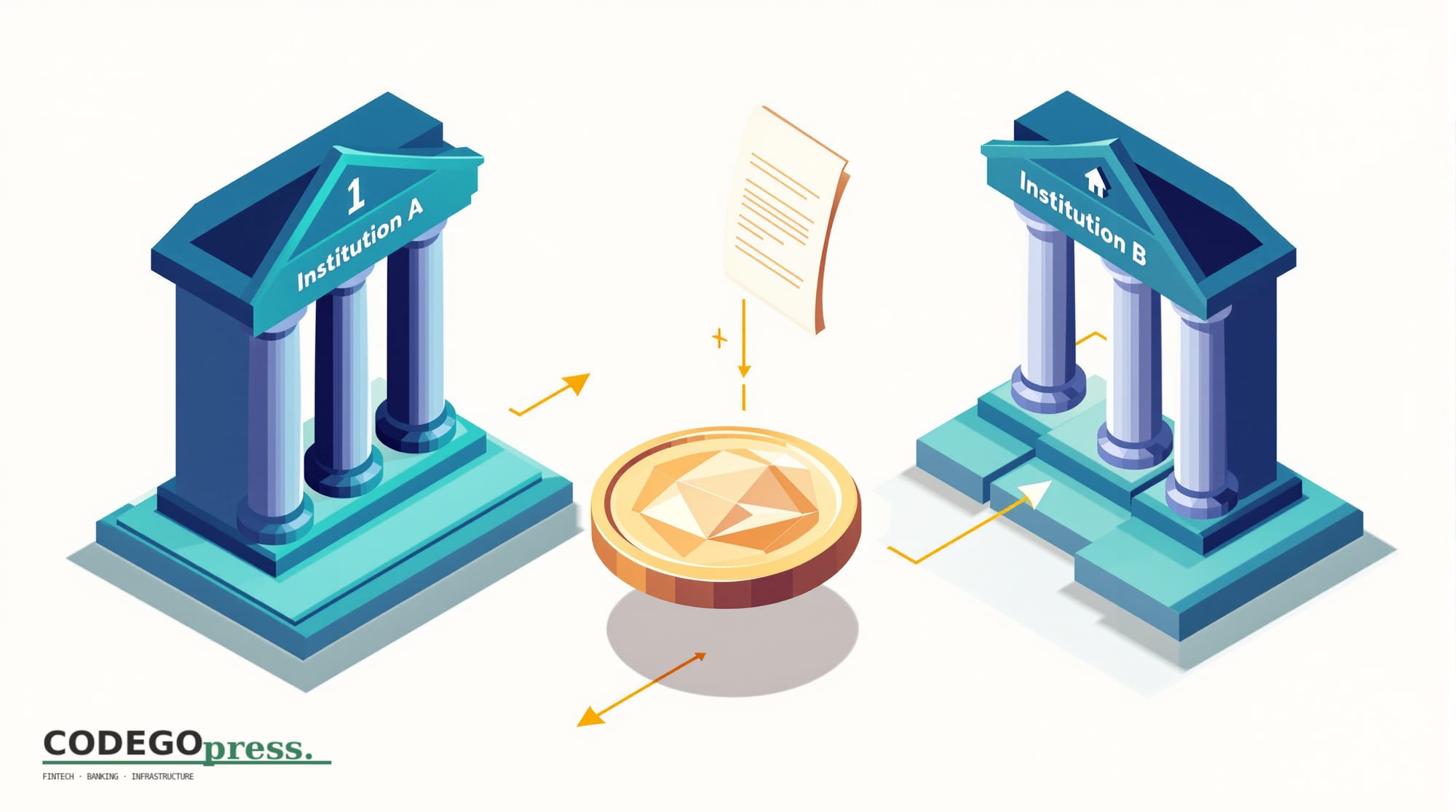
The machinery of institutional finance is embracing digital assets in earnest. Banking Circle, a Luxembourg-based payments and settlement infrastructure provider, has obtained a Crypto-Asset Service Provider license from the Commission de Surveillance du Secteur Financier (CNCSF), Luxembourg's financial regulator, opening the door to regulated stablecoin settlement services. The April 2026 approval represents more than a single firm's operational milestone—it signals that the financial system's gatekeepers have begun viewing stablecoins not as speculative instruments or regulatory hazards, but as functional settlement infrastructure worthy of institutional deployment.
The distinction matters. Banking Circle was not pursuing a license to trade cryptocurrencies or offer speculative exposure to digital assets. Instead, the firm is targeting a narrower, more pragmatic use case: using stablecoins as a medium for moving money between institutional clients. Settlement, in finance, is the final step where actual value transfers hands and counterparty risk resolves. It is the domain of central banks, payment processors like SWIFT, and licensed financial infrastructure providers. The fact that a regulated entity headquartered in an EU financial center is now permitted to offer stablecoin-based settlement under formal supervision reflects a fundamental shift in how regulators classify these assets. Luxembourg, long a hub for digital finance licensing, has become the proving ground where that reclassification takes operational form.
What Banking Circle is building addresses a genuine pain point in cross-border payments. Current settlement infrastructure—SWIFT messaging, correspondent banking relationships, ECB-operated payment systems—works, but it operates on rails designed for a pre-digital era. Settlement takes days. Correspondent banks extract fees at each hop. Smaller institutions or non-bank financial entities often struggle to access the deepest liquidity pools. Stablecoins—digital tokens pegged to fiat currencies and issued by regulated entities—bypass many of these frictions. If a stablecoin is accessible on a permissioned ledger with institutional-grade custody and regulatory oversight, settlement becomes near-instant, pseudonymous, and cheaper. For financial institutions moving capital between offices, subsidiaries, or counterparties, that efficiency gain is not theoretical.
The regulatory framework emerging around stablecoins in the EU, particularly through the Markets in Crypto-Assets Regulation (MiCA), creates guardrails that were absent during crypto's earlier permissionless phase. MiCA requires issuers to hold sufficient reserves, disclose their backing, and maintain insurance. Service providers handling stablecoins must be licensed and subject to prudential oversight. Custody arrangements must meet institutional standards. This layering of rules does not eliminate the novelty of blockchain-based settlement, but it domesticates it—brings it into the realm of regulable, inspectable, accountable infrastructure. Banking Circle's CASP license acknowledges that the firm has met those standards and can now offer these services without incurring legal jeopardy.
The timing is not accidental. Major central banks have spent the past three years experimenting with central bank digital currencies (CBDCs) and wholesale settlement networks using distributed ledger technology. The Bank for International Settlements and the ECB have signaled that tokenized settlement is no longer a fringe academic exercise but a core component of future financial infrastructure. If central banks and regulators are moving toward digital settlement, private actors offering stablecoin-based alternatives become natural partners rather than obstacles. Banking Circle's move into this space positions it as an intermediary in the emerging digital settlement ecosystem—neither a fringe crypto firm nor a legacy incumbent, but a licensed bridge between institutional finance and tokenized infrastructure.
That positioning carries competitive implications. Traditional payment processors and asset servicers—firms that have profited from opacity, incumbent network effects, and regulatory arbitrage—now face a new class of competitor. Banking Circle is not trying to displace SWIFT or Euroclear overnight. Rather, it is offering an alternative settlement path for use cases where speed or cost matters more than integrating with legacy banking plumbing. Some institutional clients will adopt it for intra-group transfers or high-frequency settlement needs. Others will ignore it entirely. But the existence of a licensed, regulated option shifts the negotiating power slightly away from monopolistic incumbents and toward institutions seeking optionality.
The broader significance lies in regulatory permission itself. When a reputable financial infrastructure provider secures a CASP license to offer stablecoin settlement, it tells the market that stablecoins have graduated from the speculative periphery to the functional core. It tells regulators in other jurisdictions—the European Banking Authority, national competent authorities, and bodies outside the EU—that stablecoin regulation is not a matter of prohibition but of calibration. The question is no longer whether stablecoins exist or whether financial institutions will use them. The question is how to license, supervise, and integrate them into existing prudential frameworks. Banking Circle's license is a data point in that conversation, and a favorable one for the long-term institutionalization of digital settlement.
For institutional treasurers and chief financial officers, the practical implication is that stablecoin-based settlement options are beginning to enter the mainstream toolkit. Due diligence requirements around counterparty credit and operational resilience remain paramount—licensing alone does not eliminate risk—but the regulatory risk, the legal ambiguity that deterred institutional adoption in the past, is diminishing. As more service providers obtain CASP licenses and deploy regulated stablecoin infrastructure, the friction and uncertainty that once surrounded these rails fade. That is how infrastructure revolutions actually happen: not through sudden disruption, but through incremental regulatory permission, institutional adoption, and the gradual erosion of incumbent advantage.
Written by the editorial team — independent journalism powered by Codego Press.