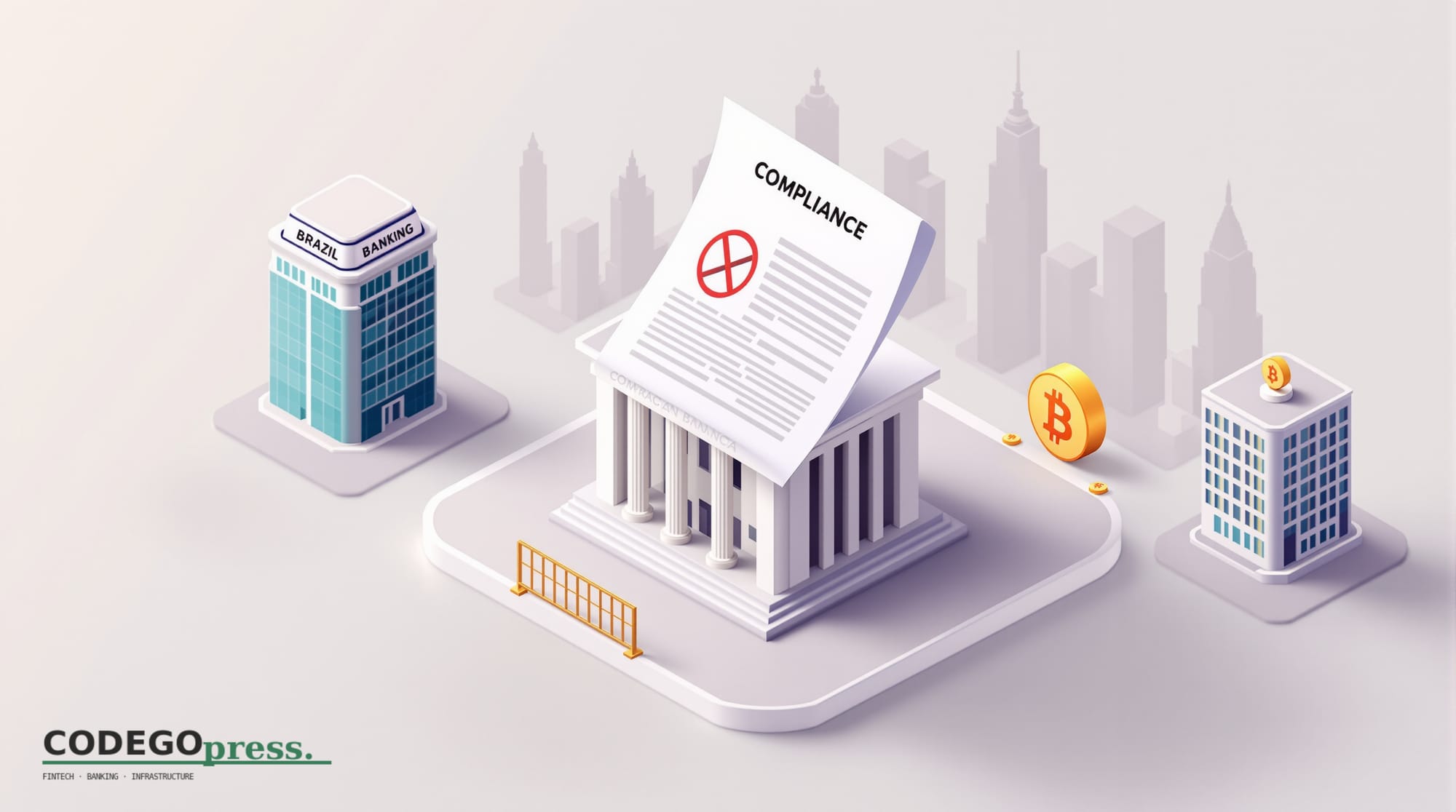
Brazil's central bank has taken a definitive stance against cryptocurrency settlement in the remittance corridors that serve millions of diaspora workers: electronic foreign exchange (eFX) companies will no longer be permitted to use digital assets to process overseas transfers. The prohibition, codified in a resolution published in May 2026 and effective October 1, represents one of the most explicit regulatory rejections of crypto-powered payments infrastructure to emerge from a major emerging market in recent years. The decision cuts against years of fintech innovation and raises fundamental questions about the role of blockchain-based settlement in a monetary system increasingly defined by central bank digital currencies and state-administered payment rails.
The resolution targets a specific vulnerability in Brazil's remittance ecosystem. Foreign exchange operators—regulated entities that handle cross-border currency conversion and settlement—had begun experimenting with cryptocurrency rails to reduce costs and accelerate transaction speeds. The appeal was straightforward: stablecoin or spot cryptocurrency settlement could theoretically bypass correspondent banking delays, reduce counterparty risk, and trim the margin compression that has defined the remittance market for two decades. For a country that received approximately $11 billion in inbound remittances annually before this policy shift, the efficiency gains promised by crypto settlement represented a material economic incentive. Yet the Banco Central do Brasil concluded that the risks outweighed the benefits.
The central bank's reasoning reflects a coherent regulatory philosophy, though one that diverges sharply from the permissive stance adopted by smaller economies. Crypto-backed remittances introduce volatility into what should be a stable, traceable monetary flow. A worker remitting earnings from São Paulo to relatives in the Northeast cannot absorb slippage from bitcoin price fluctuations or exposure to stablecoin depegging events. More critically, decentralized or semi-decentralized settlement mechanisms complicate the monetary sovereignty doctrine that underpins Brazil's inflation-targeting framework and its participation in the broader Latin American payments architecture. If remittances—a critical source of household income and foreign exchange reserves—route through cryptocurrency corridors, the central bank loses direct visibility into capital flows and the ability to implement macroprudential controls during financial stress.
This prohibition also signals a strategic choice about Brazil's role in the global payments modernization debate. The country has invested substantially in its own instant payment system, Pix, which has achieved near-universal adoption since its 2020 launch. Pix now processes millions of transactions daily and has become the dominant form of domestic money movement. By restricting eFX companies to traditional settlement rails, Brasília is effectively directing cross-border remittances toward conventional banking infrastructure and potentially toward Pix-enabled corridors with partner jurisdictions. The policy creates a protected domestic ecosystem in which state-approved payment infrastructure competes with global crypto networks on implicit subsidy—regulatory permission and the absence of compliance friction.
The precedent carries weight beyond Brazil's borders. Argentina, El Salvador, and Paraguay have experimented with crypto-friendly remittance policies, gambling that cryptocurrency adoption would reduce dollarization pressure or attract diaspora capital. Brazil's reversal suggests that larger, more financially sophisticated emerging markets are concluding that the macroeconomic and monetary control costs of permitting crypto settlement outweigh the microeconomic efficiency gains. As the Bank for International Settlements has documented, central banks increasingly view financial stability through the lens of payment system integrity and capital flow predictability—metrics that private cryptocurrencies by design compromise.
eFX companies face a genuine operational problem. They must now execute cross-border remittances using pre-existing correspondent banking relationships, syndicated liquidity pools, or integration with legacy SWIFT networks—the very infrastructure costs that made cryptocurrency attractive in the first place. Some may migrate to higher-margin products or consolidate with larger banking groups. Others may simply exit the Brazilian market, reducing competitive pressure on established banks and increasing market concentration precisely at a moment when fintech disruption was creating price discipline. Workers, the intended beneficiaries of faster and cheaper remittances, will likely face higher fees and longer settlement windows.
What this regulatory move ultimately exposes is the deep friction between crypto's architectural logic and monetary system governance. Cryptocurrencies were designed to operate outside state control; central banks exist to exercise monetary control. That tension cannot be negotiated away through stablecoin designs or regulatory sandboxes. Brazil's decision to prohibit crypto remittance settlement is not a technical mistake or a temporary inconvenience—it is a reflection of a fundamental incompatibility between decentralized settlement and centralized monetary authority. As central bank digital currencies mature and as traditional payment systems adopt blockchain technology, the pressure to permit private cryptocurrency in critical payment corridors will intensify. Yet each jurisdiction that chooses the Brazil path—prioritizing monetary stability and regulatory visibility over fintech speed—reinforces the consensus that digital assets remain a payments innovation of limited utility in the formal financial system.
Written by the editorial team — independent journalism powered by Codego Press.
Sources: PYMNTS · May 3, 2026