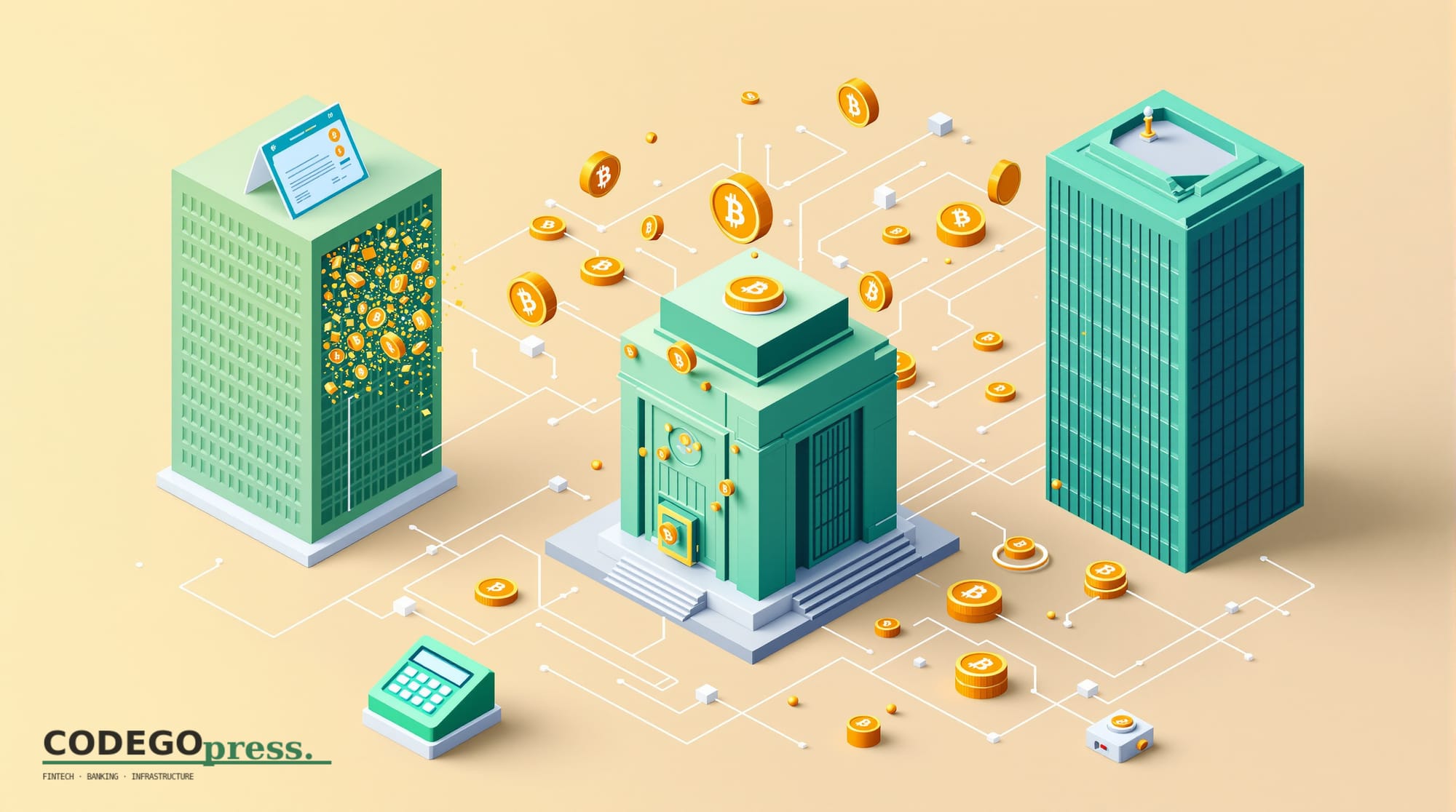
The Depository Trust & Clearing Corporation (DTCC), the invisible backbone of American securities settlement, is preparing to launch a tokenized securities platform in October 2026 with approximately fifty financial institutions representing both traditional Wall Street and decentralized finance operators. The move signals far more than a technological refresh: it represents an existential decision by the custodian of $114 trillion in liquid assets to rebuild the foundational architecture of capital markets on distributed ledger technology. This is not a peripheral innovation. It is a fundamental restructuring of how securities are created, held, transferred, and settled—and it will force a reckoning with regulatory gaps, market concentration risks, and the future viability of legacy clearing infrastructure.
For decades, the DTCC has operated as the central nervous system of American finance, quietly processing trillions in daily transactions through a mechanism that remains largely unchanged since the 1970s. Its depository subsidiary holds securities in book-entry form; its clearing subsidiary nets and guarantees trades; its settlement subsidiary coordinates the actual exchange of cash and assets. This tripartite model has proven resilient, but it carries structural vulnerabilities: settlement takes time, custody is concentrated, and the system depends on a single point of institutional trust. Tokenization—the issuance of securities as digital assets on a blockchain—promises to flatten this hierarchy. If a Treasury bond or equity share exists as a cryptographically secured token on a shared ledger, settlement becomes nearly instantaneous, custody can be distributed, and market participants gain direct visibility into transactions without intermediation delays. The DTCC's October launch is an acknowledgment that this future is not hypothetical. It is arriving.
The coalition assembled around this initiative deserves scrutiny. By recruiting both traditional custodians, broker-dealers, and asset managers alongside decentralized finance platforms, the DTCC is attempting to bridge an institutional divide that has seemed unbridgeable. Traditional finance has long dismissed crypto markets as speculative sideshows; decentralized finance actors have positioned themselves as alternatives precisely because they reject the gatekeeping role of institutions like the DTCC. Yet here they are, working together. This convergence reflects a sobering recognition on both sides: tokenization on a neutral infrastructure—neither purely centralized nor purely decentralized—may prove more resilient and efficient than either model operating in isolation. The DTCC's move is therefore not capitulation to cryptocurrency. It is absorption. Wall Street is moving to tokenize securities not because it wants to hand power to blockchain anarchists, but because it sees tokenization as the path to maintaining its dominant role in a restructured market.
The regulatory landscape, however, remains fractured and inadequate. The Securities and Exchange Commission (SEC) has not yet articulated a comprehensive framework for how tokenized securities will be treated—whether they constitute securities under Regulation A or D, how investor protections apply, what custody standards must be met. The Commodity Futures Trading Commission (CFTC) oversees derivatives; the Federal Reserve weighs settlement risks; state regulators may claim jurisdiction over certain aspects. This fragmentation creates both uncertainty and opportunity for regulatory arbitrage. A tokenized security issued on a permissioned blockchain operated by the DTCC will likely receive favorable treatment precisely because it preserves traditional institutional controls. But smaller issuers seeking to tokenize assets on public blockchains may face much harsher scrutiny or outright prohibition. The October launch will therefore likely accelerate a consolidation of market power, not its diffusion. The institutions large enough to participate in DTCC-governed tokenization will gain advantages; smaller competitors will face regulatory friction that raises their costs.
The settlement efficiency gains are real and consequential. Current U.S. equity trades settle in T+1 (one business day); many international markets require longer windows. Tokenized settlement on a shared ledger could theoretically occur in minutes or seconds, freeing up capital, reducing counterparty risk, and lowering the operational costs of clearing. The DTCC estimates that tokenization could eventually reduce settlement risk and operational redundancy across the global financial system. But these benefits will accrue disproportionately to large institutions with the technical infrastructure to integrate with new platforms. Smaller regional banks, independent advisors, and retail investors may see little direct benefit while bearing the costs of system migration and training. Market structure matters. When the DTCC launched its current infrastructure, it democratized access to securities settlement; a tokenized system, if designed around permissioned access, could re-concentrate that power among a smaller set of validated participants.
The October timeline is aggressive but credible. The DTCC has spent years on pilot programs; the fifty-institution coalition appears committed; the technical foundation is substantially ready. But the launch will test whether regulatory confidence has matured sufficiently to allow it. The SEC and Federal Reserve will be watching closely. Any significant operational failure—a smart contract bug, a consensus failure, custody confusion—could set back tokenization adoption across the broader market by years. Conversely, a smooth launch will likely trigger a cascade of similar initiatives from other clearinghouses, central securities depositories internationally, and potentially from private blockchain operators seeking to capture market share in tokenized assets.
What emerges from October will not be the decentralized financial system that early blockchain advocates envisioned. It will be something subtler and more powerful: a tokenized infrastructure operated by the same institutional gatekeepers who control today's markets, but with the efficiency benefits and transparency features of blockchain technology embedded into their operations. For market participants, this hybrid model offers genuine improvements in speed and cost. For regulators, it presents a clearer picture of market activity and reduced settlement risk. But for those hoping that tokenization might fundamentally redistribute power within finance, the DTCC's October launch represents something closer to the status quo reorganized than the status quo overthrown.
Written by the editorial team — independent journalism powered by Codego Press.