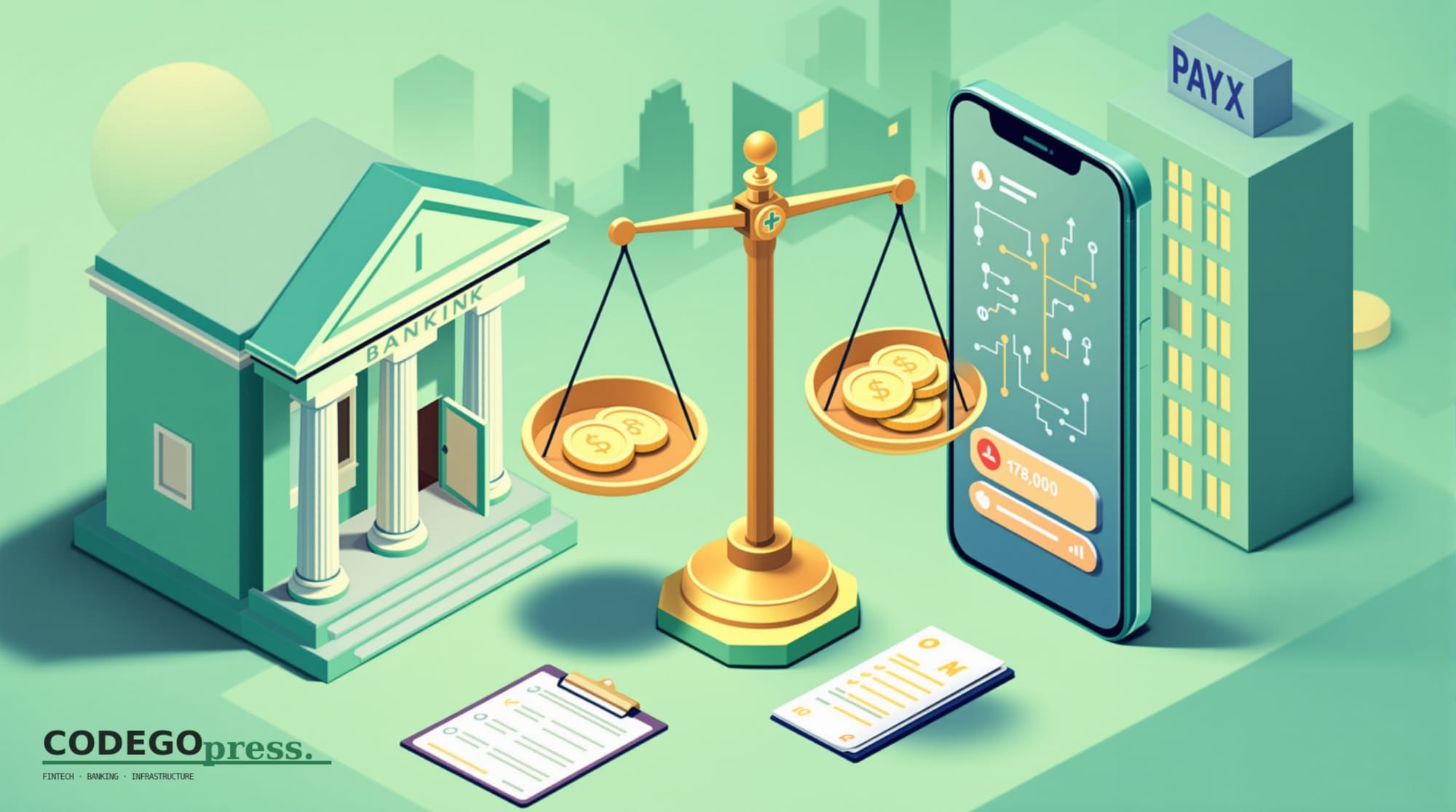
The question posed with increasing frequency across financial markets has become almost provocative in its simplicity: should retail investors abandon traditional banking altogether in favor of fintech insurgents? This framing, now spreading across investment forums and mainstream financial commentary, encapsulates a fundamental tension reshaping how ordinary people relate to their money—and demands serious examination beyond the marketing rhetoric.
The allure is understandable. Fintech platforms promise what incumbents struggle to deliver: seamless user experiences, transparent pricing, and technology that feels native to a digital age. Younger depositors in particular have embraced these alternatives, moving assets to platforms that eliminate branch visits and offer real-time transparency through smartphone interfaces. Yet the recent documentary examination of cryptocurrency's structural flaws—positioning digital assets as "subprime, but dumber"—offers a cautionary lens through which to view the broader fintech narrative. That comparison, however provocative, hints at a deeper pattern: the substitution of regulatory infrastructure with technological elegance, and institutional guardrails with the promise of disruption.
Santander's recent £3 billion announcement affecting millions of British account holders underscores this complexity. Such capital commitments by traditional lenders signal not weakness but active investment in digital transformation—the very capability that fintech evangelists claim as their exclusive domain. The distinction matters. When a century-old institution commits billions to modernization, it does so while maintaining deposit insurance frameworks, regulatory oversight from entities like the Bank of England, and capital adequacy standards designed precisely to weather systemic stress. Fintech platforms, by contrast, often operate in regulatory interstices, their stability dependent on venture capital funding cycles rather than structural safeguards forged through decades of crisis management.
The Bank of England's recent position as the gold standard for technology project execution deserves particular attention in this debate. Central banks and incumbent financial institutions have quietly become sophisticated technology operators, capable of delivering infrastructure at scale with the redundancy and security protocols that systemic importance demands. This competence is rarely celebrated in fintech discourse, yet it reflects something essential: the difference between building an elegant consumer product and maintaining the plumbing through which trillions in daily value flows.
Consider the Airwallex-Arsenal partnership—a marriage of fintech capabilities and sporting infrastructure that exemplifies how digital payment platforms extend reach and functionality. Yet this expansion occurs within an ecosystem where traditional banking relationships remain foundational. Airwallex's own regulatory licensing across jurisdictions, its compliance frameworks, and its relationship to existing payment networks like Mastercard and Visa demonstrate that even the most digitally native fintech operators cannot escape the gravitational pull of institutional finance.
The genuine insight here lies not in a binary choice between banks and fintech, but in recognizing that authentic disruption rarely means wholesale replacement. The strongest fintech platforms succeed not by promising to eliminate traditional finance but by exposing its operational inefficiencies and forcing incumbents to modernize. The worst fintech narratives—and crypto's recent reckoning with this reality—involve substituting regulatory discipline with technological mystique and market liquidity with network effects. That equation has proven catastrophic when stress testing arrives.
Retail investors contemplating whether to abandon traditional banking should ask harder questions than fintech marketing departments typically encourage. What happens to deposits if the fintech platform fails? Who bears losses if security is breached? How transparent is the pricing of embedded financial services? What regulatory arbitrage is the platform enjoying, and for how long? These questions do not render fintech illegitimate; they render fintech a complement rather than a wholesale replacement.
The financial services landscape of 2026 is characterized not by the triumph of one model but by convergence under pressure. Traditional banks are adopting fintech capabilities and organizational practices at scale. Fintech platforms are discovering that regulatory compliance and institutional stability matter more than early-stage evangelists acknowledged. The smartest participants—whether retail investors or institutional players—are treating this not as a zero-sum competition but as a restructuring period where quality of execution, transparency, and regulatory alignment determine durability.
The question "Should you forget big banks and bet on fintech instead?" represents a false binary. The real question is whether any financial services provider, traditional or digital-native, merits your trust—and that determination requires the same rigor, skepticism, and attention to structural soundness that prudent finance has always demanded.
Written by the editorial team — independent journalism powered by Codego Press.