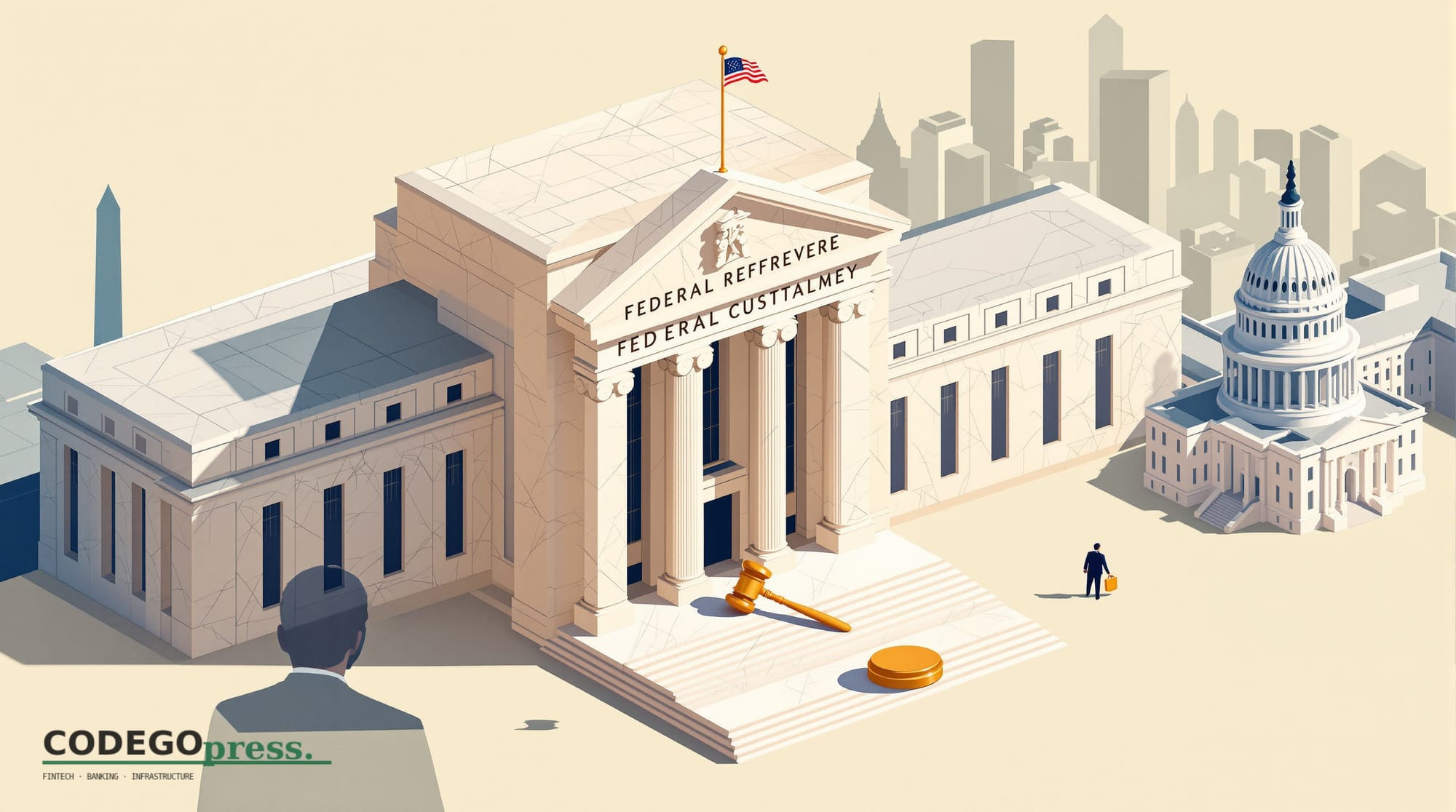
The Senate Banking Committee has advanced Kevin Warsh's nomination to chair the Federal Reserve to the full chamber, moving past a critical procedural checkpoint that once appeared in doubt. The committee vote, which followed party lines and secured even the backing of erstwhile skeptic Senator Thom Tillis, underscores a notable shift in Republican monetary politics and signals a significant reorientation of the central bank's regulatory stance toward digital finance and payment infrastructure. What happens next will reverberate far beyond the Fed's marble halls—it will shape the operational and compliance landscape for every bank-as-a-service platform, fintech issuer, and digital payments firm operating across American rails.
Warsh, who served as a Federal Reserve Governor during the financial crisis and has spent the intervening years working in private equity and fintech-adjacent advisory roles, represents a departure from the academic-economist archetype that has long dominated the central bank's leadership. His nomination carries implications that extend well beyond macroeconomic orthodoxy. Where Jerome Powell approached fintech regulation with measured caution—tolerating regulatory sandboxes while maintaining strict capital and compliance frameworks—Warsh has signaled greater openness to financial innovation and, by extension, less regulatory friction in emerging payment channels. For firms operating within the Codego Banking-as-a-Service ecosystem, this shift matters profoundly. A Fed chair sympathetic to fintech experimentation may accelerate approval timelines for novel payment models, reduce prescriptive guidance on cybersecurity and data residency, and encourage faster integration of digital currency infrastructure—though not without guardrails.
The Banking Committee's vote, coming after what industry observers had anticipated might be a drawn-out confirmation process, reflects a broader realignment within Senate Republican ranks. Tillis, once critical of Warsh's prior stances, ultimately voted with party consensus, suggesting that Trump Administration messaging on deregulation and growth has consolidated GOP support. This party-line outcome is noteworthy because it removes ambiguity: Warsh will almost certainly secure confirmation on the Senate floor, barring an extraordinary procedural complication. That certainty matters for banking strategy. Institutions already planning for a Warsh-led Fed—one expected to adopt a lighter touch on emerging payment technologies and less insistence on third-party operational risk assessments—can now move forward with capital allocation and infrastructure buildouts that might have been delayed under continued Powell stewardship.
The implications for card issuing and BaaS platforms merit close scrutiny. Under Powell, the Fed tightened supervisory expectations around third-party service providers, requiring detailed vendor risk management protocols and regular audits. Warsh-era guidance is expected to be less granular; the shift toward principles-based rather than rules-based supervision could reduce compliance costs for smaller BaaS operators and enable faster deployment of Codego's card-issuing API and embedded finance solutions, particularly for neo-bank startups and alternative payment networks. Conversely, this deregulatory momentum carries systemic risks. A Fed chair less inclined to mandate strict customer identity verification, transaction monitoring, and cross-border payment transparency could inadvertently create blind spots in the detection of illicit financing—a concern that consumer advocates and the FinCEN have already begun to raise.
The Warsh nomination also signals a potential shift in how the central bank views stablecoin regulation and distributed ledger technology. Powell's Fed maintained a cautious stance, insisting that any private stablecoin arrangement require federal charter status and robust reserve requirements. Warsh has been more open to market-driven innovation in this space, suggesting he may permit a broader range of stablecoin models and faster approval for payment stablecoins backed by commercial paper or short-term treasury instruments. This flexibility could accelerate the timeline for firms developing central bank digital currency (CBDC) interoperability and tokenized settlement infrastructure—areas where the Bank for International Settlements and leading central banks globally are moving rapidly.
There are also important implications for international coordination. The BIS, the European Central Bank, and the Bank of England have worked closely with the Powell-era Fed to harmonize cross-border payment standards, instant settlement protocols, and data-sharing requirements under frameworks like the PSD2 in Europe. A Warsh-led Fed, less wedded to multilateral coordination and more focused on American competitive advantage, may prioritize domestic innovation over international regulatory synchronization. This could create regulatory friction for global payment networks and fintech firms operating on both sides of the Atlantic, particularly those reliant on seamless IBAN issuance and SEPA rail access.
The full Senate vote on Warsh's confirmation is expected within weeks. Barring unexpected developments, he will become the 17th chair of the Federal Reserve, taking office at a moment when inflation pressures have abated, labor markets remain resilient, and the banking system is substantially recapitalized. His tenure will coincide with an acceleration in digital finance deployment, increased congressional scrutiny of stablecoin frameworks, and heightened geopolitical competition over payment rail standards. For BaaS operators, fintech platforms, and embedded finance ecosystems, the Warsh Fed represents a window of regulatory permissiveness—one that should be seized thoughtfully, with robust internal controls and transparent risk governance, lest the pendulum swing back more sharply when the next financial stress cycle arrives.
Written by the Codego Press editor — independent banking and fintech journalism powered by Codego, European banking infrastructure provider since 2012.
Sources: Banking Dive · 29 April 2026