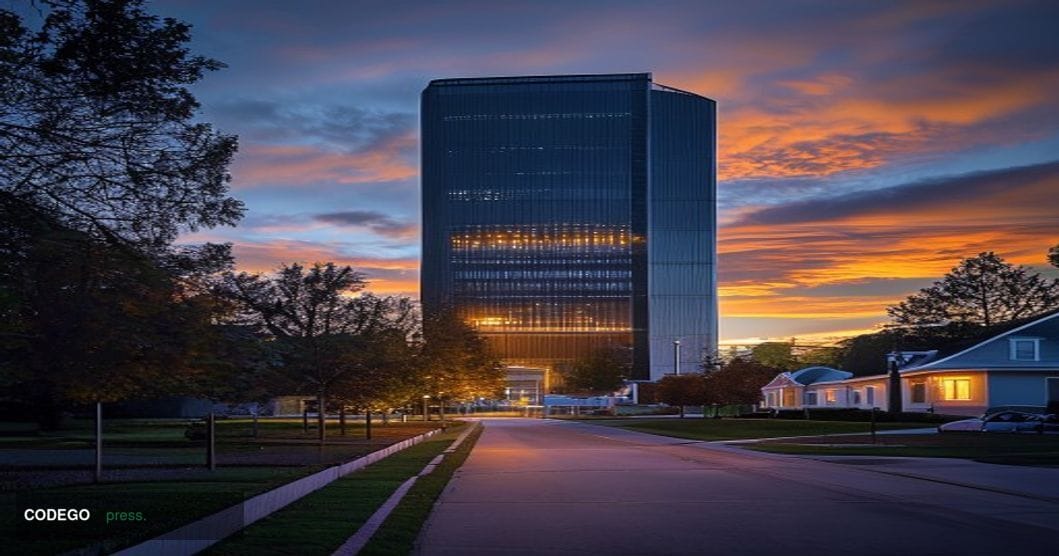
More than half of Americans would rather not live next door to the engine powering the artificial intelligence revolution. According to a new analysis by Redfin, 53% of U.S. residents oppose the construction of an AI data center in their neighborhood — a statistic that crystallizes one of the defining tensions of the current technology buildout: the infrastructure underpinning AI's explosive growth is becoming deeply unpopular at the community level, even as its economic benefits accumulate quietly in municipal balance sheets.
The finding arrives at a pivotal moment. Hyperscale technology companies are racing to pour hundreds of billions of dollars into data center capacity across the United States, driven by insatiable demand for generative artificial intelligence compute power. Yet the communities being targeted for these facilities — with their relentless power draw, cooling systems, round-the-clock truck traffic, and industrial footprints — are increasingly pushing back. The Redfin data gives quantitative weight to what planners, local politicians, and real estate professionals have been observing anecdotally for the better part of two years.
The NIMBY Effect Meets the AI Supercycle
The "not in my backyard" phenomenon is hardly new. It has shaped debates over everything from wind farms to affordable housing to cell towers for decades. What distinguishes the AI data center variant is the scale and speed at which the conflict is materializing. Unlike previous infrastructure cycles, the AI supercycle is compressing the timeline from planning to construction, leaving communities with less time to organize, negotiate, or adapt. The result is a growing mismatch between the national economic ambitions attached to AI dominance and the granular, neighborhood-level resistance those ambitions are generating.
Opposition tends to cluster around legitimate concerns: massive energy consumption that strains local grids, water usage for cooling systems, the visual and acoustic intrusion of industrial-scale facilities in or near residential zones, and anxiety over long-term property values. For many residents, the calculus is straightforward — the upside accrues to distant shareholders and national productivity statistics, while the downside lands on their street.
Northern Virginia's Counterargument
The Redfin analysis does not simply document opposition, however. It also surfaces a genuinely compelling counternarrative, one that fiscal conservatives and infrastructure advocates alike would do well to amplify. In northern Virginia — already home to the world's largest concentration of data center capacity, a corridor sometimes called "Data Center Alley" — the taxes levied on data center equipment are producing measurable public benefit. That revenue stream is being credited with fueling a notable surge in education spending in the region, while simultaneously allowing individual homeowners' property-tax rates to decline.
That combination — better-funded schools and lower residential tax burdens — represents precisely the kind of fiscal dividend that local governments dream of when courting commercial development. Northern Virginia's experience suggests that, when structured correctly, data center taxation can function as a powerful tool for redistributing the gains from AI infrastructure investment back into host communities. The challenge is that this model has not been widely replicated, and the northern Virginia outcome reflects decades of deliberate policy choices and a regulatory environment shaped specifically around the industry's presence.
A Policy Gap That Finance Cannot Ignore
For the financial sector, the implications of this public sentiment gap are consequential and underappreciated. Banks, private equity firms, and infrastructure funds are currently deploying capital into data center development at record pace, treating the sector as one of the most reliable long-term asset classes available. Real estate investment trusts specializing in digital infrastructure have attracted significant institutional flows. Yet the Redfin findings introduce a community-relations and regulatory-risk variable that due diligence frameworks are only beginning to absorb.
If opposition at the neighborhood level consolidates into sustained political resistance — zoning battles, ballot initiatives, moratoriums — the pipeline of approved sites could tighten considerably, driving up land costs and lengthening development timelines in ways that materially affect projected returns. Investors who have modeled AI data center exposure purely as a demand story may be underweighting the supply-side friction that public sentiment can generate.
What This Means
The 53% opposition figure identified by Redfin should function as a warning signal for technology companies, infrastructure investors, and policymakers simultaneously. The economic case for AI data centers is, in many respects, robust — the northern Virginia evidence on education funding and homeowner tax relief demonstrates that host communities can capture real, tangible value from these facilities. The problem is that this value proposition is poorly communicated, inconsistently structured, and unevenly distributed across the country. Closing that gap requires proactive community benefit agreements, transparent tax-sharing frameworks, and serious engagement with the energy and environmental concerns that drive opposition in the first place. Without that work, the infrastructure deficit threatening America's AI ambitions may not stem from a shortage of capital or computing hardware — it may stem from a shortage of public trust.
Written by the editorial team — independent journalism powered by Codego Press.