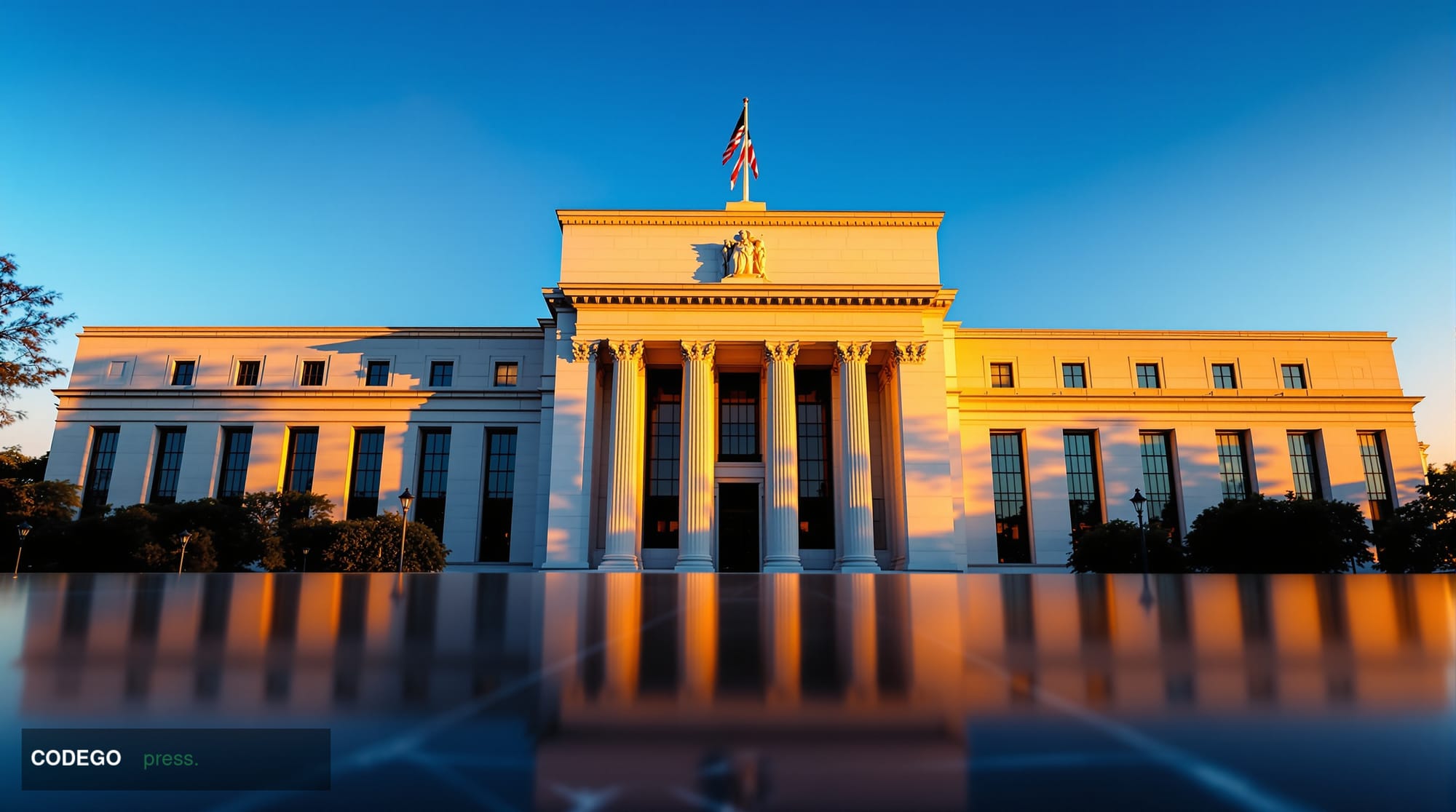
The Federal Reserve pulled the trigger on its first interest rate increase since 2023 this week, marking a consequential inflection point in United States monetary policy — and the digital asset markets barely flinched. Bitcoin absorbed the hike with minimal immediate price disruption, a response that would have seemed improbable in prior tightening cycles and one that speaks volumes about how the asset class has matured in the intervening years.
For investors who lived through Bitcoin's brutal drawdowns during the 2022 rate-hiking campaign, the temptation is to treat this composure as a triumph. The Federal Open Market Committee's decision to raise rates after nearly three years of relative stability is precisely the kind of macro shock that once sent risk assets into sharp retreat. That Bitcoin did not mirror that historical pattern is notable — though the story is far from over. With 16 of 18 Federal Reserve officials projecting at least one additional rate increase before the close of 2026, the pressure on asset valuations is not lifting anytime soon.
A Policy Pivot With Deep Implications
The Fed's return to rate hikes signals that policymakers remain concerned about underlying inflationary dynamics, even after a prolonged period in which markets had grown accustomed to a more accommodative posture. The central bank held rates steady for an extended stretch following its 2023 pause, and that period of stability became a quiet tailwind for risk assets broadly — Bitcoin included. The resumption of tightening, therefore, is not a trivial footnote. It represents a deliberate recalibration of the Fed's stance, backed by near-unanimous consensus among its officials.
The internal alignment within the Federal Open Market Committee is striking. Sixteen of eighteen officials anticipating further hikes before year-end means this is not a divided committee hedging its bets. It is a body largely convinced that the current rate level remains insufficient to achieve its policy objectives. For bond markets, that reading translates directly into yield pressure. For equities, it raises the discount rate on future earnings. For Bitcoin, the implications are more complex and, as this week demonstrated, potentially more ambiguous than historical precedent would suggest.
Bitcoin's Evolving Macro Relationship
Since the last Fed tightening cycle concluded in 2023, Bitcoin has undergone a structural evolution in its investor base. Institutional adoption has deepened, spot exchange-traded fund infrastructure has expanded access in multiple jurisdictions, and the asset has increasingly been framed by a cohort of sophisticated allocators as a long-duration store of value rather than a purely speculative vehicle. These shifts do not immunize Bitcoin from macro headwinds — higher real rates still raise the opportunity cost of holding non-yielding assets — but they do change the velocity and character of its price response.
Bitcoin's muted reaction to this rate decision could reflect several concurrent forces: pre-positioning by traders who anticipated the hike, a market that has already discounted some degree of further tightening into current valuations, or a genuine shift in how institutional holders are treating drawdown risk. It may also reflect a simple truth that markets often absorb well-telegraphed central bank decisions without dramatic moves, only to reprice more significantly in the weeks that follow as the cumulative weight of tighter policy feeds through the real economy.
The Road to Year-End
With the overwhelming majority of Fed officials aligned behind further tightening, the question for Bitcoin and the broader digital asset market is one of endurance. A single rate hike can be absorbed. A sequential tightening trajectory — particularly one that pushes borrowing costs higher into an environment where credit conditions are already tightening globally — tests a different kind of resilience. Liquidity, leverage, and sentiment all become variables that matter more at the margin.
Historically, the lag between monetary policy decisions and their full impact on asset prices has been underestimated by markets in both directions. The same officials who are projecting additional hikes will also be watching economic data carefully for signs of slowdown, and the pace of any further increases could be moderated if growth signals deteriorate. Bitcoin traders are likely to watch labor market data and inflation prints with particular intensity over the coming months, as these will shape the Fed's terminal rate expectations heading into the final quarter of the year.
What This Means for Investors
Bitcoin's stoic response to the Fed's first rate increase since 2023 is encouraging for those who have argued that the asset has matured beyond its purely speculative phase. But the signal from inside the Federal Open Market Committee — sixteen of eighteen officials leaning toward at least one more hike — demands that investors avoid complacency. The next several months will test whether Bitcoin's composure was genuine resilience or simply the calm before a more complex macro reckoning. In either case, the Fed's return to tightening has redrawn the risk landscape for 2026, and positioning accordingly is no longer optional. It is necessary.
Written by the editorial team — independent journalism powered by Codego Press.