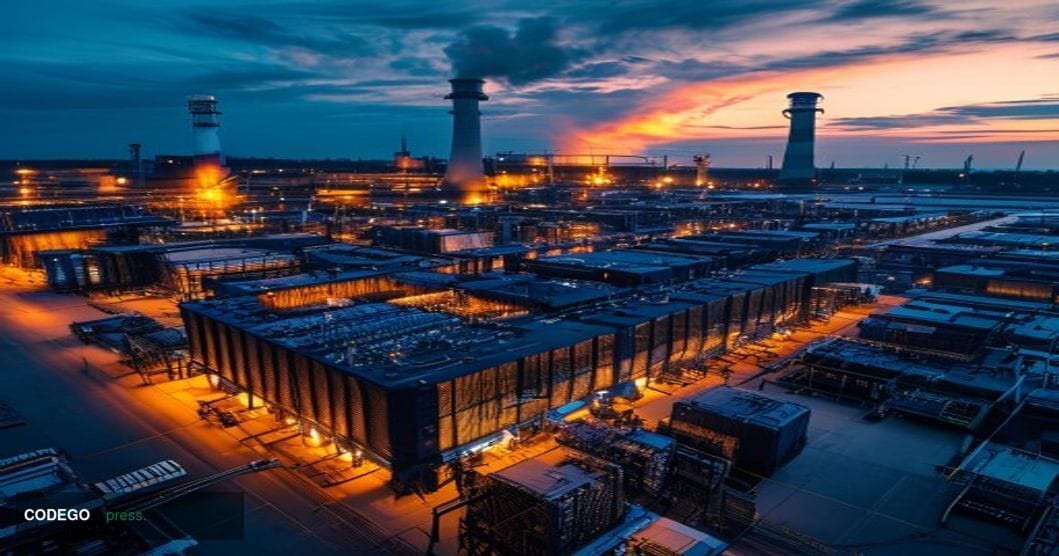
The convergence of cryptocurrency mining and artificial intelligence infrastructure has reached a tipping point, with Bernstein Research identifying Bitcoin miners as emerging power brokers in the AI boom. According to the investment firm's latest analysis, miners now control 27 gigawatts of planned power capacity and represent $90 billion in AI infrastructure deals, positioning them strategically as electricity becomes the primary bottleneck for data center expansion.
This transformation reflects a fundamental shift in how the technology industry approaches computational infrastructure. Bitcoin miners, who have spent years optimizing for energy efficiency and power procurement, find themselves uniquely positioned to address the voracious electricity demands of AI workloads. The 27 GW of controlled power capacity represents a significant portion of the energy resources needed to fuel the next generation of AI data centers, particularly as traditional cloud providers struggle with power availability constraints.
Strategic Power Positioning
The $90 billion valuation attached to these AI infrastructure opportunities underscores the scale of transformation occurring within the mining sector. Rather than abandoning their core Bitcoin mining operations, many companies are pivoting toward hybrid business models that leverage their existing power infrastructure and operational expertise. This strategic repositioning allows miners to participate in the AI infrastructure buildout while maintaining their cryptocurrency operations during favorable market conditions.
Bernstein's analysis highlights how electricity availability has emerged as the defining constraint for AI development. While semiconductor supply chains have stabilized and compute architectures continue advancing, the fundamental challenge of securing reliable, cost-effective power at scale remains unsolved for many AI companies. Bitcoin miners, having already navigated complex power procurement challenges and established relationships with utility providers, possess institutional knowledge that proves invaluable in this environment.
Infrastructure Transformation
The technical requirements for AI workloads differ significantly from Bitcoin mining operations, requiring substantial infrastructure modifications. However, the core elements—reliable power delivery, cooling systems, and physical security—translate directly between use cases. This overlap enables miners to repurpose existing facilities more efficiently than building greenfield AI data centers, providing both cost advantages and faster deployment timelines.
The geographic distribution of mining operations also aligns well with AI infrastructure needs. Many mining facilities are located in regions with abundant renewable energy resources and favorable regulatory environments, characteristics that AI companies increasingly prioritize for their data center investments. This geographical overlap creates natural synergies between the two sectors and supports the miners' strategic positioning.
Market Implications
The emergence of Bitcoin miners as AI infrastructure suppliers introduces new competitive dynamics in the data center market. Traditional colocation providers and hyperscale cloud operators now face competition from entities that can offer power-optimized solutions at competitive pricing. This development could accelerate AI deployment timelines while potentially reducing infrastructure costs for AI companies seeking alternatives to established cloud platforms.
For the broader cryptocurrency ecosystem, this diversification strategy provides miners with revenue stability and growth opportunities beyond Bitcoin price volatility. The AI infrastructure market's rapid expansion offers sustained demand that could support miner profitability even during challenging periods for cryptocurrency markets. This business model evolution represents a maturation of the mining sector and its integration with mainstream technology infrastructure.
As electricity constraints continue shaping AI development trajectories, Bitcoin miners' control over substantial power resources positions them as critical gatekeepers for the next phase of artificial intelligence infrastructure deployment. The $90 billion opportunity identified by Bernstein reflects not just immediate deal value but the strategic importance of power-optimized infrastructure in determining AI market leadership. This convergence marks a significant milestone in the evolution of both cryptocurrency and artificial intelligence industries toward greater infrastructure integration.
Written by the editorial team — independent journalism powered by Codego Press.