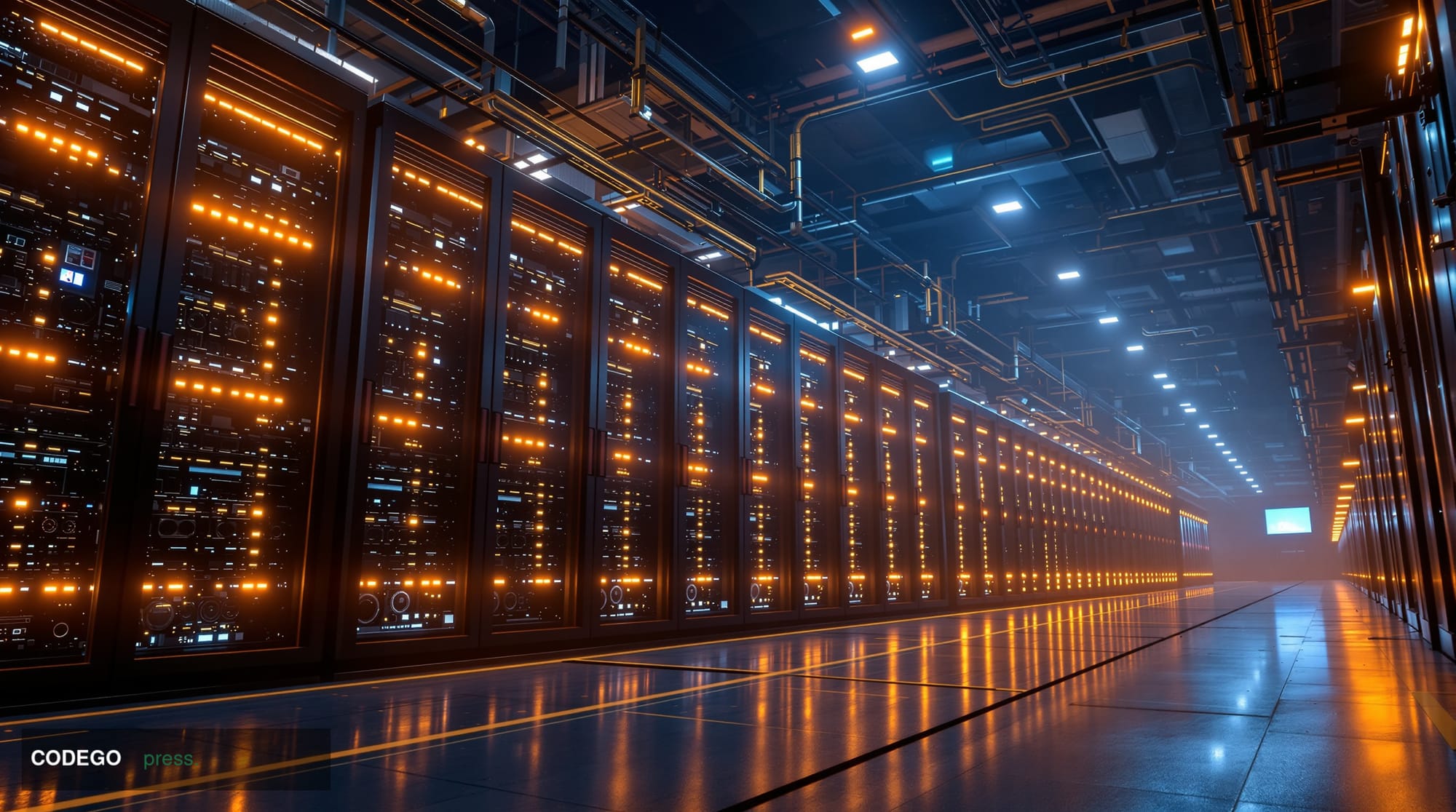
The convergence of cryptocurrency mining and artificial intelligence infrastructure is reshaping investment narratives across Wall Street, as Bitcoin mining companies leverage their power-intensive operations to capture value from the surging AI sector. This strategic pivot represents a fundamental evolution in how miners view their core assets, transforming what were once single-purpose facilities into dual-use infrastructure platforms capable of supporting both blockchain validation and machine learning workloads.
The semiconductor-driven rally that has dominated technology markets is now extending its influence into the cryptocurrency mining sector, where companies are positioning their existing power infrastructure as critical enablers of the AI revolution. Mining operators, who have spent years building out massive data centers with industrial-scale power delivery and cooling systems, are discovering that these same facilities can accommodate the computational demands of artificial intelligence training and inference workloads.
This infrastructure overlap creates compelling economics for mining companies seeking to diversify revenue streams beyond the volatility of Bitcoin prices and mining difficulty adjustments. The power distribution, cooling, and data center management capabilities that miners have developed for cryptocurrency operations translate directly to AI infrastructure requirements, offering a natural expansion path that leverages existing capital investments rather than requiring greenfield development.
The timing of this convergence appears particularly advantageous for mining operators, as enterprise demand for AI computing capacity continues to outstrip available cloud infrastructure. Hyperscale cloud providers are facing extended lead times for GPU clusters and purpose-built AI training facilities, creating market opportunities for alternative infrastructure providers who can offer immediate capacity. Mining companies with excess power allocation and flexible data center designs are uniquely positioned to capture this demand.
From a financial perspective, the dual-use model offers mining companies the potential for more stable revenue profiles compared to pure-play cryptocurrency operations. While Bitcoin mining revenues fluctuate with network hash rates and token prices, AI infrastructure services typically involve longer-term contracts with enterprise customers, providing greater revenue predictability. This diversification strategy could prove particularly valuable during periods of cryptocurrency market stress or regulatory uncertainty.
The technical requirements for supporting AI workloads do present challenges for mining operators, particularly around networking infrastructure and specialized hardware procurement. Traditional Bitcoin mining operations optimize for parallel processing of cryptographic hashing functions, while AI training requires high-bandwidth interconnects and specialized accelerator chips. However, the fundamental infrastructure components—power delivery, cooling, and physical space—remain highly transferable between use cases.
Market participants are beginning to recognize the strategic value of this positioning, as evidenced by the positive momentum in mining stocks coinciding with broader semiconductor sector gains. Investors are reassessing the long-term viability of mining companies through the lens of infrastructure utility rather than pure cryptocurrency exposure, potentially leading to multiple expansion as these businesses demonstrate their ability to monetize AI demand.
The intersection of cryptocurrency mining and AI infrastructure represents a broader trend toward computational resource optimization in an era of increasing digital processing demands. As both blockchain networks and artificial intelligence applications continue to scale, the companies that can efficiently serve multiple computational workloads from shared infrastructure platforms may emerge as the most resilient participants in the evolving digital economy.
Written by the editorial team — independent journalism powered by Codego Press.