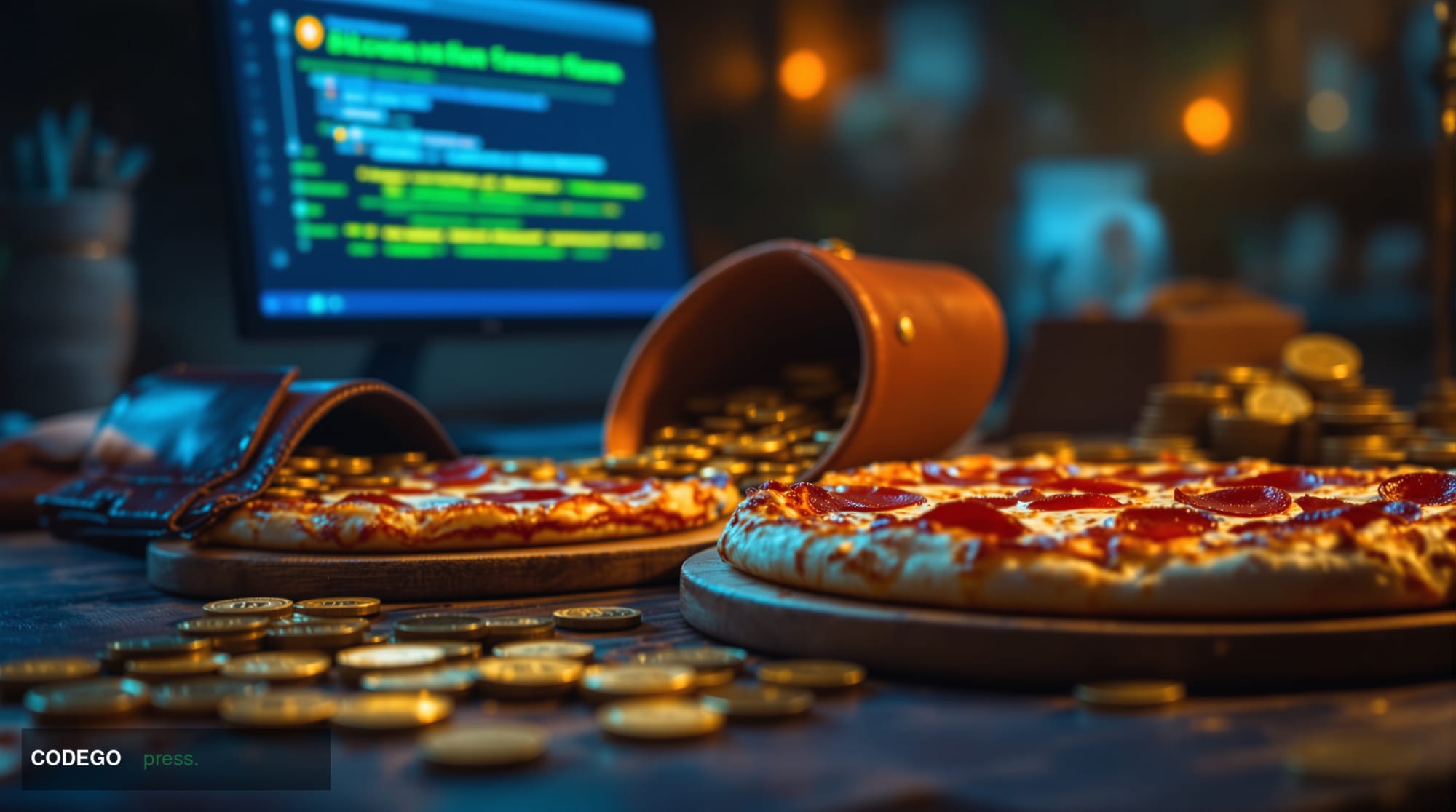
Sixteen years ago today, a Florida programmer named Laszlo Hanyecz made what would become the most scrutinized food purchase in financial history. His simple forum post offering 10,000 Bitcoin in exchange for two pizzas delivered to his home established the first recorded commercial transaction using the nascent digital currency. At today's Bitcoin valuation of approximately $70,000 per coin, those pizzas carry a retrospective price tag of $700 million.
Hanyecz's transaction, immortalized as Bitcoin Pizza Day each May 22nd, represents far more than an expensive meal. It marked the precise moment when Bitcoin transitioned from theoretical digital tokens to actual currency with measurable purchasing power. The programmer's willingness to exchange 10,000 BTC for roughly $40 worth of pizza established Bitcoin's first real-world exchange rate and demonstrated the practical viability of peer-to-peer digital payments outside traditional banking systems.
The astronomical appreciation of those 10,000 Bitcoin reflects the cryptocurrency's journey from experimental curiosity to institutional asset class. In 2010, Bitcoin traded for fractions of a cent, making Hanyecz's offer seem reasonable for two Papa John's pizzas. Today, those same tokens represent enough value to purchase luxury real estate portfolios, establish venture capital funds, or finance entire startups. The transaction's legacy extends beyond its staggering dollar figure to encompass Bitcoin's evolution as a store of value and medium of exchange.
Financial historians view the pizza transaction as a watershed moment that validated Bitcoin's core premise: digital scarcity could create genuine economic value. Hanyecz unknowingly proved that decentralized cryptocurrency could facilitate real commerce, paving the way for thousands of merchants to eventually accept Bitcoin payments. His forum post demonstrated practical blockchain utility years before institutional investors like MicroStrategy or Tesla would add Bitcoin to their corporate treasuries.
The pizza purchase also highlighted Bitcoin's deflationary characteristics, which would later attract investors seeking alternatives to traditional fiat currencies. While central banks can print unlimited paper money, Bitcoin's algorithmic supply cap of 21 million coins means early transactions like Hanyecz's become increasingly valuable over time. This scarcity model transforms every Bitcoin expenditure into a potential opportunity cost, as demonstrated by the programmer's inadvertently expensive lunch.
Contemporary cryptocurrency markets now process billions of dollars in daily Bitcoin transactions, from institutional trading to retail payments. Major payment processors like PayPal and Square have integrated Bitcoin functionality, while countries like El Salvador have adopted it as legal tender. These developments trace their origins directly to Hanyecz's pioneering willingness to spend Bitcoin on everyday goods, proving digital currency could function as practical money.
The enduring fascination with Bitcoin Pizza Day reflects broader questions about digital asset valuation and adoption timing. Hanyecz's transaction occurred when Bitcoin's primary value lay in its technological novelty rather than speculative potential. His decision to spend rather than hoard Bitcoin demonstrates the currency mindset that early adopters embraced, viewing the tokens as tools for commerce rather than investment vehicles. This perspective proved crucial for establishing Bitcoin's legitimacy as actual currency.
Modern Bitcoin holders face the same fundamental tension between spending and saving that Hanyecz navigated in 2010. The cryptocurrency's dramatic appreciation creates powerful incentives to hold rather than transact, potentially limiting its utility as everyday money. Yet Bitcoin's long-term success depends on achieving the balance between store of value and medium of exchange that Hanyecz's pizza purchase first demonstrated. His historic transaction remains a reminder that Bitcoin's revolutionary potential lies not just in price appreciation, but in its ability to facilitate trustless, permissionless commerce across global networks.
Written by the editorial team — independent journalism powered by Codego Press.