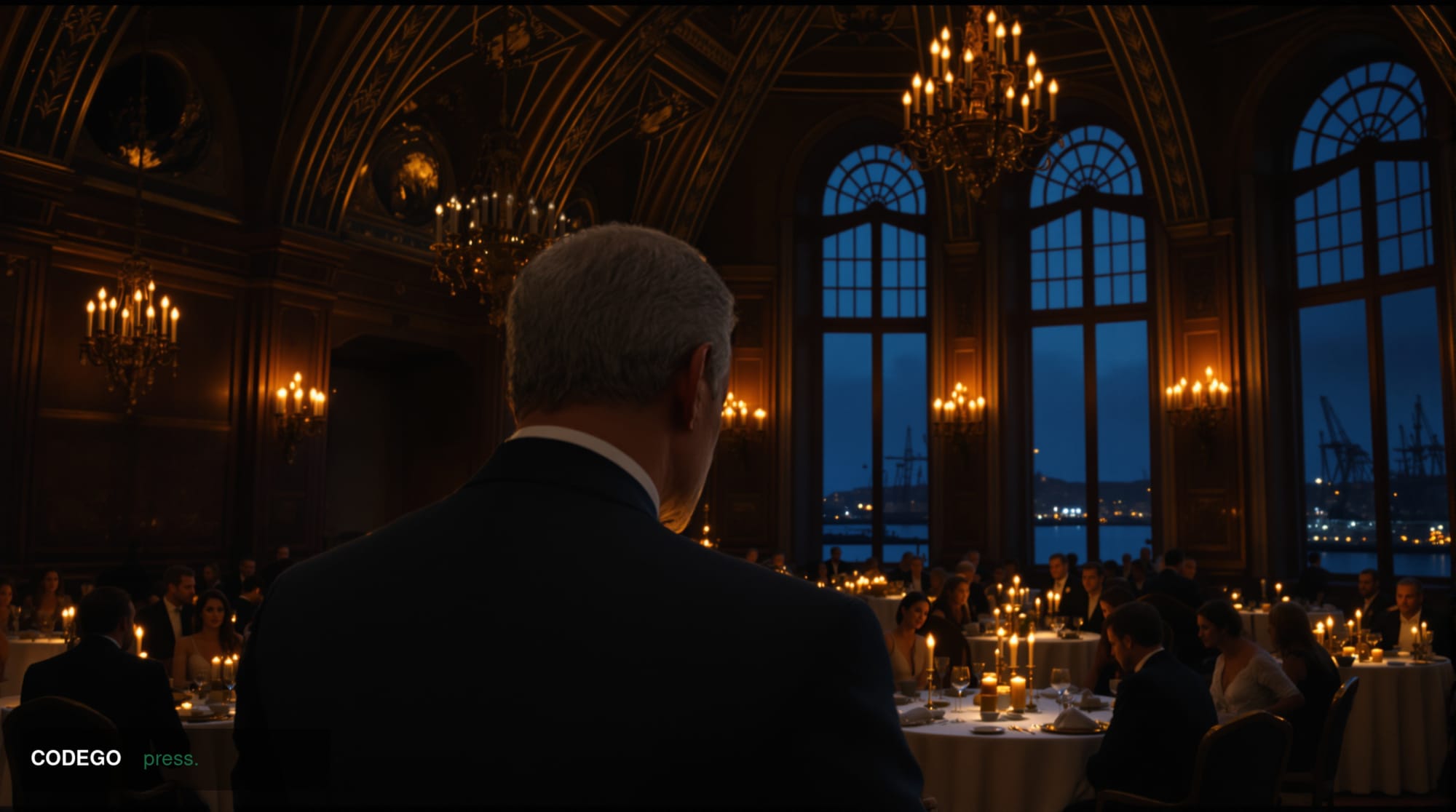
On 2 October 2026, Dr Joachim Nagel, President of the Deutsche Bundesbank, stepped to the podium at the "Jahresköste" — the storied annual banquet of the Rostock Merchants' Association — and delivered a speech framed around a single, urgent ambition: restoring and amplifying economic momentum in Germany. The setting itself carried symbolic weight. Rostock, a Baltic port city with centuries of mercantile heritage stretching back to the Hanseatic League, is precisely the kind of community where the abstract language of monetary policy meets the concrete realities of trade, logistics, and commerce.
That Nagel chose this venue for a high-profile address is telling. The Rostock Merchants' Association represents the kind of business constituency — traders, exporters, logistics operators, and regional entrepreneurs — whose fortunes are intimately tied to the broader currents of economic policy. By delivering a speech titled "More momentum for the economy" to this audience, the Bundesbank's top official was communicating directly to those on the front lines of Germany's real economy, signaling that central bank leadership is attuned to the pressures that businesses beyond Frankfurt's financial towers are navigating daily.
The Bank for International Settlements published the speech on 7 October 2026, five days after its delivery, amplifying Nagel's remarks to an international audience of central bankers, financial institutions, and policy observers worldwide. The BIS platform lends additional gravitas to the address, placing it within the broader global conversation about economic growth trajectories, monetary normalization, and the structural challenges confronting major European economies.
Germany's economic context in 2026 lends the speech's title a particular urgency. Europe's largest economy has endured an extended period of sluggish growth, buffeted by high energy costs, weakening export demand, demographic pressures on the labor market, and the prolonged process of industrial transformation toward a greener, more digitized economic base. Against that backdrop, a Bundesbank president calling publicly for "more momentum" represents a pointed acknowledgment that the status quo is insufficient — and that both monetary authorities and the broader policy ecosystem bear responsibility for catalyzing recovery.
Nagel's decision to engage directly with a regional merchants' association rather than limiting his public communications to Frankfurt conference halls or international forums reflects a broader strategic posture that the Bundesbank has cultivated under his leadership: the idea that central bank credibility is built not only through technical competence but through active dialogue with the commercial communities that monetary policy ultimately serves. Rostock's merchant class, dealing in Baltic Sea trade routes, port logistics, and cross-border commerce, represents a microcosm of the export-driven economy that defines Germany's global economic identity.
The geographic dimension of the speech venue also deserves attention. Northern Germany's port cities, Rostock foremost among them, are nodes in the European and global supply chain architecture. Trade flows through the Baltic region connect Germany to Scandinavian markets, Eastern European manufacturing hubs, and beyond. When a Bundesbank president addresses this community, the subtext invariably involves not just domestic monetary conditions but the international trade environment — tariff regimes, exchange rate dynamics, and the competitive pressures that shape the viability of export-oriented businesses.
The speech's publication via the BIS further embeds it within the international monetary policy dialogue. The BIS, often described as the central bank of central banks, disseminates speeches from member institution governors as part of its function of fostering policy transparency and cross-border institutional dialogue. That Nagel's address to a regional German merchants' banquet merited BIS publication underscores the institution's intent to communicate broadly about economic conditions across the eurozone's most consequential member state.
What This Means for Observers of European Monetary Policy
For analysts and practitioners tracking European monetary conditions, Nagel's Rostock address — framed around economic momentum — arrives at a consequential juncture. The European Central Bank's policy trajectory, inflation dynamics across the eurozone, and Germany's own fiscal and structural reform agenda all intersect in how "momentum" is defined and pursued. A Bundesbank president speaking in those terms to a business audience is, at minimum, a signal that the conversation about growth, competitiveness, and policy support is very much alive at the highest levels of German monetary authority. Regional banquets have long served as venues where carefully chosen language carries disproportionate policy signal — and Rostock's "Jahresköste" appears to be no exception. Market participants, policymakers, and European finance professionals would do well to monitor the full text of Nagel's remarks as it circulates through institutional channels in the weeks ahead.
Written by the editorial team — independent journalism powered by Codego Press.