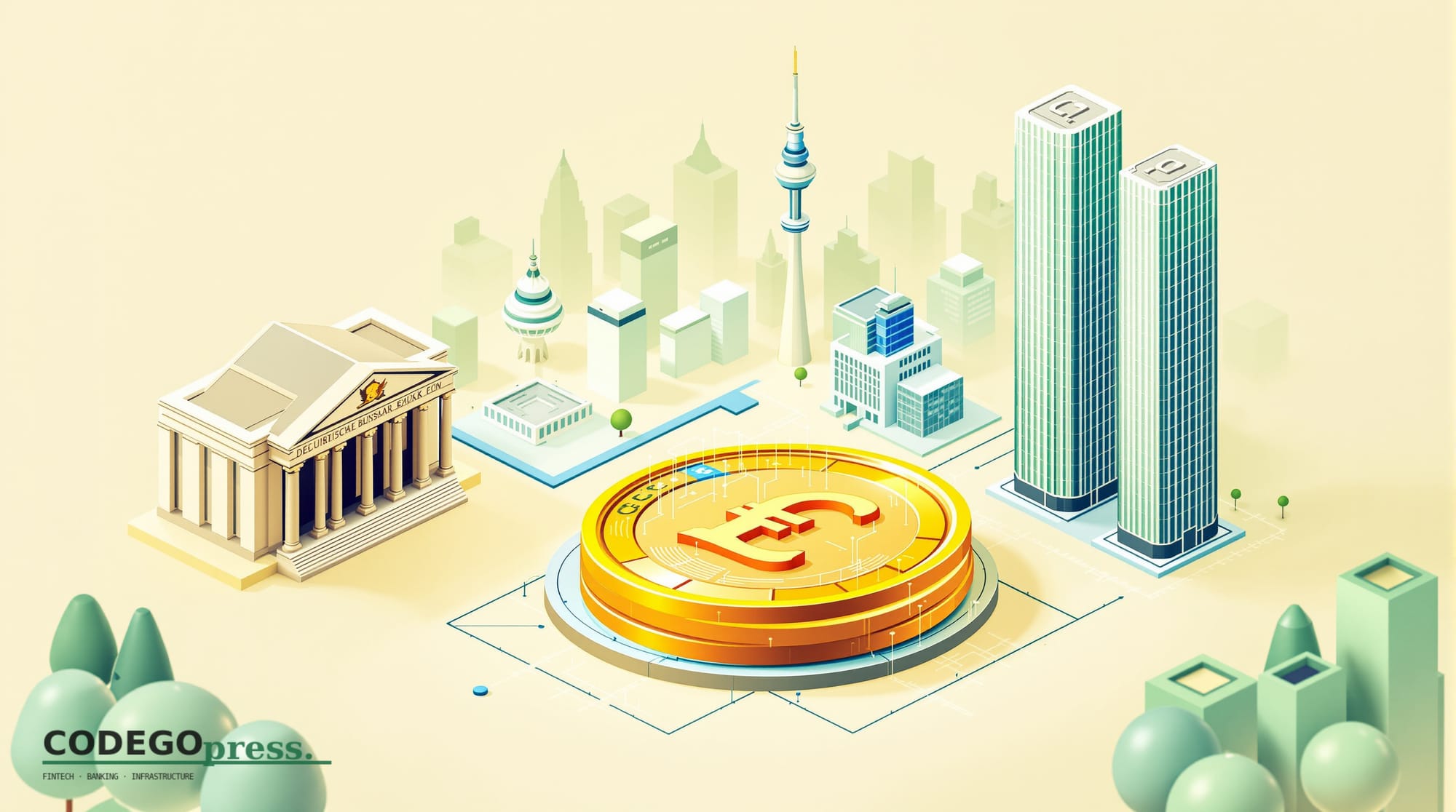
The debate over digital money has reached a critical inflection point. As the European Central Bank advances the digital euro toward piloting phases and nations race to architect central bank digital currencies (CBDCs), a senior figure from Germany's monetary establishment has injected a note of caution into the narrative. Burkhard Balz, Member of the Executive Board of the Deutsche Bundesbank, argued at the Global Currency Forum in Antalya this week that the resilience of any modern monetary system depends not on the wholesale replacement of cash, but on the intelligent coexistence of physical and digital instruments.
This stance carries profound implications for European payment infrastructure, regulators, and the entire ecosystem of financial technology vendors constructing the plumbing for embedded finance and Banking-as-a-Service platforms. Balz's framing rejects the technological determinism that has animated much of the CBDC discussion—the implicit assumption that digital is inherently superior and that physical currency is obsolete. Instead, he positions cash as a resilience asset: a failsafe that operates independently of telecommunications networks, power grids, and cybersecurity vulnerabilities. In a continent where banking infrastructure is already fragmented across national supervisory regimes, and where payment rails from SWIFT to real-time gross settlement systems require continuous operational oversight, the addition of a parallel digital euro creates both redundancy and systemic complexity.
The Bundesbank's institutional memory of monetary crisis runs deep. Germany's banking sector has absorbed lessons from the eurozone sovereign debt crisis, the 2008 financial collapse, and more recently, the operational stresses exposed by the pandemic—moments when centralized digital systems faced congestion and when the ability to settle transactions outside conventional payment channels proved economically valuable. Balz's argument that cash provides a non-digital settlement layer is not romantic or backward-looking; it is grounded in operational risk management. When ATM networks malfunction or payment processors experience outages, cash remains functional. When cybersecurity incidents compromise digital ledgers or compromise institutional systems, physical currency cannot be remotely disabled or manipulated.
For fintechs and platforms building on Codego Banking-as-a-Service infrastructure or issuing white-label IBAN platforms, this position signals that regulators expect dual-rail architectures, not replacement architectures. A fintech offering embedded banking services to SMEs or gig workers cannot assume that its customer base will transition entirely to digital payments. The German financial establishment is signaling that policy will continue to protect and enshrine cash usage rights—a legal and commercial obligation that fintech platforms must accommodate in their product roadmaps. Merchants, consumers, and financial institutions will operate in a mixed-mode environment for at least the next decade, possibly longer.
The digital euro itself remains in a measured development phase. The ECB has outlined principles for a CBDC that would be available to businesses and consumers, but not as a replacement for bank deposits. The digital euro would circulate alongside cash and electronic bank money—what Balz implicitly endorses. This three-tier model (physical cash, digital euro, commercial bank deposits and payment services) reflects a consensus that has crystallized among European monetary authorities: digital currencies are tools for enhancing payment efficiency and financial inclusion, not instruments of monetary centralization or the abolition of alternative settlement media.
However, the coexistence model raises engineering challenges that Balz's speech does not directly address. A three-tier system requires regulatory guardrails that prevent digital euro holdings from cannibalizing bank deposits during periods of financial stress—a phenomenon known as "digital euro run risk." It also requires interoperability standards that allow European Banking Authority-regulated institutions and fintech platforms to interface with a central bank digital infrastructure without compromising either security or competition. The PSD2 regulatory framework has already established open API requirements for payment service providers; a digital euro will likely inherit and expand those mandates. For card issuers and payment processors, this means API-based integration with the digital euro will become a compliance expectation, not an optional capability.
The Bundesbank's position also reflects a deeper institutional anxiety about monetary sovereignty in an era of technology concentration. If Europe outsources CBDC infrastructure to a handful of cloud providers or technology companies, it cedes control over a core pillar of financial system stability to actors whose primary obligations are to shareholders, not to financial stability. By maintaining cash as a regulatory priority, Germany signals that it views monetary independence as inseparable from operational diversity—the ability to settle transactions through multiple, independent channels. This logic extends to the design of settlement systems themselves: the ECB and national central banks must avoid single points of failure in digital payment infrastructure.
What this means for the financial infrastructure sector is clear: the era of the "cashless society" is over, or at least indefinitely postponed. Regulatory policy, shaped by voices like Balz's, will continue to mandate that payment processors, card networks, and BaaS providers maintain cash handling capabilities and integration points. Consumer protection regulation will likely strengthen—not weaken—the legal status of cash in commerce. And the design of central bank digital currencies will proceed with the explicit assumption that they are supplements to, not substitutes for, existing monetary instruments.
For Codego and similar infrastructure providers serving the European fintech ecosystem, this creates a stable baseline for product development. The regulatory environment will not flip suddenly toward a fully digital, bank-disintermediated system. Instead, Europe is constructing a layered, resilient payment architecture where digital and physical channels coexist by design, where multiple settlement rails reduce systemic concentration risk, and where fintech platforms must be agile enough to serve customers who may choose any of three monetary instruments depending on circumstance, geography, and trust.
Written by the Codego Press editor — independent banking and fintech journalism powered by Codego, European banking infrastructure provider since 2012.
Sources: Bank for International Settlements — Burkhard Balz keynote, Global Currency Forum · 29 April 2026