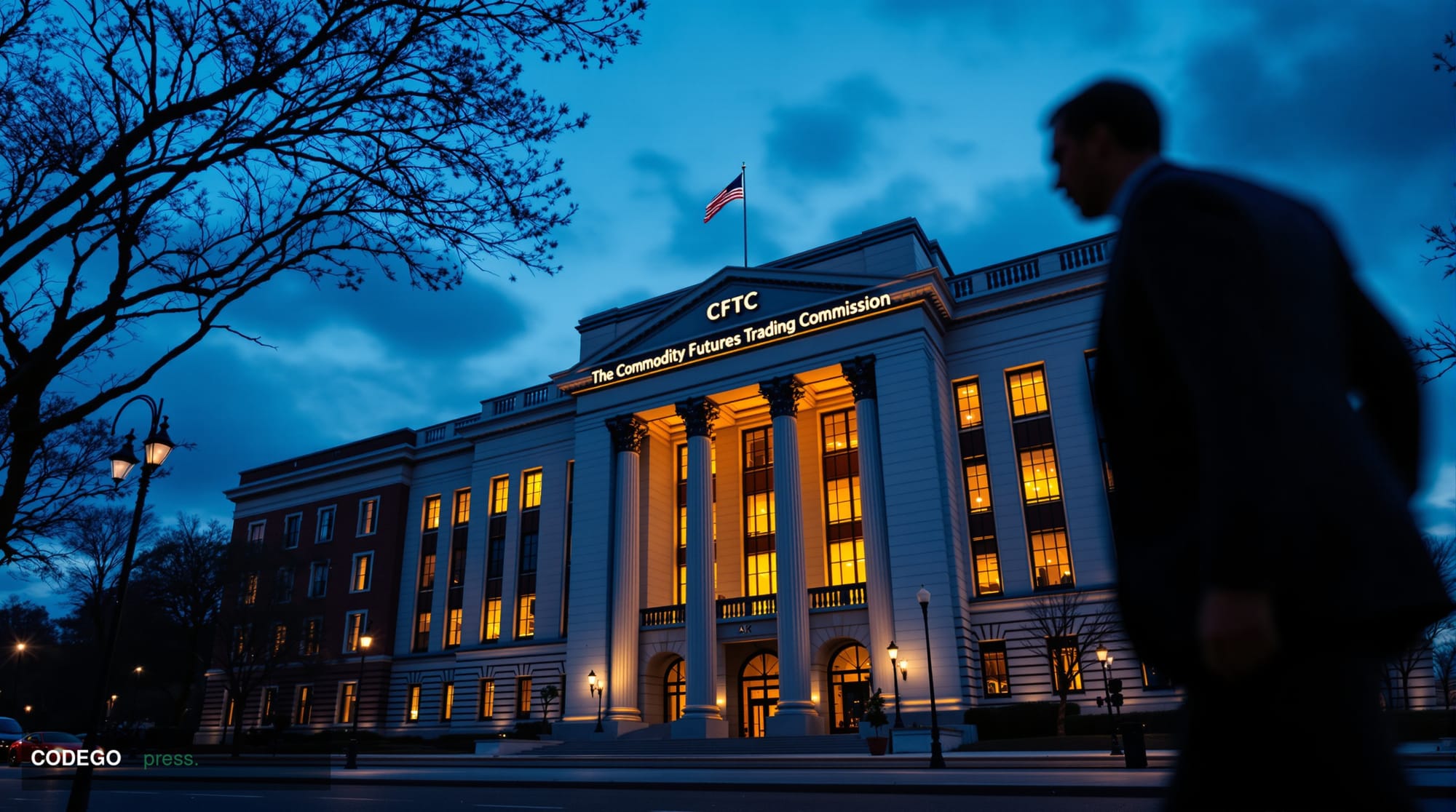
A regulatory earthquake has struck the Commodity Futures Trading Commission (CFTC), where officials who raised concerns about major cryptocurrency platforms including Polymarket, Crypto.com, and Gemini have been suspended from their positions. The disciplinary action against these regulatory professionals threatens to create a dangerous vacuum in oversight precisely when digital asset markets require heightened scrutiny.
The suspension of these officials represents more than an internal personnel matter—it signals a potentially seismic shift in how America's derivatives regulator approaches cryptocurrency oversight. When regulatory professionals who identify platform-specific risks face suspension rather than support, the entire framework of investor protection comes under strain. The CFTC's mission to safeguard market integrity depends fundamentally on officials being able to raise concerns without fear of retaliation.
The timing of these suspensions raises critical questions about regulatory independence. Polymarket operates as a decentralized prediction market platform, while Crypto.com and Gemini function as major cryptocurrency exchanges serving millions of retail investors. Each platform presents distinct regulatory challenges that require sophisticated oversight mechanisms. When officials identifying these challenges face suspension, the regulatory apparatus loses both institutional knowledge and the critical function of risk identification.
The potential weakening of regulatory oversight creates immediate implications for retail investor protection. Cryptocurrency platforms operate in a rapidly evolving landscape where new risks emerge constantly—from market manipulation concerns to custody vulnerabilities to compliance gaps. Effective regulation requires officials who can identify these emerging threats and recommend appropriate responses. The suspension of such officials effectively removes early warning systems from the regulatory framework.
For Polymarket specifically, regulatory oversight becomes particularly complex given its prediction market structure. The platform allows users to trade on real-world events, creating potential intersections with both commodities regulation and election integrity concerns. Similarly, major exchanges like Crypto.com and Gemini handle billions in customer assets, making effective oversight essential for market stability.
The institutional implications extend beyond these specific platforms. When regulatory officials face suspension for raising concerns, it creates a chilling effect that may discourage future risk identification across the entire cryptocurrency sector. Other officials may become reluctant to flag potential issues, knowing that such actions could result in career consequences. This dynamic fundamentally undermines the regulatory mission.
The suspension also comes at a critical juncture for cryptocurrency regulation more broadly. Congressional pressure for clearer digital asset frameworks continues mounting, while courts increasingly scrutinize regulatory approaches to cryptocurrency oversight. In this environment, the CFTC needs experienced officials who understand both traditional derivatives markets and emerging digital asset complexities. Removing such expertise through suspensions weakens the agency's capacity to navigate these challenges effectively.
Market participants and industry observers should monitor how these suspensions affect ongoing regulatory processes. The CFTC's approach to cryptocurrency oversight has significant implications for platform operations, compliance costs, and ultimately investor protection. When the agency faces internal disruption through official suspensions, these broader regulatory functions inevitably suffer.
The suspension of CFTC officials who raised platform-specific concerns represents a troubling precedent that could fundamentally alter cryptocurrency oversight. By potentially silencing internal voices of caution, the agency risks creating exactly the oversight gaps that enable the investor harm it seeks to prevent. The cryptocurrency sector's rapid evolution demands regulatory vigilance, not the suppression of officials who identify emerging risks. As retail investors increasingly engage with platforms like Polymarket, Crypto.com, and Gemini, effective oversight becomes not just beneficial but essential for market integrity and consumer protection.
Written by the editorial team — independent journalism powered by Codego Press.