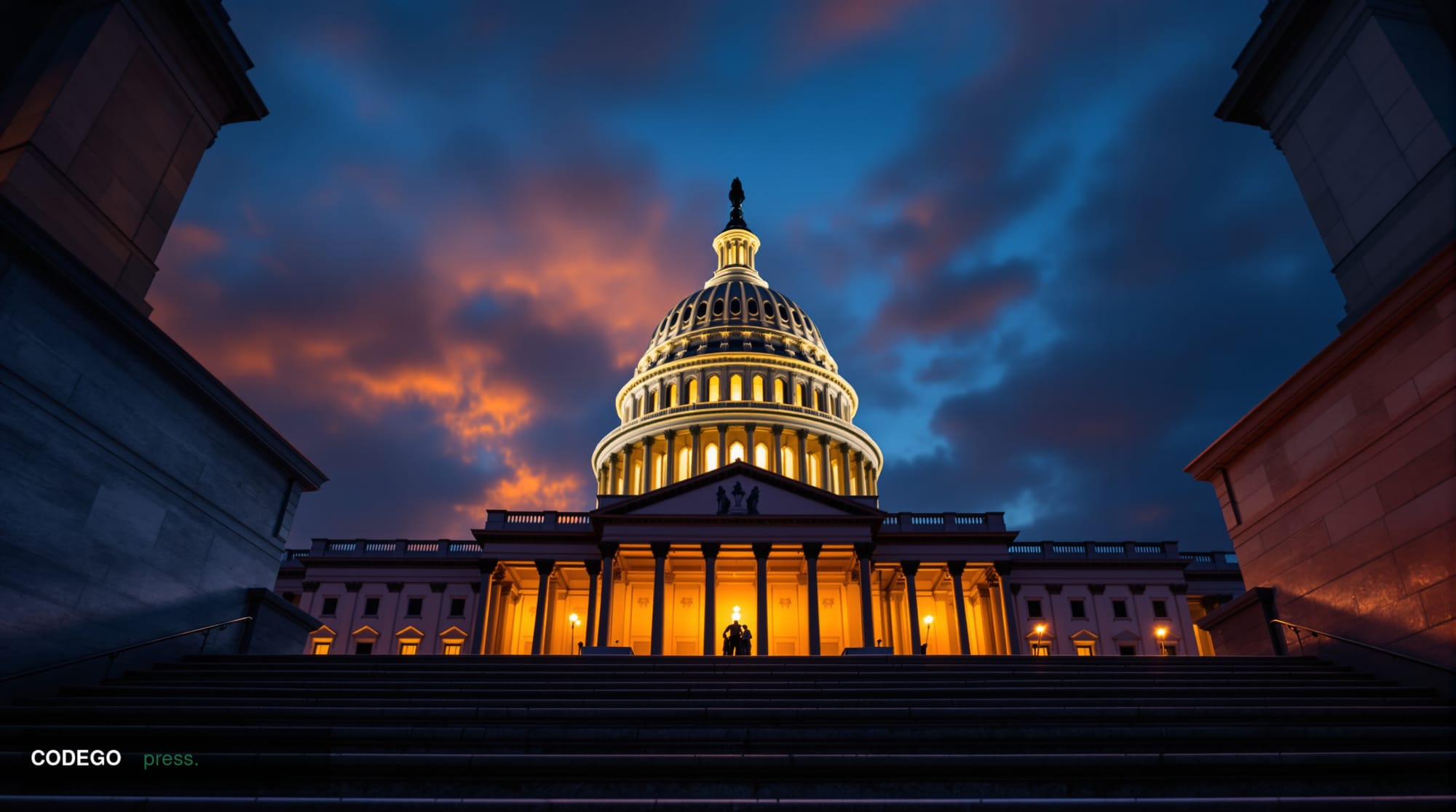
The legislative clock is running out. Following an August recess that consumed weeks of critical session time, the United States Senate now has a window of just 36 working days before the close of 2026 to pass the CLARITY Act, the most significant piece of crypto-specific legislation to advance through Congress in recent memory. What began as a promising regulatory milestone for the digital asset industry is now caught in a familiar Washington bottleneck — and the stakes for the broader crypto market could not be higher.
The CLARITY Act, which aims to establish a comprehensive federal framework for digital asset regulation, has been a focal point of debate among lawmakers, industry participants, and Securities and Exchange Commission observers for months. Its core promise is to resolve the persistent ambiguity surrounding whether cryptocurrencies and related digital assets are classified as securities or commodities — a question that has haunted the industry for years and generated enormous legal and compliance costs across the ecosystem. The bill's passage would represent a foundational shift in how American regulators approach the sector.
Yet the math is unforgiving. With the Senate returning from its August break, the chamber faces an extraordinarily compressed legislative calendar. Thirty-six session days sounds deceptively generous until one accounts for the procedural realities of the Senate floor: quorum calls, competing appropriations battles, potential government funding deadlines, and the ever-present gravitational pull of political posturing ahead of the midterm election cycle. Each of those forces routinely consumes floor time that proponents of the CLARITY Act desperately need.
Midterm proximity is a particularly acute complicating factor. As electoral pressures mount, senators from competitive districts and states tend to retreat from controversial or technically complex legislation — and crypto regulation, despite its growing mainstream profile, remains polarizing along ideological lines. Votes on digital asset frameworks carry reputational risk for legislators who have not fully committed to a public position on the industry, and that ambiguity tends to produce delay rather than decisive floor action in the months preceding a national election.
The irony is that broader political momentum for digital asset regulation has arguably never been stronger in Washington. Bipartisan support for establishing clearer rules of the road has grown substantially as the crypto sector has matured, institutional capital has flowed in at scale, and foreign jurisdictions — most notably the European Securities and Markets Authority under the Markets in Crypto-Assets, or MiCA, framework — have moved decisively to regulate the space. American inaction increasingly looks not like prudent caution but like a competitive disadvantage, and legislators on both sides of the aisle have said as much publicly.
Major industry participants, from centralized exchanges to decentralized finance, or DeFi, protocol developers, have lobbied aggressively for the bill's passage, arguing that continued regulatory uncertainty suppresses domestic innovation and pushes activity offshore to more permissive jurisdictions. The Coinbase-backed Stand With Crypto coalition and other advocacy groups have poured significant resources into Capitol Hill engagement precisely because they understand that windows like this one are rare — and can close permanently with little warning.
If the Senate fails to act before year-end, the CLARITY Act would face a reset under the newly constituted Congress, requiring reintroduction, fresh committee hearings, and a renewed whipping effort to rebuild legislative support from the ground up. That process could consume the better part of 2027, leaving the industry mired in the same regulatory grey zone that has defined the past several years. Legal uncertainty of that duration has real economic consequences: compliance costs remain elevated, institutional risk appetites remain constrained, and promising projects continue to domicile abroad.
What This Means for Markets and the Industry
The 36-day figure is not merely a scheduling footnote — it is a hard structural constraint that will force Senate leadership to make an explicit choice about whether crypto regulation belongs on a crowded end-of-year agenda. If the CLARITY Act cannot secure floor time alongside government funding battles and other must-pass legislation, it will effectively be shelved until the next Congress convenes. For an industry that has waited years for federal clarity, that outcome would represent a significant setback, reinforcing the perception that Washington remains structurally incapable of governing emerging technology at the pace the market demands. The next 36 days will be, in the most literal sense, decisive.
Written by the editorial team — independent journalism powered by Codego Press.