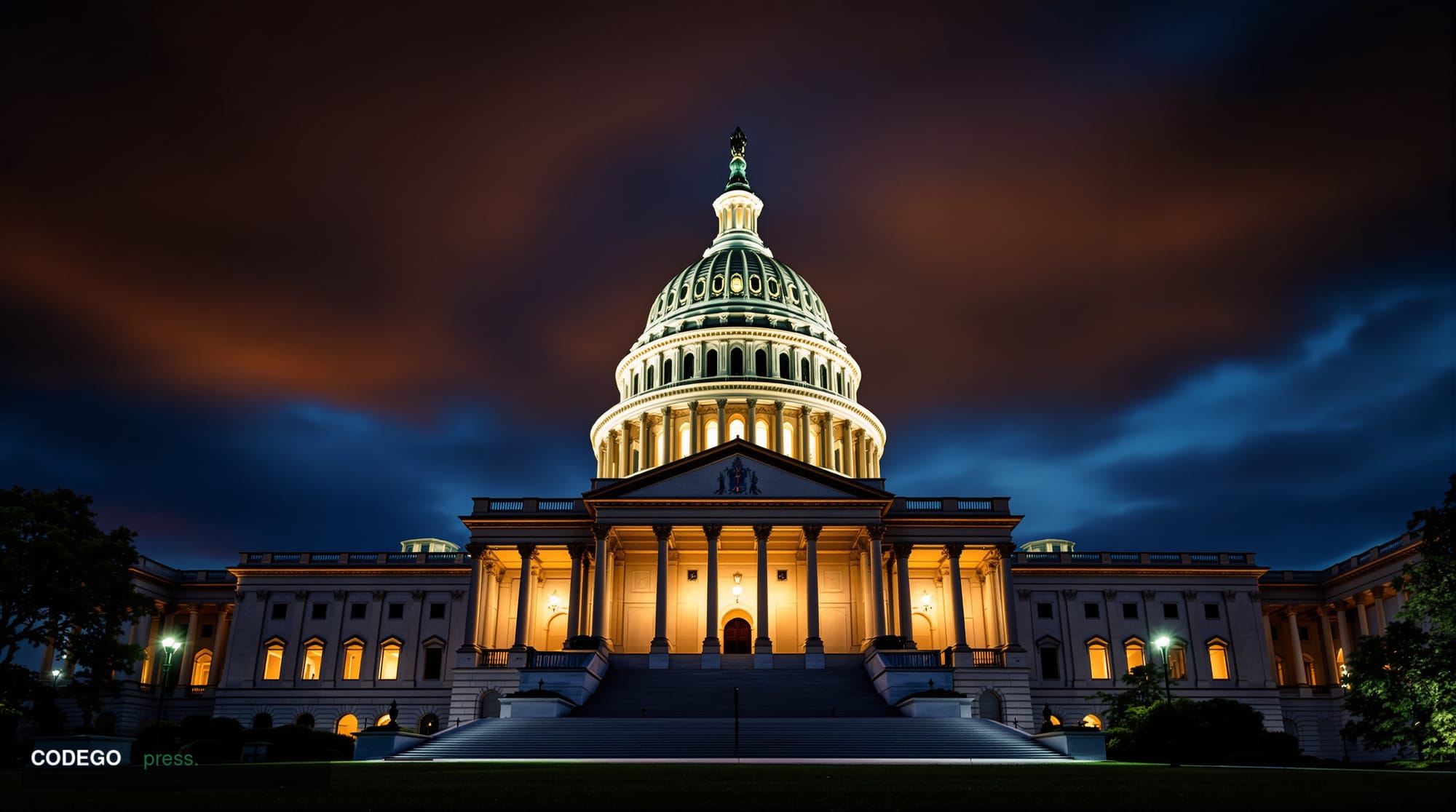
The window for one of the most consequential pieces of cryptocurrency legislation in recent United States history is closing fast. Following an August recess that has already compressed the Senate's remaining calendar, lawmakers will have just 36 days in session before the end of 2026 to advance the CLARITY Act — a crypto regulatory framework bill — through the upper chamber and onto the President's desk. Whether those 36 days are enough to resolve deep legislative divisions, satisfy competing industry interests, and navigate the gravitational pull of electoral politics may well determine whether digital asset markets in the United States gain their long-awaited regulatory foundation this year or face yet another cycle of uncertainty.
A Bill Under the Clock
The CLARITY Act has been one of the most closely watched pieces of financial legislation in Washington's current session. Designed to establish clearer rules governing the classification and treatment of digital assets, the bill represents a significant attempt by Congress to move beyond years of regulatory ambiguity that has left crypto firms, institutional investors, and consumer advocates simultaneously frustrated. Its supporters have argued that the absence of a coherent federal framework has ceded competitive ground to jurisdictions in Europe and Asia that have moved more decisively on digital asset regulation. Yet despite broad acknowledgment that clarity is needed, translating that consensus into enacted law has proven stubbornly difficult.
The August recess — a standard but politically consequential pause in the Senate's working calendar — has now reduced the available legislative runway to a figure that veteran Congressional watchers describe as genuinely tight. Thirty-six session days is not an abstract number; it represents the full practical horizon within which floor scheduling, committee reconciliation, amendment debates, and procedural votes must all be compressed. For a bill of the CLARITY Act's complexity, that is an extraordinarily compressed timeline, and the arithmetic leaves little margin for the kind of prolonged negotiation that has characterised the bill's journey to this point.
The Electoral Shadow
Compounding the scheduling pressure is the broader political environment. With midterm elections looming on the horizon, the Senate's attention and energy will inevitably fracture as individual members turn toward their own electoral calculations. Legislators facing competitive races are historically reluctant to commit political capital to complex, technically demanding bills — particularly in sectors like cryptocurrency that remain unevenly understood by the general electorate and where the lobbying landscape is intense and often contradictory. This dynamic does not make passage impossible, but it does mean that the CLARITY Act's advocates will need to build and maintain coalitions under conditions that actively work against sustained legislative focus.
The intersection of electoral politics and crypto regulation is not new. Successive congressional sessions have seen digital asset bills stall at precisely the moment when political self-interest diverges from legislative productivity. What makes the current moment distinct is the degree to which the industry itself has matured. Institutional participation in crypto markets has deepened significantly, and major financial players — from traditional banks exploring tokenized asset platforms to payment networks integrating blockchain infrastructure — now have concrete, material interests in the outcome of legislation like the CLARITY Act. The stakes of inaction are no longer primarily theoretical.
What the Senate Must Navigate
For the bill to advance within the remaining session window, Senate leadership will need to prioritise floor time in a chamber where scheduling is itself a form of power. Competing legislative priorities — appropriations, foreign policy measures, and nomination battles — routinely crowd out even well-supported bills in the final stretch of a congressional year. The CLARITY Act's proponents must therefore not only command sufficient votes but also sufficient political leverage to secure a place in what will be an intensely contested legislative queue.
There is also the substantive dimension. Reconciling any differences between the Senate version of the bill and whatever framework the House has developed requires a functional conference process — and conference processes consume time that the calendar no longer generously provides. Any significant divergence between chambers on questions of jurisdictional authority between the Securities and Exchange Commission and the Commodity Futures Trading Commission, or on the treatment of decentralised protocols, could prove fatal to the bill's prospects in this session window.
What This Means
The CLARITY Act's trajectory over the next 36 Senate session days will serve as a definitive test of whether Washington has developed the institutional capacity to legislate meaningfully on digital assets under real deadline pressure. If the bill passes, it would mark a watershed moment for United States crypto regulation — providing the kind of durable legal framework that markets have sought for years. If it stalls again, the industry faces the prospect of carrying its regulatory uncertainty into another election cycle, with all the market volatility and capital allocation caution that implies. For institutions, investors, and the broader fintech ecosystem watching closely, the Senate's post-recess conduct will speak volumes about the political system's willingness to match its stated ambitions with legislative action.
Written by the editorial team — independent journalism powered by Codego Press.