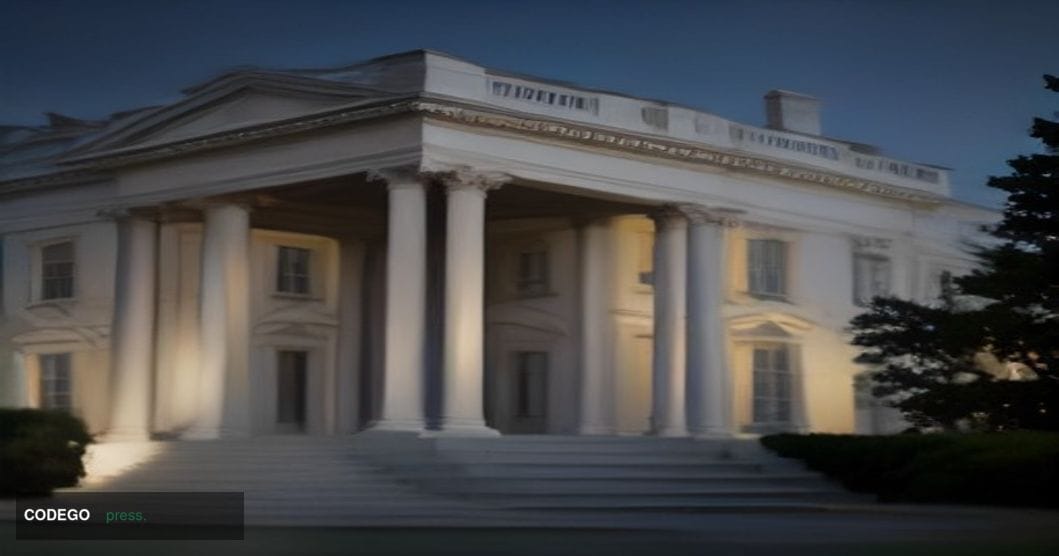
Crypto industry leaders emerged from a high-stakes meeting at the White House with a notably more confident posture on the fate of the Clarity Act — the landmark digital-asset market structure legislation that has spent more than a year trapped in a legislative limbo of the Senate's making. The meeting injected fresh momentum into a bill that many in the industry had quietly begun to fear might expire without becoming law, and it underscores just how consequential Washington's posture toward digital assets has become for the global financial system.
A Bill Long Awaited, Still Not Delivered
The Clarity Act passed the House of Representatives more than a year ago, making it one of the most significant pieces of cryptocurrency legislation ever to clear a chamber of the United States Congress. Its core purpose is to establish a coherent legal framework governing the structure of digital-asset markets — a framework that industry participants, institutional investors, and international regulators have all said is urgently needed. Yet despite its House passage, the bill has been unable to advance through the Senate, stalled by a set of concerns that are as much political as they are policy-driven.
The source of the Senate's hesitation is striking in its bipartisanship: legislators from both parties have raised objections rooted in President Donald Trump and his family's extensive involvement in the cryptocurrency space. That a bill designed to regulate crypto markets is being slowed — at least in part — by concerns about the crypto holdings and dealings of the sitting president represents an unusual and deeply uncomfortable dynamic for an industry eager to shed its reputation for political entanglement. The concerns are not trivial. Bipartisan unease signals that the resistance cuts across ideological lines and cannot be dismissed as mere partisan obstruction, making the legislative arithmetic significantly more complex for the bill's supporters.
The White House Meeting and Its Aftermath
Against that fraught backdrop, the gathering of crypto executives at the White House marks a notable development. The precise details of the discussions remain limited in public disclosure, but the outcome — as measured by the mood of those who attended — was one of cautious but genuine optimism. Industry leaders who entered those meetings carrying the weight of a year-long Senate impasse left with a renewed sense that the path forward for the Clarity Act may be less obstructed than it has appeared in recent months.
This shift in tone matters for several reasons. The crypto industry has historically struggled to present a unified, credible voice in Washington, fragmented as it is across competing platforms, protocols, and commercial interests. When executives from across that landscape converge on the White House and depart with a shared sense of forward momentum, it signals a level of coordinated political engagement that the industry has not always been able to sustain. It also suggests that conversations at the executive level may be actively working to address the Senate's concerns — or at least to soften the political resistance that has kept the bill from a floor vote.
The Trump Complication
The elephant in the room for the Clarity Act's Senate journey remains the Trump family's crypto involvement. The fact that this concern is bipartisan — rather than confined to opposition-party criticism — means it carries genuine legislative weight. Senators who might otherwise be inclined to support crypto-friendly market structure legislation have found themselves reluctant to advance a bill that could, in the eyes of their constituents, appear to benefit a president with documented personal and financial stakes in the very market being regulated.
This conflict-of-interest question is not merely optics. It touches on fundamental questions about regulatory integrity and the credibility of any framework the Clarity Act establishes. If the law's passage is associated — rightly or wrongly — with executive-branch interests that overlap with the regulated industry, the legitimacy of the resulting regulatory architecture could be undermined before it is ever applied. Addressing this perception will be as important to the bill's Senate prospects as any specific amendment to its text.
What This Means for Digital Asset Markets
For the broader financial ecosystem, the stakes attached to the Clarity Act's passage are substantial. Institutional participants — from asset managers exploring tokenized fund structures to global banks building digital-asset custody operations — have cited the absence of clear United States market structure rules as a primary reason for strategic hesitation. Exchanges, broker-dealers, and decentralized-finance protocols operating in the American market remain in a state of prolonged regulatory uncertainty, unable to plan with the confidence that legislative clarity would provide.
The renewed optimism flowing from the White House meeting does not guarantee the Clarity Act will reach the Senate floor, let alone the president's desk. Bipartisan concern of the kind currently surrounding the bill is not easily dissolved by a single meeting, however well it may have gone. But in a legislative environment that has produced little concrete progress on crypto regulation despite years of debate, a demonstrated willingness on the part of the executive branch to actively engage with the bill's advocates represents a meaningful data point. The industry, and the investors watching it, will be monitoring the Senate's next moves with greater attention than at any point since the House vote more than a year ago.
Written by the editorial team — independent journalism powered by Codego Press.