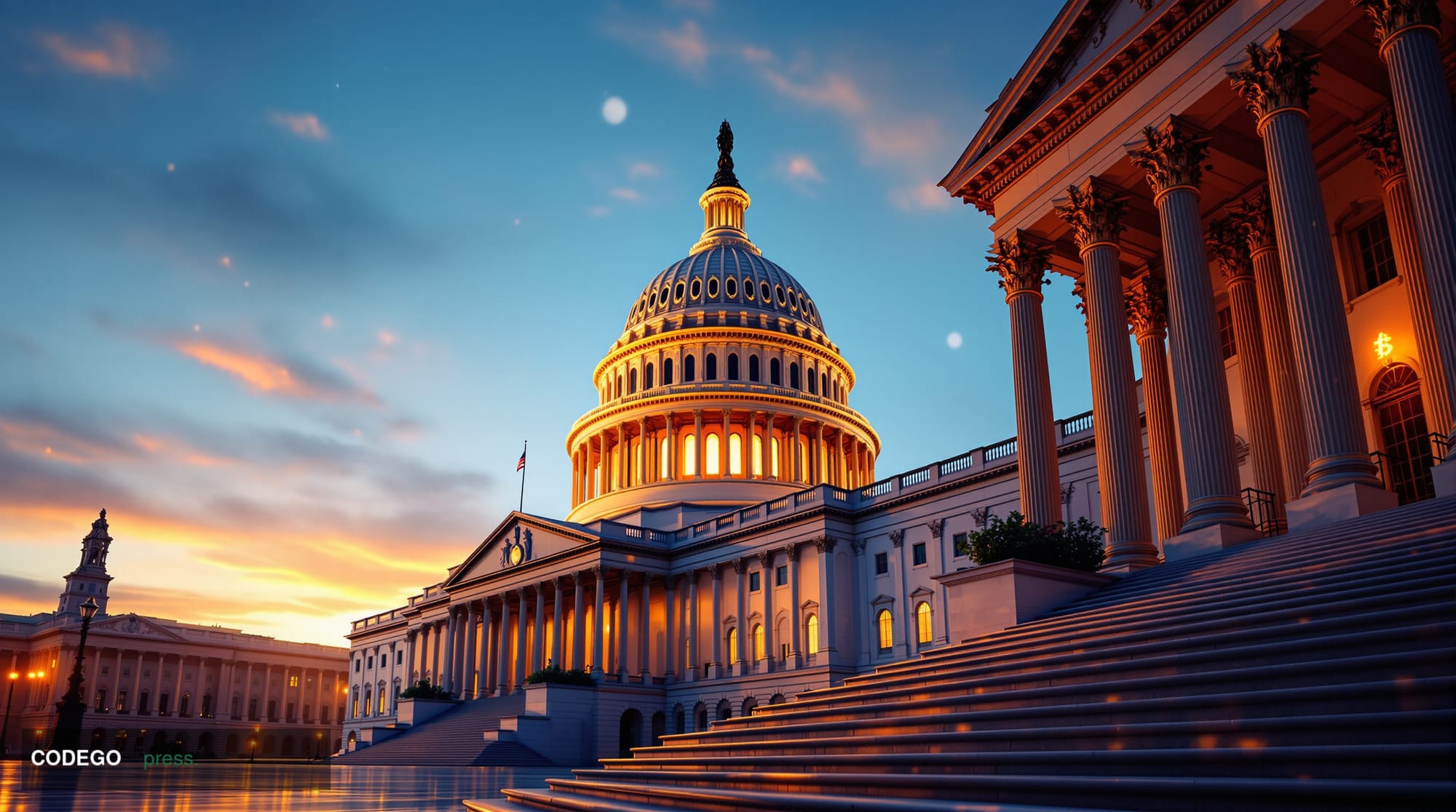
The cryptocurrency industry witnessed a watershed moment as the Digital Asset Clarity Act advanced through the Senate Banking Committee, triggering a substantial 10% surge across crypto markets and marking what many consider the most significant regulatory development in the sector's history.
The legislative breakthrough represents years of advocacy efforts finally bearing fruit, as the bill successfully navigated the crucial committee stage after previously clearing the House of Representatives. This dual-chamber momentum signals unprecedented bipartisan support for comprehensive digital asset regulation, a stark contrast to the regulatory uncertainty that has plagued the industry for over a decade.
The market's immediate response underscores the pent-up demand for regulatory clarity that has constrained institutional adoption and investment flows. The 10% rally across cryptocurrency markets demonstrates investor confidence that formal regulatory frameworks will legitimize digital assets as a recognized asset class, potentially opening floodgates for institutional capital that has remained sidelined due to compliance concerns.
Institutional Validation Through Legislative Process
The Senate Banking Committee's approval carries particular weight given the panel's jurisdiction over financial services regulation and its historically cautious approach to emerging technologies. Committee members have spent months scrutinizing the bill's provisions, consulting with industry stakeholders, traditional financial institutions, and regulatory agencies to craft legislation that balances innovation with consumer protection.
This methodical approach contrasts sharply with the ad hoc regulatory responses that have characterized government interactions with cryptocurrency markets. The CLARITY Act represents a fundamental shift toward proactive regulation rather than reactive enforcement, providing the legal foundation necessary for sustainable industry growth.
Market Infrastructure Implications
The legislation's progression through both chambers of Congress signals imminent establishment of clear operational parameters for cryptocurrency exchanges, custody providers, and institutional service providers. This regulatory certainty addresses longstanding concerns from traditional financial institutions about compliance risks associated with digital asset exposure.
Major cryptocurrency exchanges and service providers have already begun positioning themselves for the enhanced regulatory environment, with many implementing compliance frameworks that exceed current requirements in anticipation of formal regulatory standards. The market surge reflects confidence that established players will benefit from regulatory moats that favor compliant operators over less sophisticated competitors.
Broader Financial System Integration
The CLARITY Act's advancement represents more than cryptocurrency regulation—it signals the formal integration of digital assets into the traditional financial system. Banks, insurance companies, and asset managers have been awaiting clear regulatory guidelines before committing significant resources to cryptocurrency-related services and products.
The legislation establishes frameworks for institutional custody, trading, and investment management services that align with existing financial regulations while accommodating the unique characteristics of digital assets. This harmonization removes artificial barriers between traditional and digital finance, potentially accelerating convergence between these previously separate domains.
Global Regulatory Leadership
The United States' movement toward comprehensive cryptocurrency regulation positions the nation as a potential global standard-setter in digital asset governance. Other jurisdictions have implemented varying approaches to cryptocurrency regulation, but none have achieved the comprehensive framework that the CLARITY Act represents.
This regulatory leadership carries significant economic implications, as clear standards could attract international cryptocurrency businesses and investment flows toward American markets. The legislation's progression demonstrates that democratic institutions can adapt to technological innovation while maintaining appropriate oversight and consumer protections.
What This Means
The CLARITY Act's Senate Banking Committee approval marks a inflection point for cryptocurrency's evolution from speculative asset to regulated financial instrument. The 10% market surge reflects more than short-term trading enthusiasm—it represents validation of the industry's decade-long argument that appropriate regulation would unlock mainstream adoption and institutional investment.
Success at this legislative stage suggests strong probability of eventual passage, given the bill's bipartisan support and prior House approval. The cryptocurrency industry now stands on the threshold of regulatory legitimacy that could fundamentally transform its relationship with traditional finance, potentially catalyzing the next phase of digital asset adoption across institutional and retail markets.
Written by the editorial team — independent journalism powered by Codego Press.