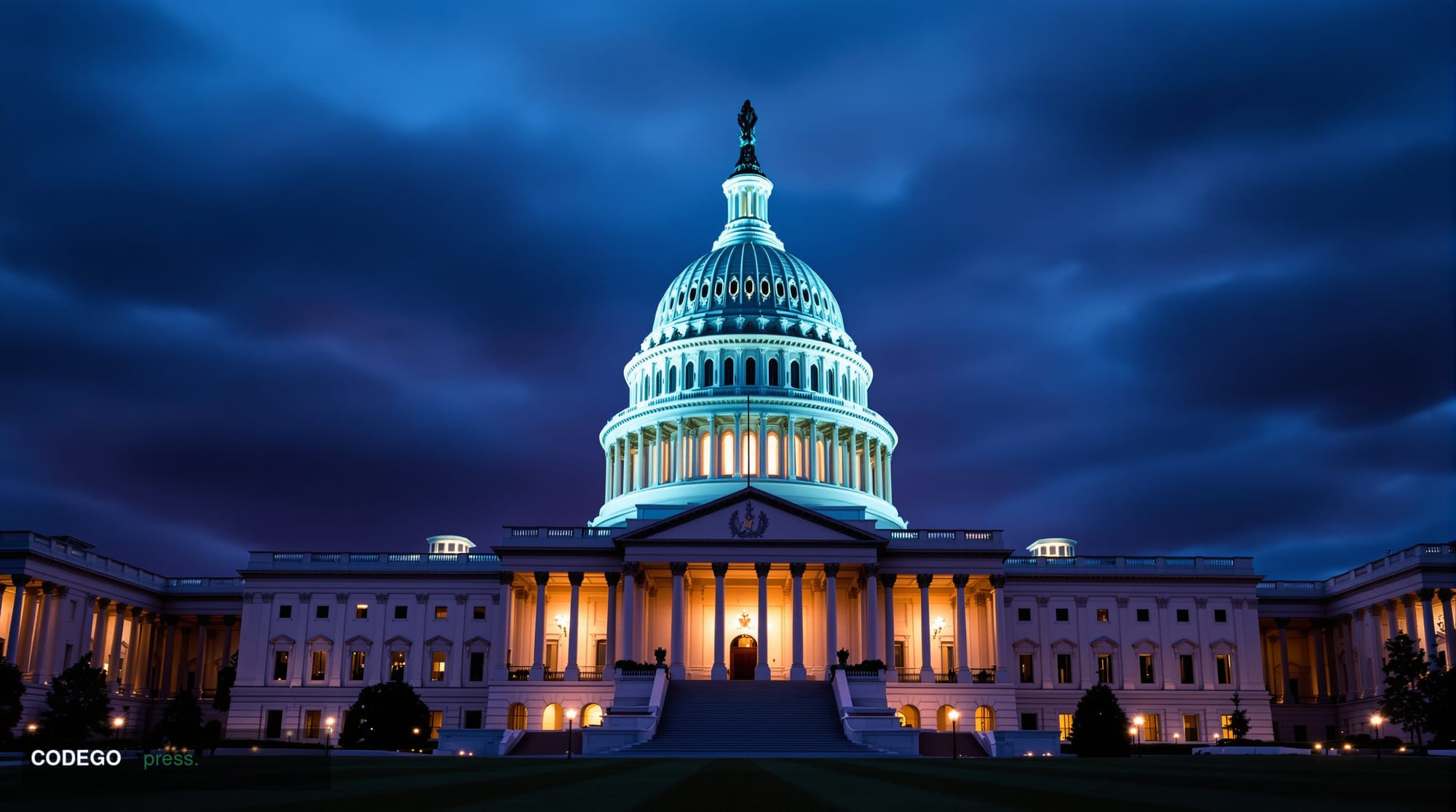
The United States Senate is heading toward a pivotal procedural moment on September 15, when lawmakers are scheduled to hold a cloture vote on the CLARITY Act — the most consequential piece of crypto-market-structure legislation to reach the Senate floor in years. But seasoned observers of congressional process know that a cloture vote and final passage are entirely different animals, and the distance between the two may prove wider than the digital-asset industry had hoped.
Cloture, for those outside the chambers of Capitol Hill, is the Senate mechanism used to end debate and advance a bill toward a floor vote. It requires sixty votes to succeed — a threshold that routinely exposes the fault lines running through an increasingly polarized upper chamber. The September 15 date, therefore, is not a finish line. It is closer to the starting gun for what may become a protracted procedural battle, one whose outcome will shape whether the United States finally establishes a coherent federal framework for cryptocurrency markets or continues to govern them through regulatory ambiguity and enforcement action.
The obstacles are not merely numerical. Unresolved amendments represent a substantive challenge layered beneath the vote-counting arithmetic. When senators hold competing visions for how digital assets should be classified, who should regulate them, and what consumer protections must attach to crypto transactions, those disagreements do not disappear simply because a floor date has been calendared. They resurface as amendment fights — each proposed modification threatening to peel away a vote from one coalition while attracting support from another. Managing that dynamic requires floor leadership of exceptional discipline, and there is no guarantee that leadership will materialize in time.
Senate divisions on the CLARITY Act reflect a broader ideological fracture that has complicated crypto legislation for years. On one side sit lawmakers sympathetic to the industry's argument that heavy-handed regulation will drive innovation offshore, ceding technological leadership to jurisdictions with lighter regulatory touch. On the other side stand legislators who view the relatively unregulated state of digital-asset markets as a persistent threat to retail investors and financial stability — a view reinforced by the high-profile collapses and fraud cases that have punctuated the sector's recent history. Finding language that satisfies both camps is a legislative puzzle that has defeated previous attempts at comprehensive crypto legislation, and the CLARITY Act inherits that difficult legacy.
The stakes extend well beyond Washington. Institutional participants — from custody banks and broker-dealers to asset managers building tokenized-product pipelines — have spent considerable capital lobbying for regulatory clarity precisely because ambiguity raises compliance costs and limits product development. Every month of legislative stasis is a month in which firms must navigate conflicting guidance from the Securities and Exchange Commission, the Commodity Futures Trading Commission, and a patchwork of state-level regulators. The CLARITY Act, whatever its final form, represents the most credible opportunity in the current congressional cycle to resolve that jurisdictional overlap.
International competitive pressure adds urgency to the timeline. The European Securities and Markets Authority has been implementing the Markets in Crypto-Assets regulation — commonly known as MiCA — providing European operators with a unified rulebook that American firms operating across the Atlantic must already accommodate. The United Kingdom, Singapore, and the United Arab Emirates have each advanced their own frameworks at varying speeds. A failed or indefinitely delayed CLARITY Act vote would deepen the regulatory asymmetry, giving non-U.S. venues a structural advantage in attracting crypto-native businesses and liquidity.
It would be premature, however, to write the legislation off on the basis of a single procedural hurdle. Senate leaders do not schedule cloture votes they are certain to lose — the political cost of a public failure is high enough that floor managers typically wait until they believe they are within striking distance of sixty votes before pulling the trigger. The September 15 date suggests some confidence that the coalition is at least close, even if it is not yet fully assembled. Whether the remaining holdouts can be brought along through amendment negotiations or direct lobbying in the weeks ahead will determine whether this vote marks the beginning of the end of legislative ambiguity — or simply the end of another failed attempt.
What This Means for the Crypto Industry
For market participants, the September 15 cloture vote is an inflection point that warrants close attention regardless of outcome. A successful cloture vote would unlock genuine momentum toward final passage and signal to global markets that the United States is serious about establishing a durable regulatory foundation for digital assets. A failed vote, by contrast, would likely push comprehensive crypto legislation past the current congressional session, resetting the clock and reopening every foundational question about jurisdiction, classification, and oversight. The industry's best posture, in either scenario, is engagement — monitoring amendment negotiations with the same rigor applied to on-chain data, and preparing compliance infrastructure for the range of outcomes still plausibly on the table.
Written by the editorial team — independent journalism powered by Codego Press.