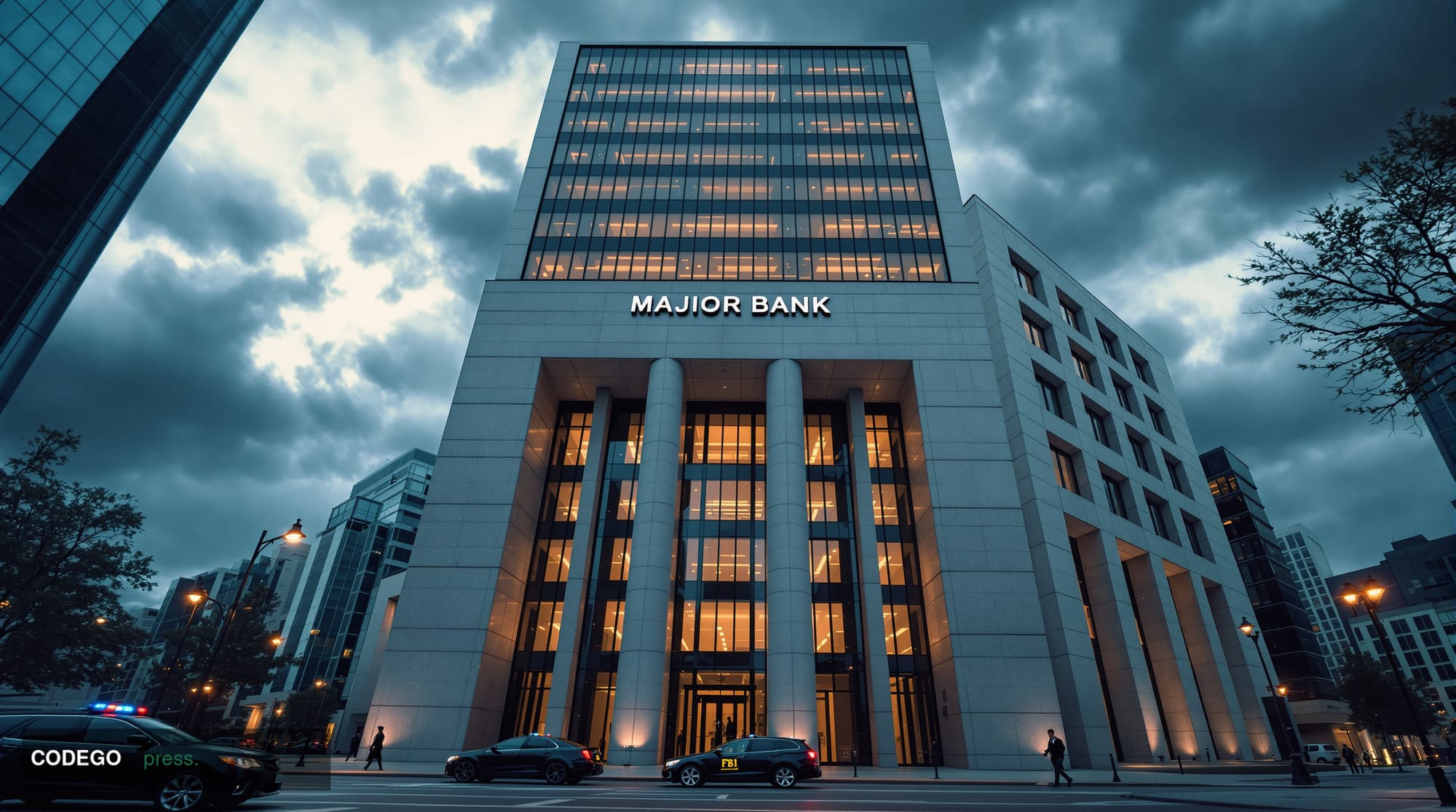
The United States regulatory landscape for digital assets shifted meaningfully this week as Coinbase's trust company subsidiary received its final regulatory clearance — a milestone that marks one of the most significant institutional legitimizations of a major crypto firm to date. Yet the approval arrived against a backdrop of intensifying Congressional scrutiny, with Senate lawmakers simultaneously demanding compliance records and probing what they characterize as potential conflicts of interest across the broader crypto industry. The juxtaposition encapsulates precisely where the American crypto regulatory debate stands: cautious forward motion on one front, aggressive legislative oversight on another.
The granting of a trust charter to Coinbase's dedicated trust company entity represents more than a bureaucratic formality. Trust charters sit at the intersection of state banking law and federal financial oversight, conferring on their holders a level of institutional credibility that has historically been reserved for traditional custodial banks and fiduciaries. For Coinbase, final clearance means its trust arm can now operate with the kind of legal standing that institutional investors — pension funds, endowments, sovereign wealth vehicles — typically require before they will permit a custodian to hold assets on their behalf. In practical terms, this approval opens doors to pools of capital that have remained cautious about engaging with crypto custody infrastructure lacking that formal imprimatur.
US regulators advancing on crypto trust charters more broadly signals that the framework being constructed, however gradually, is one oriented toward integration rather than exclusion. The willingness of regulatory bodies to process and finalize these charters suggests an institutional posture that recognizes digital asset custody as a legitimate and enduring financial function — one that requires a proper supervisory home rather than perpetual regulatory ambiguity. This is a materially different posture from the enforcement-first approach that dominated much of the previous regulatory cycle, and market participants have noted the shift.
However, the Senate's parallel mobilization introduces a countervailing dynamic that industry observers would be unwise to dismiss. Lawmakers seeking records on crypto firms' compliance histories are exercising a form of oversight that sits above and independent of the chartering process itself. Congressional investigations carry subpoena power, the capacity to generate damaging public narratives, and — crucially — the ability to shape future legislation that could either reinforce or hollow out whatever regulatory framework the chartering process is building. The specific focus on potential conflicts of interest adds another layer of complexity: it suggests that legislators are examining not merely whether crypto firms have followed existing rules, but whether the structural relationships within the industry create incentives incompatible with fiduciary responsibilities.
The conflict-of-interest angle deserves particular attention in the context of Coinbase specifically. As both a retail and institutional exchange and now a formally cleared trust entity, Coinbase occupies multiple roles within the same ecosystem — a configuration that invites legitimate questions about information barriers, proprietary trading adjacency, and custodial independence. These are not novel concerns; traditional finance spent decades developing rules around precisely these tensions. The Senate's interest in examining how crypto firms navigate analogous pressures reflects a maturing legislative understanding of the sector's structural complexities, even if the investigation's ultimate conclusions remain to be seen.
What is unfolding, in effect, is a two-track process whose tracks do not necessarily run parallel. Regulatory agencies are building a permissioning architecture — trust charters, custody frameworks, compliance expectations — while the legislature simultaneously audits whether the industry entities seeking those permissions are themselves operating with the integrity that institutional status demands. The outcome of that audit could either accelerate the chartering process, by establishing clear standards that firms demonstrably meet, or complicate it substantially, by surfacing conduct that calls the entire framework's assumptions into question.
For the broader digital asset industry, the Coinbase trust clearance is unambiguously a positive data point — evidence that the regulatory machinery can deliver approvals of genuine commercial consequence. But the Senate's concurrent records requests are a reminder that in Washington, approval and investigation are not mutually exclusive. Firms that have operated under the assumption that a charter signals the end of regulatory risk rather than a new phase of institutional accountability may find the coming months instructive. The price of legitimacy, it turns out, is scrutiny — and the American legislative branch appears fully prepared to collect it.
What This Means for the Industry
The simultaneous advance of crypto trust charters and Senate oversight defines the current moment in US digital asset regulation: incremental institutional recognition paired with heightened political accountability. For firms pursuing trust status, the Coinbase precedent confirms that the pathway exists and is navigable — but the Senate's records demands confirm equally that navigating it successfully requires airtight compliance infrastructure and clean conflict-of-interest disclosures. Institutions considering crypto custody arrangements will watch both tracks closely. The next phase of this debate will likely determine whether the United States builds a durable, globally competitive digital asset regulatory framework, or one perpetually destabilized by the tension between its own regulatory and legislative branches.
Written by the editorial team — independent journalism powered by Codego Press.