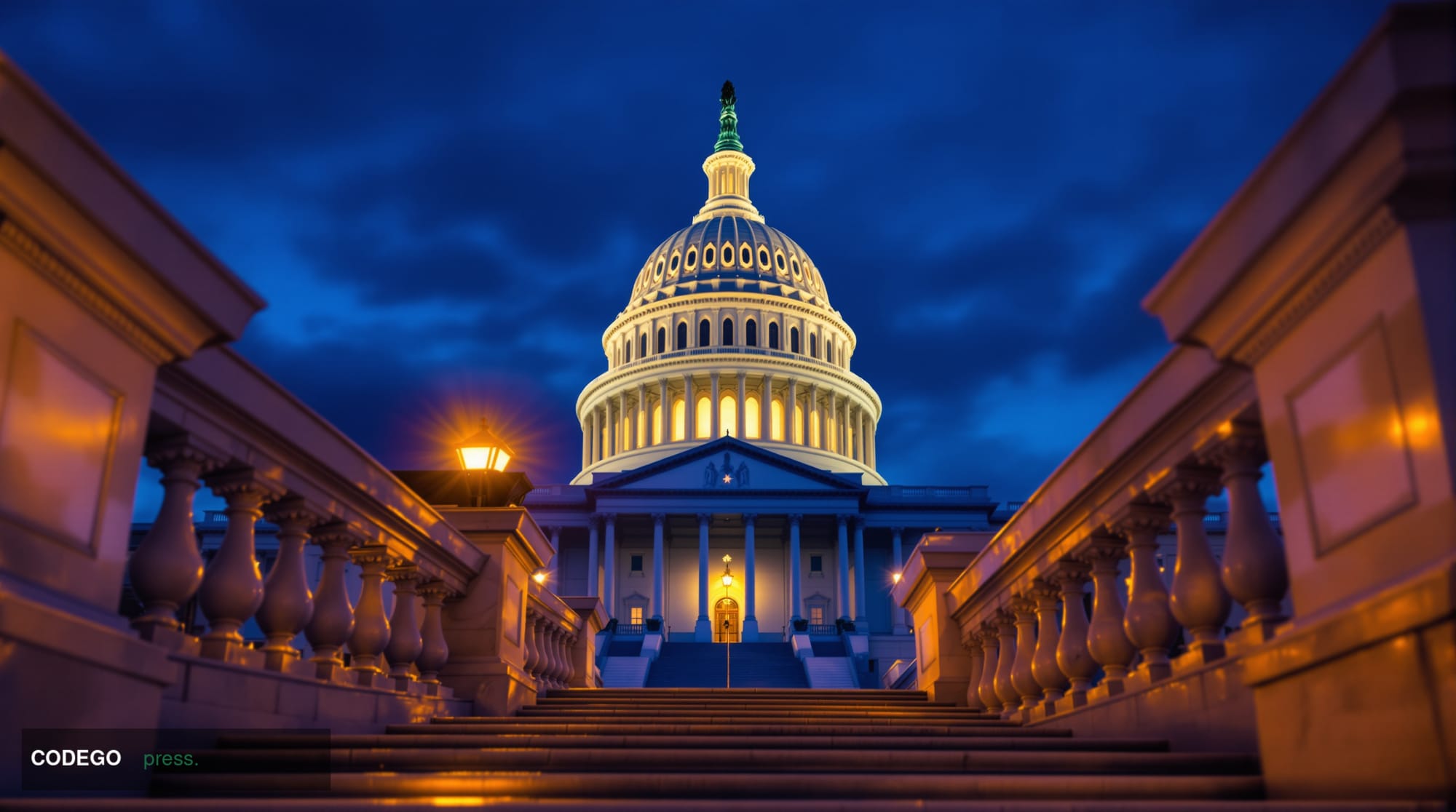
A legislative proposal advancing through the United States Congress could fundamentally reorder the relationship between the traditional banking system and the digital asset economy. The measure under consideration would explicitly permit federally regulated banks to hold cryptocurrency on behalf of clients and to issue stablecoins — a combination of powers that, if enacted, would represent the most consequential shift in American financial law since the emergence of Bitcoin as an institutional asset class.
The stakes are substantial. For years, the question of whether chartered deposit-taking institutions could provide direct custody of digital assets — or mint their own dollar-pegged tokens — has remained legally ambiguous, navigated through a patchwork of guidance letters, no-action positions, and state-level licensing regimes. A clear congressional mandate would dissolve that ambiguity overnight, granting banks the legal certainty they have repeatedly cited as the primary obstacle to deeper engagement with crypto markets.
The implications for institutional adoption are difficult to overstate. JPMorgan, Bank of America, and their global peers have maintained cautious, arms-length postures toward direct crypto custody, constrained by regulatory uncertainty rather than any stated philosophical opposition. Should Congress authorize such activity through statute, the competitive pressure on large banks to offer digital asset services would become acute almost immediately. Institutions that hesitate risk ceding ground to the neobank challengers and crypto-native custodians — such as Coinbase — that have spent years building precisely the infrastructure that traditional lenders would now be scrambling to replicate or acquire.
The stablecoin dimension of the proposal carries its own distinct weight. Bank-issued stablecoins would differ materially from the privately issued tokens currently dominating the market. Instruments minted by entities subject to federal prudential oversight, capital requirements, and deposit insurance frameworks would arrive in the market with an implicit credibility that issuers such as Circle — operator of USD Coin — have worked hard to approximate through reserve transparency and third-party attestation. A bank-issued stablecoin would carry the balance sheet of a federally chartered institution behind it, an entirely different proposition for corporate treasury departments and institutional payment processors evaluating settlement risk.
The broader market stabilization argument embedded in this proposal deserves analytical scrutiny. Proponents contend that bank participation in crypto custody and stablecoin issuance would deepen liquidity pools, reduce the outsized volatility that has historically plagued digital asset prices, and attract a category of institutional capital — pension funds, sovereign wealth vehicles, insurance company general accounts — that remains prohibited by mandate or board policy from engaging with markets perceived as structurally immature. There is reasonable evidence for this thesis. The introduction of spot Securities and Exchange Commission-approved Bitcoin exchange-traded funds in the United States demonstrated that clearer regulatory pathways do draw in measurable institutional flows with tangible effects on price behavior and volatility profiles.
Bitcoin's valuation trajectory would almost certainly feel the weight of this legislation, should it advance to enactment. The cryptocurrency has long traded as a proxy for the degree of institutional legitimacy accorded to the broader digital asset sector. Congressional authorization for bank-level custody would constitute the most direct form of institutional endorsement the asset class has yet received from the American legislative branch — a signal that markets are unlikely to price in slowly. The Bank for International Settlements and the European Banking Authority have both been monitoring United States regulatory posture closely, recognizing that American legislative frameworks tend to set the terms of debate in jurisdictions still deliberating their own crypto banking rules under frameworks such as Markets in Crypto-Assets regulation.
Opposition to the measure will not be absent. Consumer protection advocates and some monetary policy economists have raised concerns about the systemic risks of embedding volatile digital assets within the balance sheets of deposit-insured institutions. The speed with which crypto market dislocations can materialize — as demonstrated during the 2022 collapse of several centralized lending platforms — gives those concerns empirical grounding. Regulators at the Federal Reserve will likely scrutinize capital treatment provisions with considerable care before any final framework takes operational effect.
What This Means for the Industry
If Congress passes legislation authorizing banks to hold crypto and issue stablecoins, the digital asset industry will enter a structurally different era — one defined not by the tension between traditional finance and crypto-native ecosystems, but by their interpenetration. Institutional adoption would accelerate on a timeline measured in quarters rather than years, digital asset market structures would deepen materially, and Bitcoin's role as a benchmark asset within regulated portfolios would be further entrenched. The proposal is not yet law, and the legislative path through both chambers carries genuine uncertainty. But the direction of travel is now clearer than at any prior point in this industry's short history, and every participant in the financial system — banks, custodians, payment processors, and asset managers alike — should be mapping their strategic responses today.
Written by the editorial team — independent journalism powered by Codego Press.