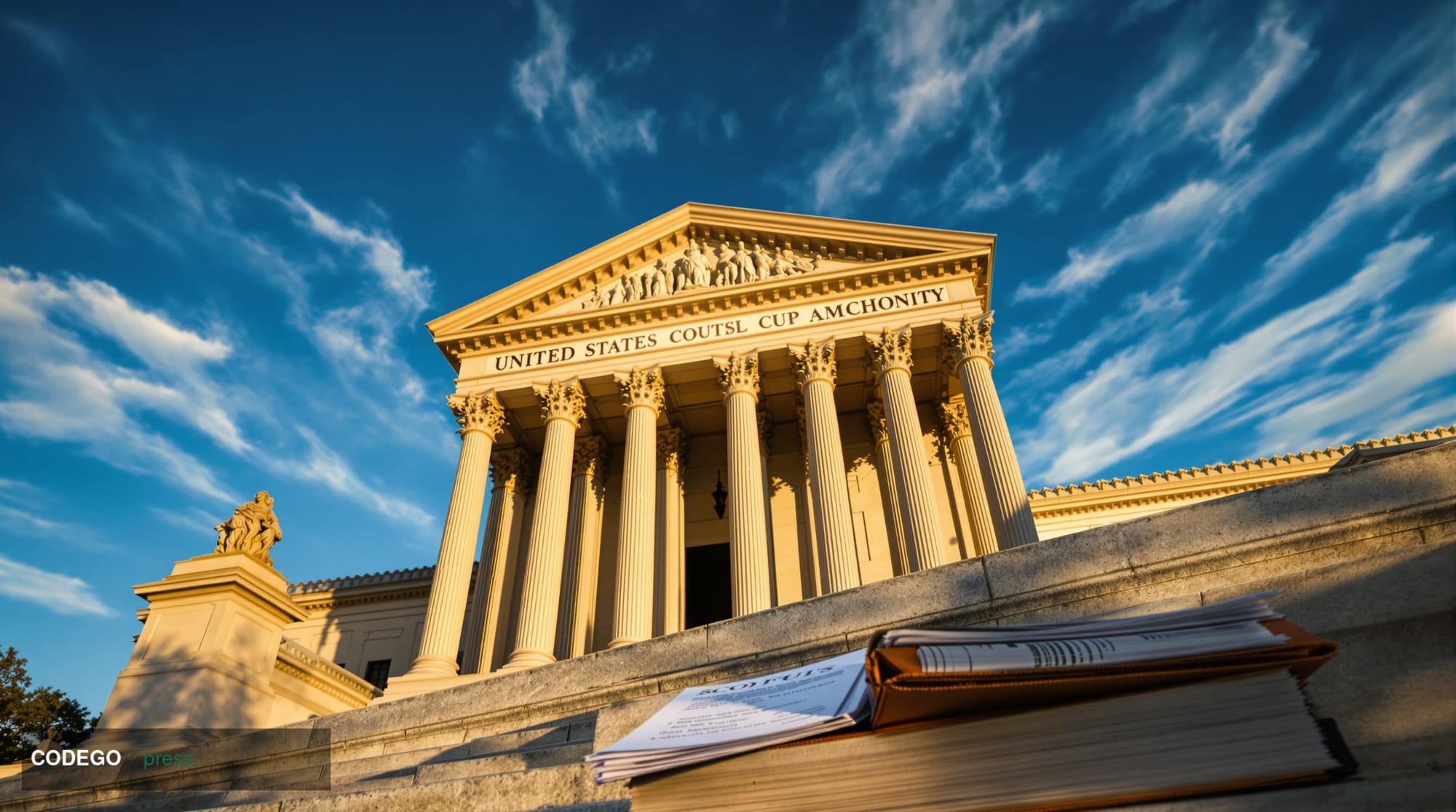
Custodia Bank, the Wyoming-based cryptocurrency-focused financial institution, has escalated its multi-year legal battle against the Federal Reserve to the highest court in the United States, petitioning the Supreme Court for relief after repeated failures in lower courts. The bank's central contention — that the Fed's refusal to grant it a master account amounts to, in the institution's own stark terms, a "death sentence" — now lands before the nine justices who will decide whether the nation's central banking architecture can lawfully exclude a state-chartered institution from direct access to the payments system.
At the heart of this dispute is the Fed master account: a foundational gateway that grants depository institutions direct access to Federal Reserve payment rails, including the ability to hold reserves, settle transactions, and access overnight lending facilities. Without such an account, financial institutions are forced to operate through correspondent banking relationships with larger commercial banks — a structural dependency that imposes costs, counterparty risk, and operational constraints that many fintech and crypto-native institutions find untenable. For Custodia, which was specifically designed and chartered under Wyoming's Special Purpose Depository Institution framework to serve digital asset businesses, correspondent-bank dependency is not merely inconvenient; the company argues it renders the business model unviable.
Custodia has been waging this legal campaign for years, operating under the belief that its Wyoming state charter entitles it to the same access to Federal Reserve services available to other depository institutions. The bank's founders structured the entity precisely to be a bridge between the conventional banking system and the digital asset economy, obtaining a Wyoming charter that prohibits fractional reserve lending and requires 100% reserve backing — a model its advocates describe as inherently conservative and systemically safe. The Fed, however, has remained unmoved, declining the application and defending the denial through the lower court proceedings that followed.
Federal Reserve officials and their legal representatives have maintained throughout the litigation that the central bank retains broad discretionary authority over the granting of master accounts, and that no statute unambiguously compels it to extend access to every chartered depository institution that applies. Lower courts sided with this interpretation, finding that the Fed's gatekeeping role over the payments infrastructure does not constitute a legally actionable denial of rights that Custodia can enforce through the judiciary. Those rulings are now the precise target of Custodia's Supreme Court petition, which asks the justices to reconsider whether the Federal Reserve's discretion is truly as unconstrained as the lower courts concluded.
The stakes of this petition extend well beyond Custodia itself. The case sits at the convergence of several seismic debates in American financial policy: the legal status of state-chartered crypto banks, the Federal Reserve's authority over payment system access, and the broader question of whether regulators can effectively determine which business models survive by controlling infrastructure access rather than applying explicit statutory prohibitions. If the Supreme Court agrees to hear the case and ultimately rules in Custodia's favor, it could force a fundamental reassessment of how the Fed evaluates master account applications from non-traditional financial institutions — opening the door for a new class of digital-asset-focused banks to operate with direct central bank connectivity.
Conversely, a rejection of the petition, or an adverse ruling on the merits, would entrench the Fed's position as the effective arbiter of which financial innovators gain meaningful market access. Critics of the Fed's conduct in this and related cases argue that using infrastructure access as a de facto regulatory veto — without the procedural transparency of formal licensing denial — represents a troubling exercise of administrative power that bypasses the accountability frameworks Congress intended. The "death sentence" language Custodia has chosen is deliberately charged: it frames the master account denial not as routine regulatory caution but as an institutional execution carried out without trial.
The timing of this petition is also notable. The broader regulatory environment surrounding digital assets in the United States has shifted considerably in recent years, with Congress and financial regulators revisiting the legal architecture governing crypto firms, stablecoins, and digital asset custody. A Supreme Court that has demonstrated increasing willingness to scrutinize expansive assertions of executive and administrative agency authority may find Custodia's arguments more receptive ground than those arguments found in the lower courts.
What This Means
For the financial services industry, Custodia's Supreme Court petition is a landmark moment that forces clarity on a question that has lingered unresolved since the first wave of crypto-native banks sought conventional banking infrastructure access. The outcome will define the boundaries of Federal Reserve discretion in a manner that affects not only digital asset institutions but any future financial innovator seeking to operate outside the legacy correspondent banking hierarchy. Whether the Supreme Court grants certiorari or declines the petition, the case has already succeeded in placing the question of payment system access and institutional survival squarely on the national legal agenda — a debate that neither the central bank nor Congress can afford to ignore indefinitely.
Written by the editorial team — independent journalism powered by Codego Press.