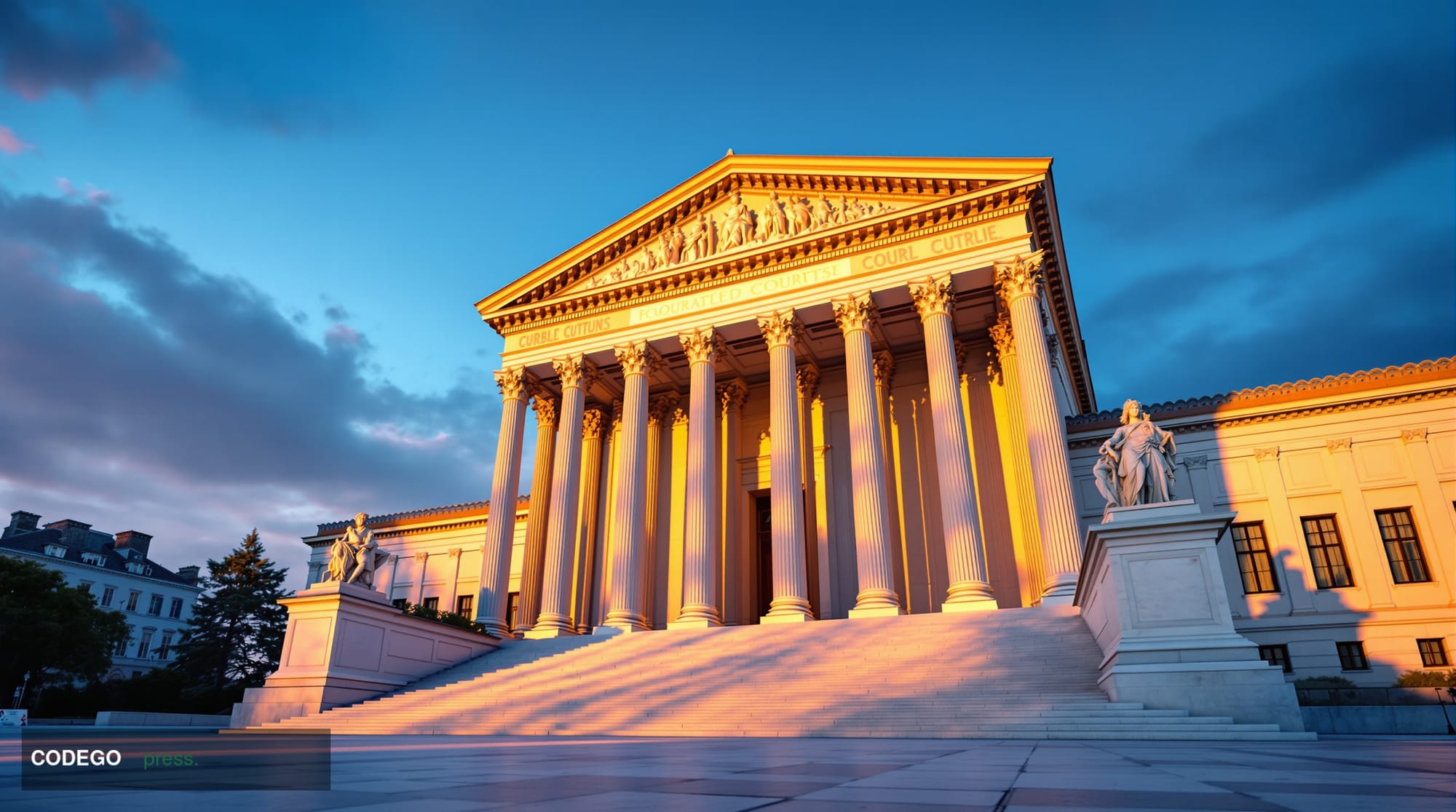
Custodia Bank's years-long effort to secure a Federal Reserve master account has arrived at the nation's highest court, and the digital lender is no longer fighting alone. Senator Cynthia Lummis, Republican of Wyoming; former Senator Pat Toomey, Republican of Pennsylvania; the Digital Chamber; and the Blockchain Association have all filed arguments at the U.S. Supreme Court urging a definitive resolution to what has become one of the most consequential access-to-banking disputes in the short history of the digital asset industry.
The coalition backing Custodia is notable both for its breadth and its political weight. Lummis has long been among the most vocal advocates for cryptocurrency in the Senate chamber, and Toomey's tenure on the Senate Banking Committee made him one of the institution's most credible voices on financial regulatory architecture. That two sitting or former members of Congress would step forward at the Supreme Court level signals that this case is no longer perceived as a narrow administrative dispute between a single fintech firm and a regional Federal Reserve Bank — it has become a referendum on whether digital-asset-focused institutions can access the fundamental plumbing of the American financial system on equal terms with their conventional peers.
At the heart of the matter is the master account, an instrument so foundational that most traditional bankers rarely give it a second thought. A master account held at a Federal Reserve Bank grants an institution direct access to the central bank's payment rails, allowing it to settle transactions, hold reserves, and operate with the kind of institutional legitimacy that customers and counterparties expect. Without one, a financial institution is forced to rely on intermediary correspondent banks — an arrangement that introduces cost, friction, and operational dependency. For Custodia, which has sought to build a regulated, state-chartered institution purpose-built for digital assets, the denial of a master account has represented not merely an inconvenience but an existential constraint on its business model.
The Federal Reserve's resistance to granting Custodia access has been framed, at various stages of the legal proceedings, around questions of supervisory authority, systemic risk, and the Fed's discretion over who may access its infrastructure. Critics of that position — and the amici filing at the Supreme Court are firmly in that camp — argue that the Fed has exercised that discretion in a manner that effectively weaponises access to payment infrastructure as a tool of regulatory policy, shutting out a class of lawfully chartered institutions on the basis of their business focus rather than any demonstrated prudential deficiency.
The involvement of trade organisations further elevates the stakes. The Digital Chamber and the Blockchain Association collectively represent a broad swath of the digital asset industry, from infrastructure providers to asset managers to payments firms. Their decision to file at the Supreme Court level reflects an industry consensus that the Custodia case is not an isolated fact pattern but a structural precedent: whatever the court decides about this digital lender's right to a master account will reverberate across every firm that aspires to hold a state charter and operate within the regulated financial system while touching digital assets.
The timing is not without political resonance. The broader regulatory environment for digital assets in the United States has been in a state of flux, with Congress advancing several competing legislative frameworks and federal agencies reassessing postures that were hardened during a period of intense crypto-sector scrutiny. The willingness of Lummis and Toomey to intervene at the Supreme Court level suggests that at least some of Washington's most knowledgeable financial legislators believe the judiciary may now be the most reliable venue for settling a question that the executive branch has so far declined to resolve with clarity.
What This Means for the Industry
A Supreme Court ruling in favour of Custodia would not simply hand one Wyoming-chartered digital bank its long-sought master account. It would establish a judicial precedent constraining the Fed's ability to deny access to lawfully chartered institutions on grounds that critics characterise as policy-driven rather than prudentially grounded. Conversely, a ruling upholding the Fed's discretion in its broadest form would confirm that the central bank retains virtually unchecked authority over which institutions may participate directly in the U.S. payment system — a sobering outcome for any fintech or digital-asset firm that has built its strategy around the assumption of equitable access to financial infrastructure. Either way, the amicus coalition assembled around Custodia has ensured that the Supreme Court will hear the industry's case in full before it decides.
Written by the editorial team — independent journalism powered by Codego Press.