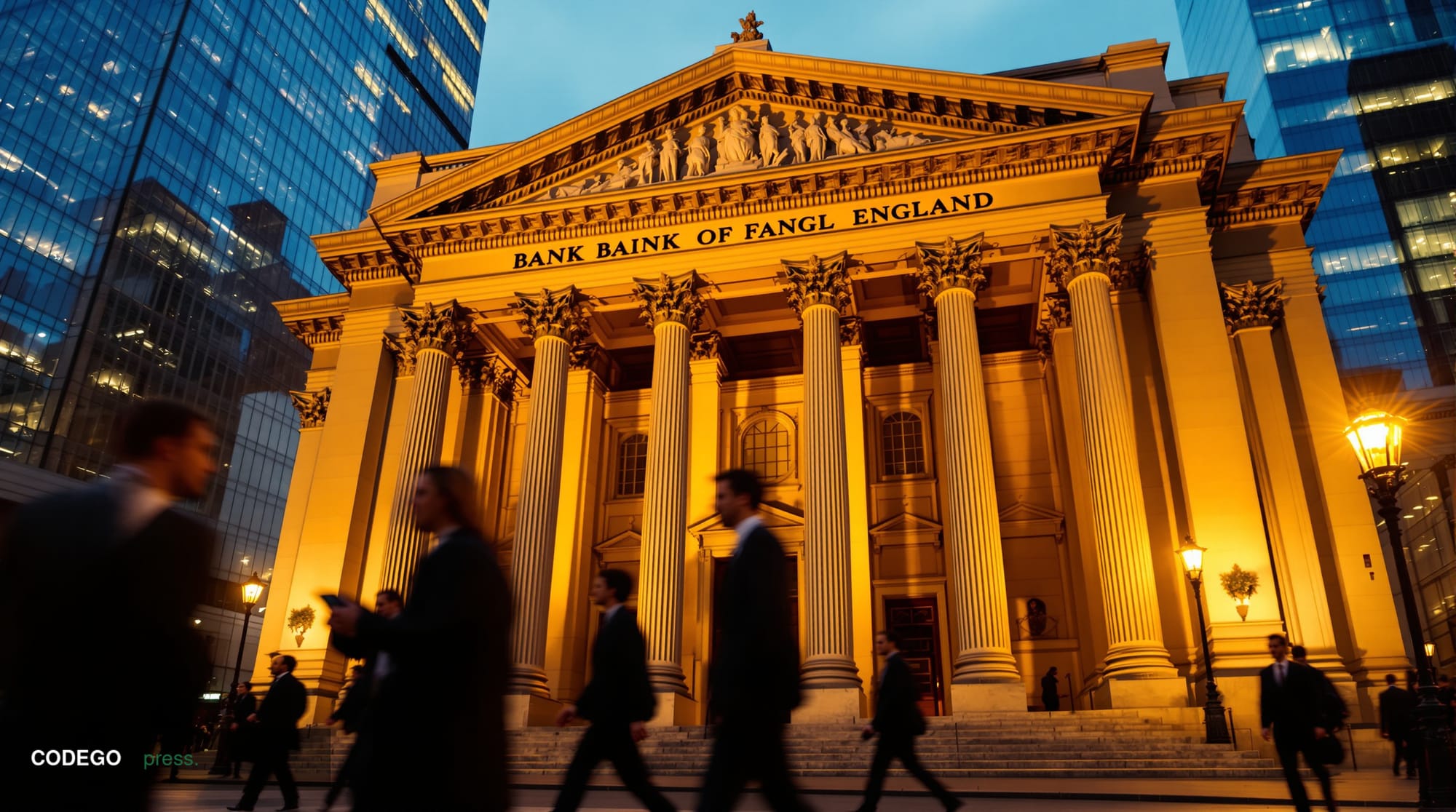
The financial services sector confronts an escalating wave of sophisticated digital threats as deepfake technology targets senior banking officials, while traditional money laundering networks expand across British institutions. A high-profile incident involving Bank of England leadership and political figure Nigel Farage has thrust cybersecurity concerns into the spotlight, coinciding with revelations of extensive criminal financial networks operating across the UK banking system.
The deepfake attack represents a troubling evolution in financial sector cybercrime, demonstrating how artificial intelligence tools can be weaponized to undermine institutional credibility and potentially manipulate markets. Such incidents pose unprecedented challenges for central bank communications and monetary policy transmission, as public trust in official statements becomes increasingly vulnerable to technological manipulation. The targeting of both the Bank of England's leadership and prominent political figures suggests coordinated efforts to destabilize confidence in British financial institutions.
Simultaneously, British banks have uncovered a sprawling money mule network comprising 1,400 individuals, highlighting the persistent threat of traditional financial crime operating alongside emerging digital risks. This discovery represents one of the largest coordinated money laundering operations detected in recent years, involving networks that exploit legitimate banking infrastructure to move illicit funds. The scale of the operation underscores the ongoing challenge financial institutions face in detecting and preventing money laundering activities, despite significant investments in anti-money laundering technology and compliance systems.
The convergence of these threats occurs against a backdrop of mounting pressure on international banks regarding environmental financing practices. Campaign reports indicate that US and Japanese banks continue expanding fossil fuel financing, despite global climate commitments and regulatory pressure to divest from carbon-intensive industries. This development reflects the complex balance financial institutions must strike between commercial interests, shareholder demands, and environmental responsibilities.
Meanwhile, the fintech sector continues its integration into government infrastructure, with Adyen securing the contract to serve as payment provider for GOV.UK Pay. This appointment represents a significant validation of fintech capabilities in handling critical government payment processing, potentially setting precedent for broader public sector digital transformation initiatives. The selection of Adyen demonstrates government confidence in fintech security and scalability, particularly important given the sensitive nature of government payment transactions.
The financial sector also witnesses major consolidation activity, with the world's oldest bank becoming the center of a £26 billion takeover bid. This massive transaction reflects ongoing industry consolidation trends as institutions seek scale advantages in an increasingly competitive and regulated environment. Such large-scale mergers typically face extensive regulatory scrutiny, particularly regarding market concentration and systemic risk implications.
Implications for Financial Stability
These concurrent developments illuminate the multifaceted challenges confronting modern financial institutions. The deepfake incident targeting Bank of England leadership represents a new frontier in financial warfare, where technological manipulation can potentially influence monetary policy credibility and market stability. Central banks must now consider communication security protocols that account for sophisticated impersonation attempts that could trigger market volatility or undermine policy effectiveness.
The discovery of the extensive money mule network demonstrates that despite technological advances in financial crime detection, criminal organizations continue adapting traditional methods to exploit system vulnerabilities. The 1,400-person network suggests highly organized operations with sophisticated recruitment and management structures, indicating that financial crime has evolved beyond individual actors to encompass large-scale criminal enterprises.
The integration of fintech providers like Adyen into critical government payment infrastructure represents both opportunity and risk. While fintech innovation can enhance efficiency and user experience, it also introduces new dependencies and potential failure points in essential government services. The success of such partnerships will likely influence future government technology procurement strategies and regulatory frameworks governing fintech participation in public sector operations.
These developments collectively underscore the financial sector's transformation into a battleground where traditional banking, emerging technology, environmental policy, and cybersecurity intersect. Financial institutions must simultaneously defend against sophisticated digital attacks while maintaining compliance with evolving regulatory requirements and managing increasing scrutiny of their environmental impact. The sector's ability to navigate these challenges will determine its resilience and continued role in supporting economic stability and growth.
Written by the editorial team — independent journalism powered by Codego Press.