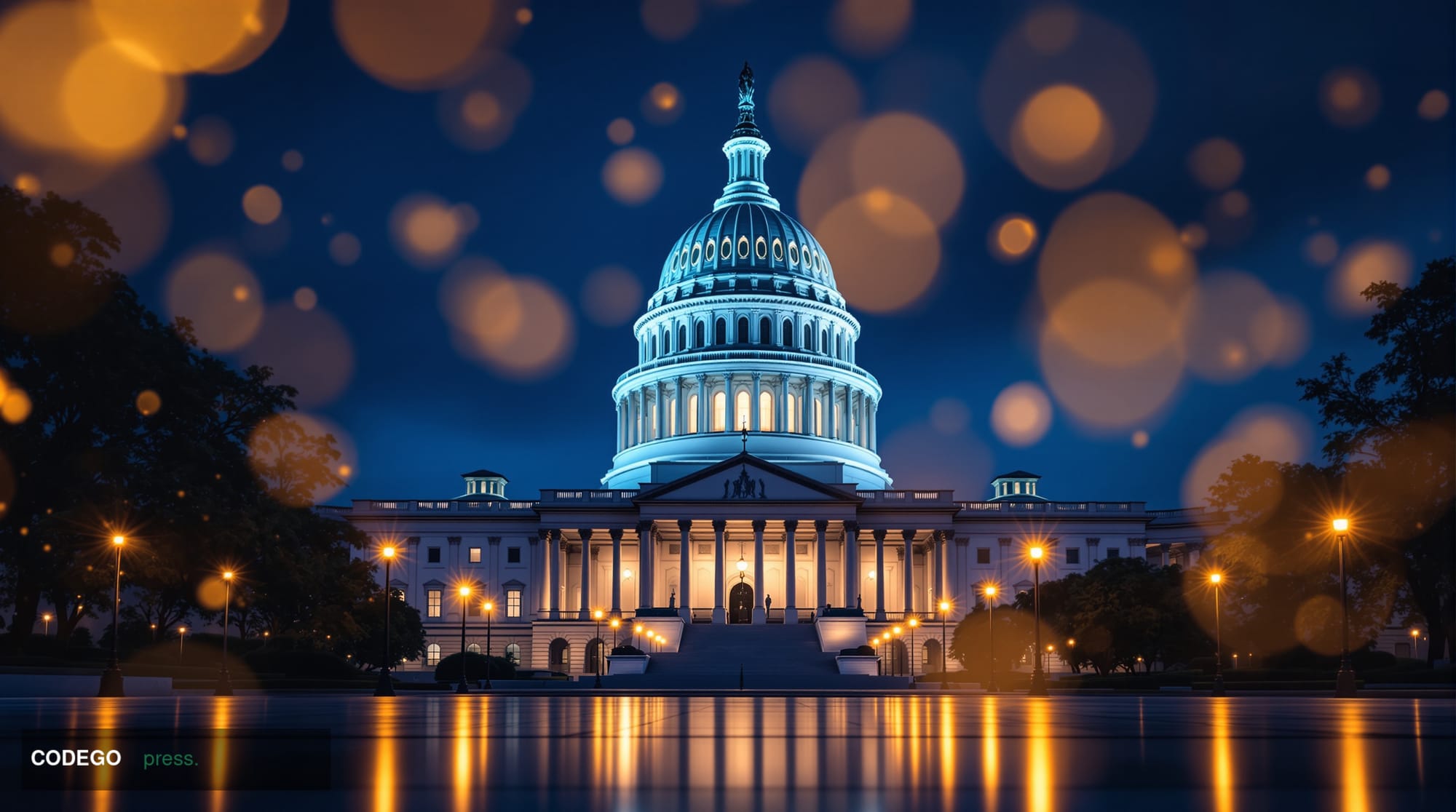
Democrats seized control of the United States House of Representatives in the 2026 midterm elections, completing a congressional turnaround that few in Washington's political establishment had considered certain entering election night. With the House flipping to Democratic control, the party now commands both chambers of Congress — a majority that immediately recalibrates the legislative landscape across a wide range of policy domains, but perhaps nowhere more consequentially than in the contested arena of digital asset regulation.
The 2026 midterms were notable from the outset for the degree to which cryptocurrency had become a genuine electoral force. Crypto-backed candidates contested key congressional races across multiple states, backed by industry funding that in recent election cycles has grown from a niche curiosity into a measurable political variable. The digital asset industry's willingness to deploy significant resources in support of sympathetic candidates — and against those perceived as hostile to the sector — marked a coming-of-age moment for crypto as an organised political constituency. That the Democrats ultimately prevailed despite this mobilisation makes the outcome all the more striking for industry observers.
For the digital asset sector, the question of congressional control is not abstract. The Securities and Exchange Commission, the Commodity Futures Trading Commission, and the broader federal regulatory architecture that governs crypto markets are all subject to congressional oversight and legislative direction. Committee chairmanships, hearing schedules, and the prioritisation of specific bills all shift in material ways when chamber control changes hands. With Democrats now holding the majority in both the Senate and the House, the trajectory of pending crypto legislation — including proposals around stablecoin oversight, exchange registration requirements, and the jurisdictional boundary between securities and commodities classifications — will be subject to a markedly different set of priorities than those advanced under Republican-led chambers.
Historically, Democratic leadership in Congress has tended toward a more assertive regulatory posture on digital assets, emphasising investor protection, anti-money-laundering compliance, and the systemic risks that unregulated crypto markets may pose to broader financial stability. That does not necessarily translate into a hostile Congress for the industry across the board — many Democratic legislators have shown genuine interest in crafting workable frameworks rather than pursuing outright prohibition — but it does suggest that the lighter-touch, innovation-first legislative agenda that crypto advocates had hoped to advance under Republican majorities will face considerably more friction. The composition of key financial services and banking committees will be watched closely in the coming weeks as Democrats make committee assignments.
The role of prediction markets in tracking and anticipating these results also deserves acknowledgment. Platforms operating in the decentralised finance space have increasingly served as real-time barometers of electoral sentiment, drawing scrutiny from regulators even as they demonstrated remarkable accuracy in aggregating distributed forecasting. The 2026 cycle only deepened that dynamic, with on-chain prediction markets drawing substantial trading volumes tied to congressional race outcomes — adding yet another dimension to crypto's entanglement with the political process.
Industry participants will now be forced to recalibrate their legislative strategies with considerable urgency. Lobbying priorities, coalition-building efforts, and the sequencing of regulatory engagement will all need to be reassessed in light of the new congressional reality. For companies that had been counting on a Republican-majority Congress to advance permissive stablecoin legislation or to rein in what the industry characterised as regulatory overreach by federal agencies, the path forward has become meaningfully more complex. Conversely, advocates of robust consumer protection frameworks and mandatory disclosure requirements for digital asset issuers may find a more receptive audience in committee rooms now led by Democratic chairs.
The international dimension also warrants consideration. As the European Parliament's Markets in Crypto-Assets regulation — commonly known as MiCA — continues to reshape European digital asset markets, the absence of a comparable comprehensive federal framework in the United States has created competitive ambiguity. A Democratic-controlled Congress is unlikely to accelerate the passage of a broad crypto market structure bill in the near term, potentially extending that period of regulatory uncertainty for US-based firms weighing jurisdictional decisions. Whether that dynamic ultimately advantages or disadvantages American competitiveness in digital finance remains a matter of active debate among policy economists.
What This Means for Digital Asset Markets
The Democratic sweep of Congress in the 2026 midterms represents a genuine inflection point for crypto regulation in the United States. The industry enters a new legislative chapter in which its political investments in candidate support did not produce the congressional majority it sought, and in which the regulatory agenda will be shaped by legislators whose instincts run toward oversight rather than deregulation. That does not make comprehensive crypto legislation impossible — bipartisan agreement on certain baseline frameworks remains achievable — but it does mean the industry must adapt to a more demanding political environment. How swiftly and strategically the digital asset sector pivots to that reality may well determine whether the next two years yield workable rules of the road or continued regulatory limbo.
Written by the editorial team — independent journalism powered by Codego Press.