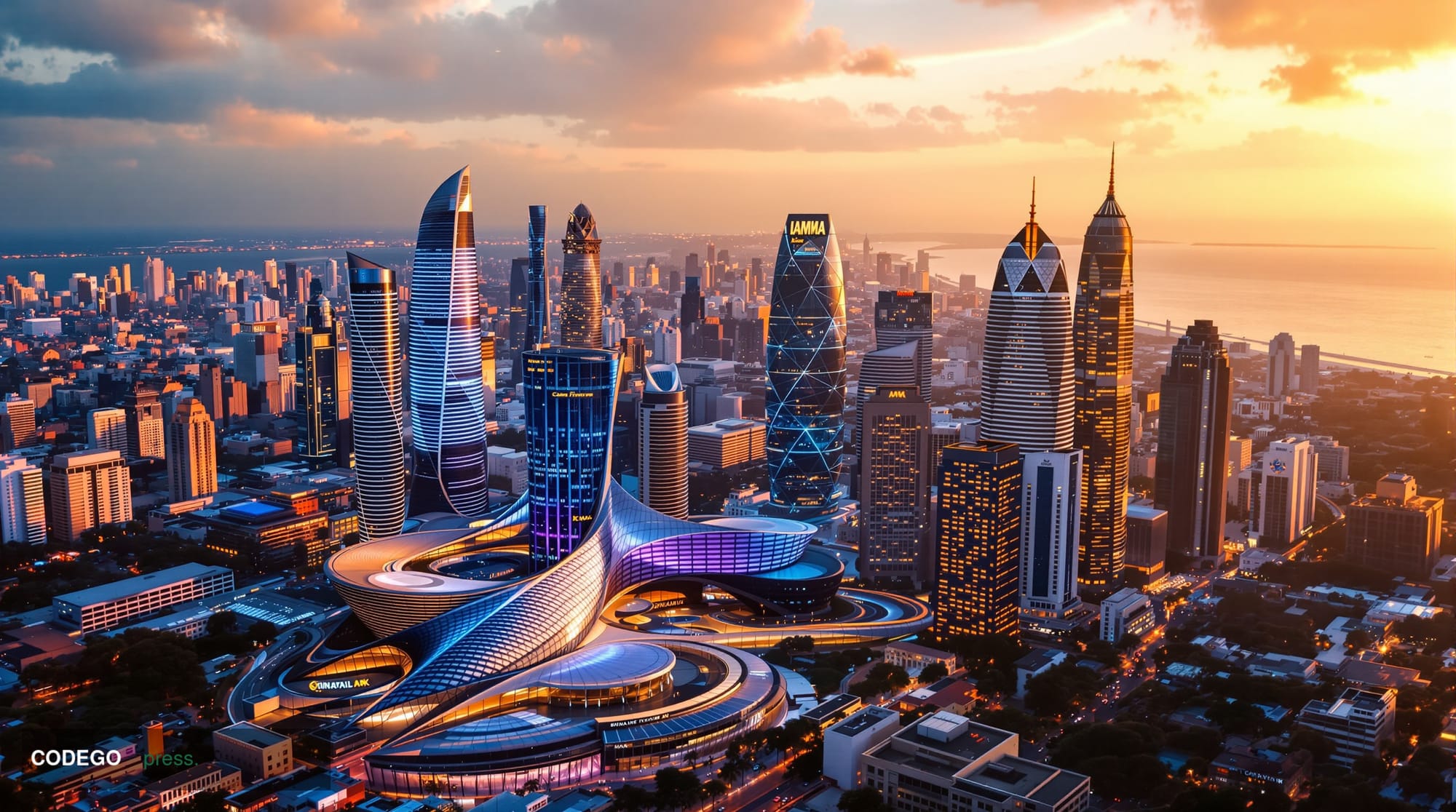
Mumbai will host Devcon 8, the Ethereum Foundation's flagship global developer conference, from November 3 to 6, 2026 — a selection that carries significance well beyond conference logistics. The choice of India's financial capital as the venue for the eighth edition of the most consequential gathering in the Ethereum ecosystem signals a deliberate and meaningful pivot toward the world's most populous nation, one that has been quietly assembling the talent, regulatory appetite, and entrepreneurial infrastructure to become a genuine force in decentralized technology.
For those who have tracked Devcon's trajectory, the venue choices have always functioned as a barometer of where the Ethereum community sees momentum concentrating. Previous editions moved through cities including Berlin, Cancún, Prague, and Osaka before landing in Bogotá in 2022 and Bangkok in 2024 — a pattern that deliberately avoided the obvious Western financial centers in favor of regions where developer communities are young, hungry, and growing at pace. Mumbai fits that logic precisely, and then some.
Why Mumbai, Why Now
India's credentials in the global technology landscape have become impossible to ignore. The country now produces more software engineers annually than any other nation, and its developer community has embraced open-source blockchain tooling with particular intensity. NASSCOM data has consistently shown India ranking among the top three countries globally for blockchain-related developer activity, and the concentration of that activity in financial hubs like Mumbai, Bengaluru, and Hyderabad has created a fertile ground for the kind of protocol-level collaboration Devcon is designed to accelerate.
Mumbai itself adds a dimension that pure technology metrics do not fully capture. As the seat of India's capital markets, its insurance industry, and the headquarters of major private-sector banks, the city sits at the intersection of traditional finance and the emerging digital-asset economy. That proximity matters at a moment when the Ethereum ecosystem's most consequential conversations are no longer confined to layer-2 scaling or consensus mechanism refinements — they increasingly involve tokenization of real-world assets, decentralized finance rails for institutional participants, and programmable settlement infrastructure that speaks directly to the concerns of Mumbai's financial establishment.
A Statement of Geographic Intent
Bringing Devcon 8 to India also arrives against a shifting regulatory backdrop. The Indian government has moved cautiously but perceptibly toward a structured framework for digital assets, with the Financial Intelligence Unit registering offshore exchanges and the Reserve Bank of India running its own central bank digital currency pilots. That regulatory evolution, however incomplete, creates a context in which a gathering of four days — November 3 through 6, 2026 — can serve as far more than a technical summit. It becomes an opportunity for policymakers, builders, and investors to occupy the same rooms and accelerate conversations that would otherwise unfold across months of fragmented engagement.
The Ethereum Foundation's decision also reflects a broader strategic reality for the ecosystem: the next hundred million users of decentralized applications are not in San Francisco or London. They are in South and Southeast Asia, in Sub-Saharan Africa, and in Latin America — markets where mobile-first internet access, remittance dependency, and underbanked populations create genuine product-market fit for blockchain-based financial tools. India alone accounts for the world's largest remittance inflow, receiving over 120 billion dollars annually according to World Bank estimates — a figure that gives Ethereum's payments and cross-border infrastructure narratives immediate real-world resonance on home soil.
What This Means for the Ecosystem
For the Indian blockchain developer community, Devcon 8 in Mumbai represents something more personal than a prestigious international conference arriving at their doorstep. It is an acknowledgment from the global Ethereum Foundation that the work being done in India is not peripheral — it is central to where the protocol goes next. Local developer collectives, university blockchain clubs, and Web3 startups will have four days of unmediated access to core Ethereum researchers, layer-2 teams, and application developers whose codebases they have been contributing to from a distance for years.
For institutional observers — the banks, asset managers, and payments companies headquartered in Mumbai's Bandra Kurla Complex and Nariman Point financial districts — the conference offers a rare window into a technology that is increasingly relevant to their own roadmaps, delivered by the people actually building it. Whether that proximity translates into accelerated adoption, pilot programs, or regulatory advocacy remains to be seen, but the conditions for meaningful dialogue will be present in a way they rarely are when the conference is held halfway around the world.
Devcon has always been as much about community as it is about code. By choosing Mumbai for its eighth edition in November 2026, the Ethereum Foundation has made a statement that the geography of blockchain innovation is expanding — and that India intends to be at its center.
Written by the editorial team — independent journalism powered by Codego Press.