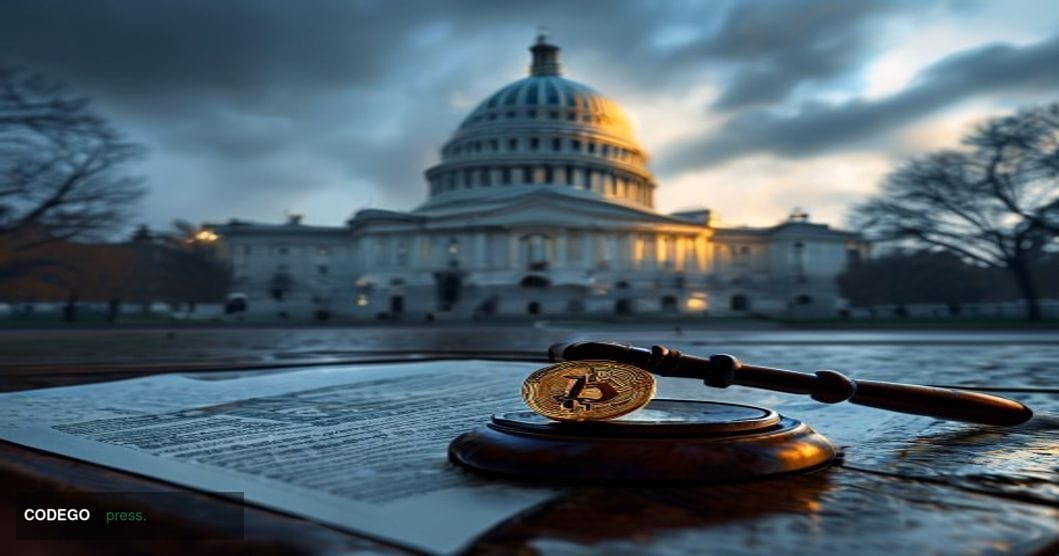
A landmark legal confrontation between the cryptocurrency industry and state-level regulators is taking shape in Illinois, where the Digital Chamber has filed a lawsuit against Illinois state officials seeking to strike down a newly enacted 0.2% tax on digital asset transactions. The trade group argues the law, signed in June 2026, singles out cryptocurrency users for discriminatory treatment and must be blocked before it ever takes effect.
At its core, the Digital Chamber's complaint rests on a straightforward but legally potent premise: that Illinois has created a targeted financial penalty applied exclusively to individuals and businesses that choose to transact in digital assets. No comparable tax is levied on equivalent transactions conducted in traditional fiat currency or through conventional financial instruments. That asymmetry, the group contends, is not merely inequitable — it is legally indefensible.
The 0.2% rate may appear modest at first glance, but its cumulative effect on high-frequency traders, decentralized finance participants, and businesses that rely on blockchain-based payment rails could be substantial. A professional trading desk executing millions of dollars in daily cryptocurrency volume would face a compounding cost burden that its peers operating in equities or foreign exchange markets simply do not. For retail participants already navigating network fees, exchange spreads, and federal tax obligations on digital asset gains, the addition of a state-level transaction tax represents yet another friction point layered onto an asset class that regulators have historically treated with suspicion.
Illinois is not the first jurisdiction to explore cryptocurrency-specific levies, but the Digital Chamber's decision to pursue immediate injunctive relief — seeking to block both implementation and enforcement of the law — signals that the industry intends to contest discriminatory state taxation aggressively rather than absorb it and litigate incrementally. The trade group's posture reflects a broader strategic shift within the digital asset sector: as crypto assets gain mainstream financial legitimacy, industry organizations are increasingly willing to challenge legal frameworks they view as constitutionally or statutorily infirm.
The legal theories available to the Digital Chamber are potentially wide-ranging. A transaction tax that applies only to one category of financial instrument could face challenges grounded in equal protection principles, dormant Commerce Clause arguments if the tax demonstrably burdens interstate digital commerce, or preemption claims depending on how federal cryptocurrency legislation — currently advancing across several legislative vehicles in Washington — intersects with state authority. The precise legal architecture of the complaint will determine which of these avenues proves most viable, but the threshold argument — that the law discriminates against a defined class of transactors — is a foundation upon which multiple theories can be built.
Illinois officials, for their part, are likely to defend the tax as a legitimate exercise of the state's broad taxing authority and a mechanism for ensuring that digital asset activity contributes to public revenues in proportion to its growing economic footprint. That argument carries political weight in a state that has faced chronic fiscal pressure, but it will need to withstand scrutiny over why the 0.2% levy was not structured as a broad financial transaction tax applicable across asset classes — a design choice that would have deflected the discrimination argument entirely.
The timing of the lawsuit is also notable. The federal regulatory landscape for digital assets is undergoing rapid transformation in 2026, with Congressional action on stablecoin legislation and market structure frameworks reshaping the boundaries of state versus federal jurisdiction over cryptocurrency. A court ruling in favor of the Digital Chamber in Illinois could set a persuasive precedent discouraging other states from enacting asset-class-specific crypto taxes, while a ruling upholding the law could embolden copycat legislation across other fiscally strained state capitals.
What This Means for the Industry
The Illinois lawsuit is not merely a local regulatory skirmish — it is an early test case for whether U.S. states can legally impose discriminatory transaction taxes on digital assets as the sector matures into a recognized component of mainstream finance. If the Digital Chamber succeeds in obtaining an injunction, it will have established that the industry possesses both the legal standing and the institutional resolve to neutralize hostile state-level fiscal policy before it inflicts market damage. If it fails, cryptocurrency participants in Illinois — and potentially across a growing number of states watching the outcome closely — face a structural cost disadvantage that has no equivalent in traditional finance. Either way, the case will be closely watched by legal teams at every major digital asset firm operating in the United States.
Written by the editorial team — independent journalism powered by Codego Press.