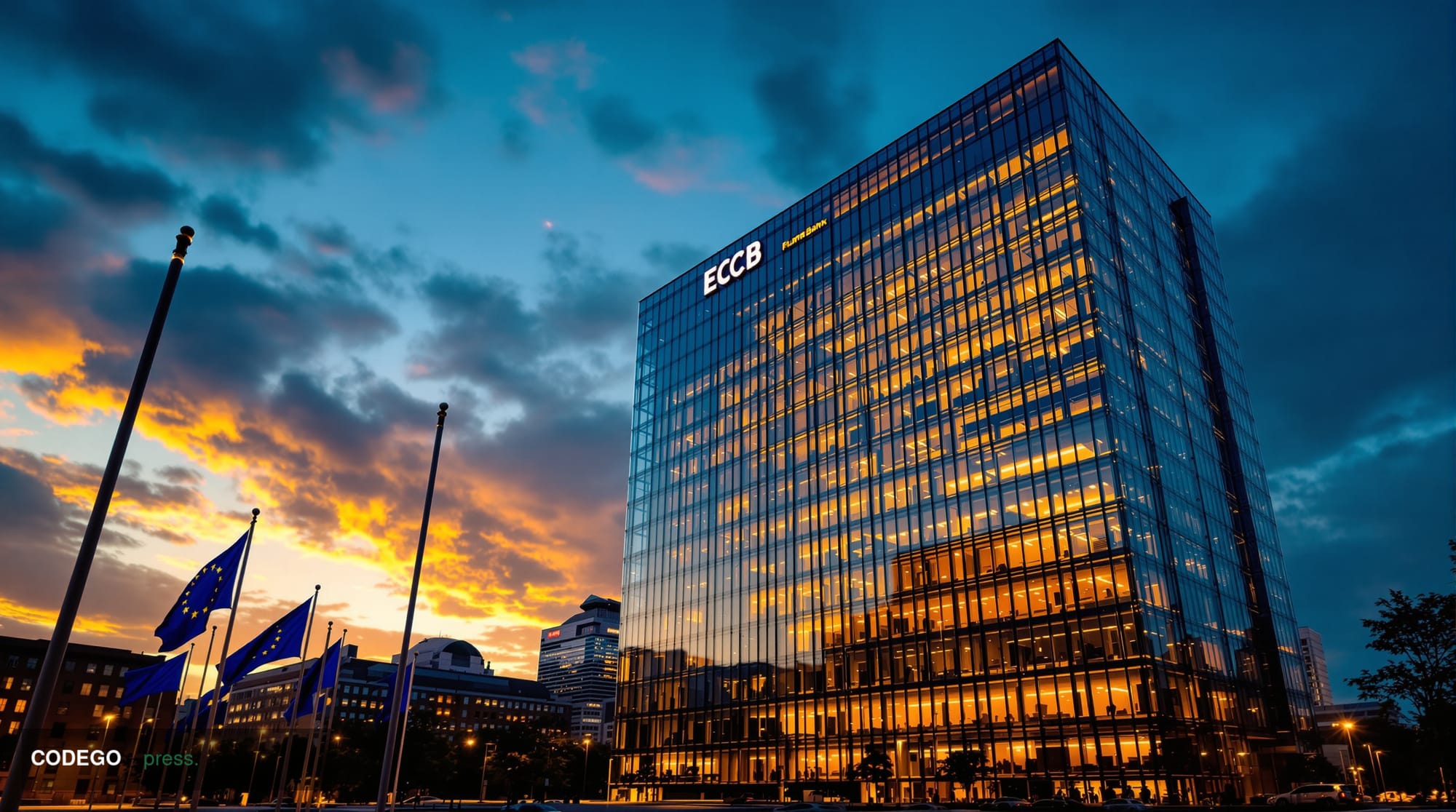
The European Central Bank (ECB) continues to position itself as a driving force behind Europe's financial future, with Executive Board Member Frank Elderson delivering a keynote address that underscored the critical importance of deeper financial integration across the continent. Speaking at the "Financing Europe: a new era of strategic investment" conference in Brussels on May 12, 2026, Elderson articulated a vision where enhanced integration serves as the foundation for sustained European prosperity.
Elderson, who serves both as a Member of the ECB's Executive Board and Vice-Chair of the Supervisory Board, used the Brussels platform to advocate for a more interconnected European financial landscape. His address came at a pivotal moment when European policymakers are grappling with how to mobilize capital for strategic investments that will define the continent's competitive position in the global economy.
The conference theme itself—"a new era of strategic investment"—signals a recognition among European financial leaders that traditional approaches to capital allocation may no longer suffice in an increasingly complex global economic environment. Elderson's emphasis on deeper integration suggests that the ECB views fragmented national financial markets as a potential barrier to achieving the scale of investment needed for Europe's long-term economic objectives.
The timing of Elderson's remarks reflects broader European concerns about maintaining economic competitiveness while navigating geopolitical uncertainties and technological disruptions. Financial integration has long been a cornerstone of European economic policy, but recent global events have intensified discussions about how to accelerate this process to meet contemporary challenges.
From a regulatory perspective, Elderson's dual role positions him uniquely to understand both the monetary policy implications and supervisory challenges of deeper financial integration. His perspective carries particular weight given the ECB's central role in overseeing the eurozone's financial stability while simultaneously managing monetary policy across 20 member countries.
The Brussels conference setting is significant, as the Belgian capital serves as the de facto headquarters of European Union institutions and frequently hosts discussions about the future direction of European economic policy. The choice of venue reinforces the institutional importance of the integration agenda that Elderson championed in his keynote.
Strategic Investment Imperative
The conference's focus on strategic investment financing reflects growing awareness among European policymakers that the continent faces substantial capital requirements to maintain its economic relevance. These needs span everything from digital infrastructure and green energy transitions to advanced manufacturing capabilities and research and development initiatives.
Elderson's advocacy for deeper integration appears to recognize that fragmented capital markets may struggle to efficiently allocate the massive resources required for these strategic priorities. A more integrated European financial system could potentially offer greater economies of scale, improved risk diversification, and enhanced capital mobility across borders.
The ECB's position on financial integration has evolved significantly over the past decade, with officials increasingly viewing it as essential to monetary policy transmission and financial stability. Elderson's remarks suggest this institutional perspective continues to strengthen, particularly as European leaders seek to reduce dependence on external financing sources for critical investments.
What this means for European financial markets is potentially transformative. Deeper integration could reshape everything from banking supervision and capital markets regulation to cross-border payment systems and investment fund structures. For financial institutions operating across multiple European jurisdictions, enhanced integration could reduce compliance costs while expanding market opportunities. However, it also implies intensified competition as geographic barriers to financial services diminish.
Written by the editorial team — independent journalism powered by Codego Press.