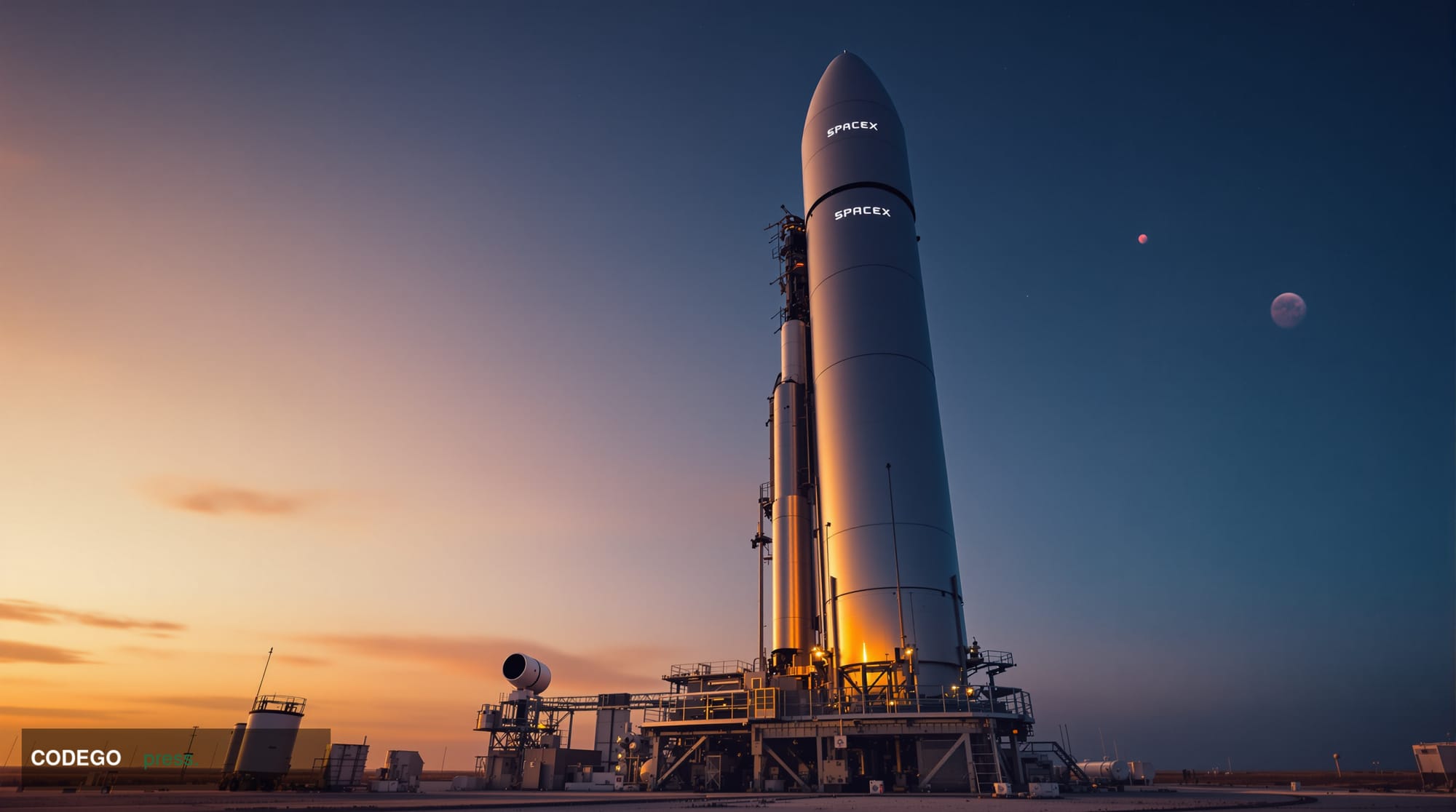
The convergence of cryptocurrency wealth and space exploration reached a historic milestone as F2Pool co-founder Chun Wang secured the first commercial booking for a SpaceX Mars mission. The Bitcoin billionaire's planned Starship flyby of the Red Planet represents a watershed moment where digital asset fortunes directly fund humanity's expansion into the solar system.
Wang's Mars venture positions him at the forefront of a new era where cryptocurrency-generated wealth drives ambitious space exploration initiatives. As co-founder of F2Pool, one of the world's largest Bitcoin mining operations, Wang accumulated his fortune through the digital gold rush that has transformed global finance over the past decade. His decision to channel these resources toward Mars exploration underscores the growing intersection between blockchain technology pioneers and space industry advancement.
The timing of Wang's mission carries strategic significance, scheduled to occur before SpaceX attempts its first human landings on the Martian surface. This positioning suggests Wang's flyby could serve multiple purposes: validating Starship's deep space capabilities, conducting reconnaissance for future landing sites, and demonstrating the commercial viability of private Mars missions. The mission architecture represents a calculated risk assessment, offering the prestige of Mars exploration while avoiding the exponentially greater complexities of surface operations.
From a financial perspective, Wang's booking signals the maturation of both the cryptocurrency and commercial space sectors. The transaction demonstrates that digital asset wealth has reached sufficient scale to fund interplanetary missions, while simultaneously validating SpaceX's business model for Mars transportation services. This commercial precedent could accelerate the development of a Mars economy, with early missions funded by cryptocurrency fortunes potentially laying groundwork for sustained human presence.
The broader implications for the space industry cannot be understated. Wang's commitment provides SpaceX with crucial revenue for Mars program development while reducing the company's reliance on government contracts and satellite deployment missions. This diversification of funding sources strengthens the business case for continued Starship development and Mars infrastructure investment, potentially accelerating timelines for human settlement programs.
The mission also highlights the evolving relationship between digital asset wealth and traditional aerospace engineering. Where previous space exploration relied heavily on government funding or established aerospace corporations, Wang's booking demonstrates how cryptocurrency-generated fortunes can directly finance cutting-edge space technology development. This trend could fundamentally reshape space exploration financing, with blockchain entrepreneurs becoming primary customers for next-generation space transportation systems.
For the cryptocurrency sector, Wang's Mars mission represents a powerful demonstration of digital asset utility beyond financial speculation. By converting Bitcoin mining profits into tangible space exploration achievements, Wang showcases how cryptocurrency wealth can drive real-world technological advancement and human progress. This narrative could prove valuable for the broader blockchain industry, which continues seeking applications that demonstrate clear societal benefit.
Wang's historic booking establishes a template for how cryptocurrency billionaires might deploy their wealth toward ambitious technological ventures. As digital asset valuations continue expanding, more blockchain entrepreneurs may follow Wang's example, channeling their fortunes toward space exploration, scientific research, or other frontier technologies. This trend could accelerate human technological advancement while providing cryptocurrency wealth holders with meaningful legacy projects beyond traditional philanthropy or financial investments.
Written by the editorial team — independent journalism powered by Codego Press.