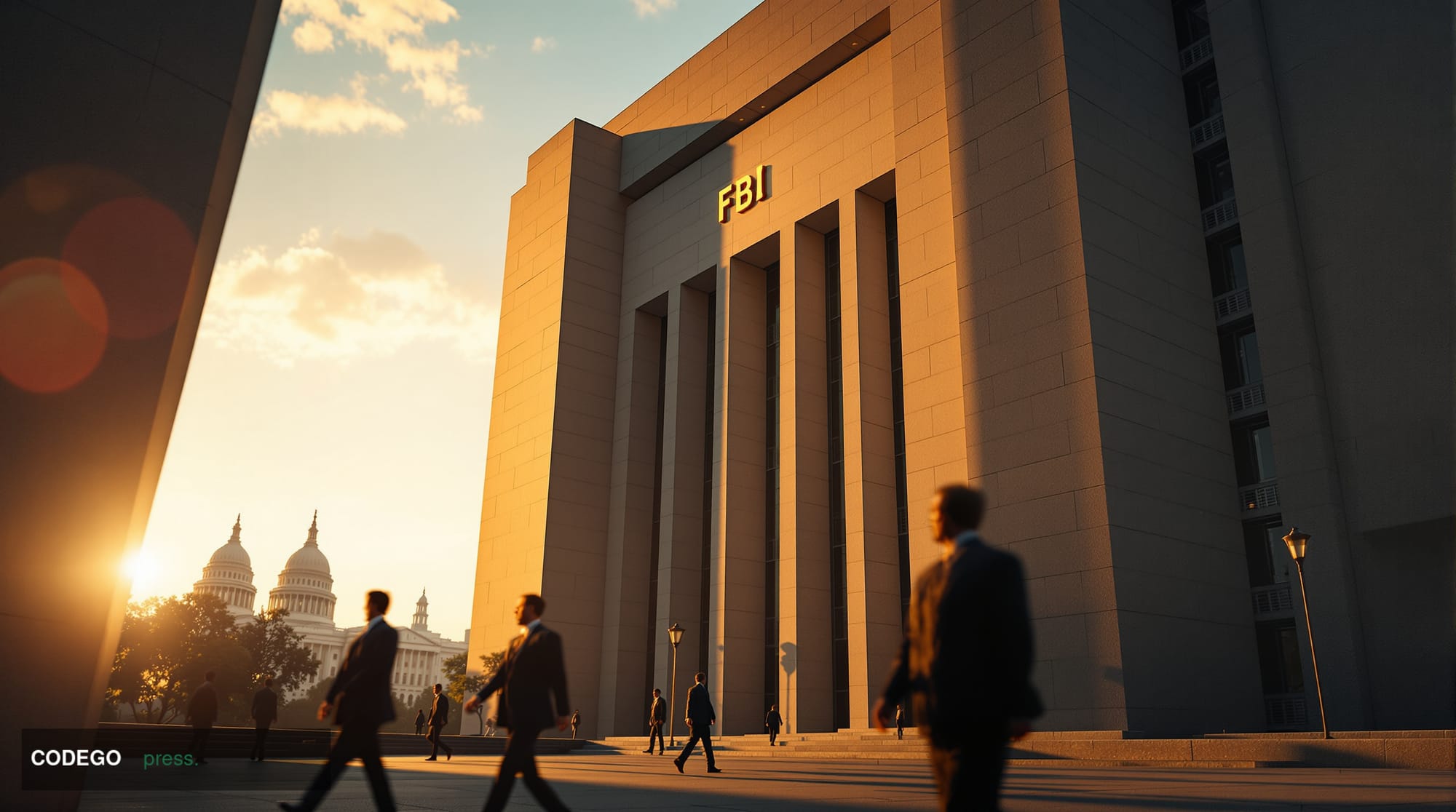
Federal authorities have delivered a decisive blow to international financial crime networks, charging 30 individuals in connection with a sophisticated insider trading scheme that operated across multiple countries for a full decade. The Federal Bureau of Investigation (FBI) announcement marks one of the most extensive cross-border financial crime prosecutions in recent years, underscoring the evolving complexity of modern market manipulation.
The dismantling of this extensive network represents a significant victory for federal prosecutors who have increasingly focused on transnational financial crimes that exploit regulatory gaps between jurisdictions. The decade-long duration of the scheme demonstrates both the sophistication of the operation and the challenges faced by law enforcement in detecting and prosecuting such elaborate conspiracies. With 30 defendants now facing charges, the case ranks among the largest insider trading prosecutions by participant count in recent federal court history.
The international scope of the conspiracy highlights a troubling trend in financial crime: the exploitation of cross-border regulatory arbitrage to evade detection. Modern insider trading networks have evolved far beyond the traditional model of corporate executives sharing tips with friends. Today's schemes often involve complex webs of intermediaries, offshore entities, and cryptocurrency transactions designed to obscure the flow of information and proceeds. The multi-country nature of this particular network suggests a level of operational sophistication that required significant coordination and planning.
For financial institutions and compliance professionals, this case serves as a stark reminder of the inadequacies in current monitoring systems. Traditional surveillance tools, designed primarily for domestic markets, often struggle to detect patterns that span multiple jurisdictions with varying regulatory frameworks. The success of this decade-long scheme suggests that existing compliance infrastructure may be fundamentally inadequate for addressing the realities of globalized financial crime.
The prosecution also illuminates the critical importance of international law enforcement cooperation in combating sophisticated financial crimes. The FBI's ability to successfully investigate and charge participants across multiple countries required unprecedented coordination with foreign regulatory authorities and law enforcement agencies. This level of cooperation, while essential, remains challenging due to differences in legal systems, information sharing protocols, and enforcement priorities between nations.
The regulatory implications extend beyond traditional securities markets. As financial crimes increasingly leverage digital assets and cross-border payment systems, regulatory authorities worldwide are grappling with the challenge of maintaining market integrity in an interconnected global financial system. The Securities and Exchange Commission and other regulatory bodies have been pushing for enhanced information sharing agreements and standardized enforcement protocols to address these challenges.
This case underscores the urgent need for financial institutions to invest in next-generation compliance technologies capable of detecting suspicious patterns across multiple jurisdictions and asset classes. Traditional rule-based monitoring systems are proving insufficient against adversaries who understand how to exploit the seams between different regulatory regimes. Advanced analytics, artificial intelligence, and real-time cross-border data sharing will likely become essential tools in the fight against sophisticated financial crime networks.
The successful prosecution of this international insider trading ring sends a clear message that geographic boundaries will not protect financial criminals from federal prosecution. As regulatory authorities continue to strengthen international cooperation frameworks and enhance technological capabilities, the operating environment for such schemes will become increasingly hostile. The decade-long duration of this particular network may prove to be an artifact of a previous era, as improved detection capabilities and international coordination make such extended operations far more difficult to sustain.
Written by the editorial team — independent journalism powered by Codego Press.