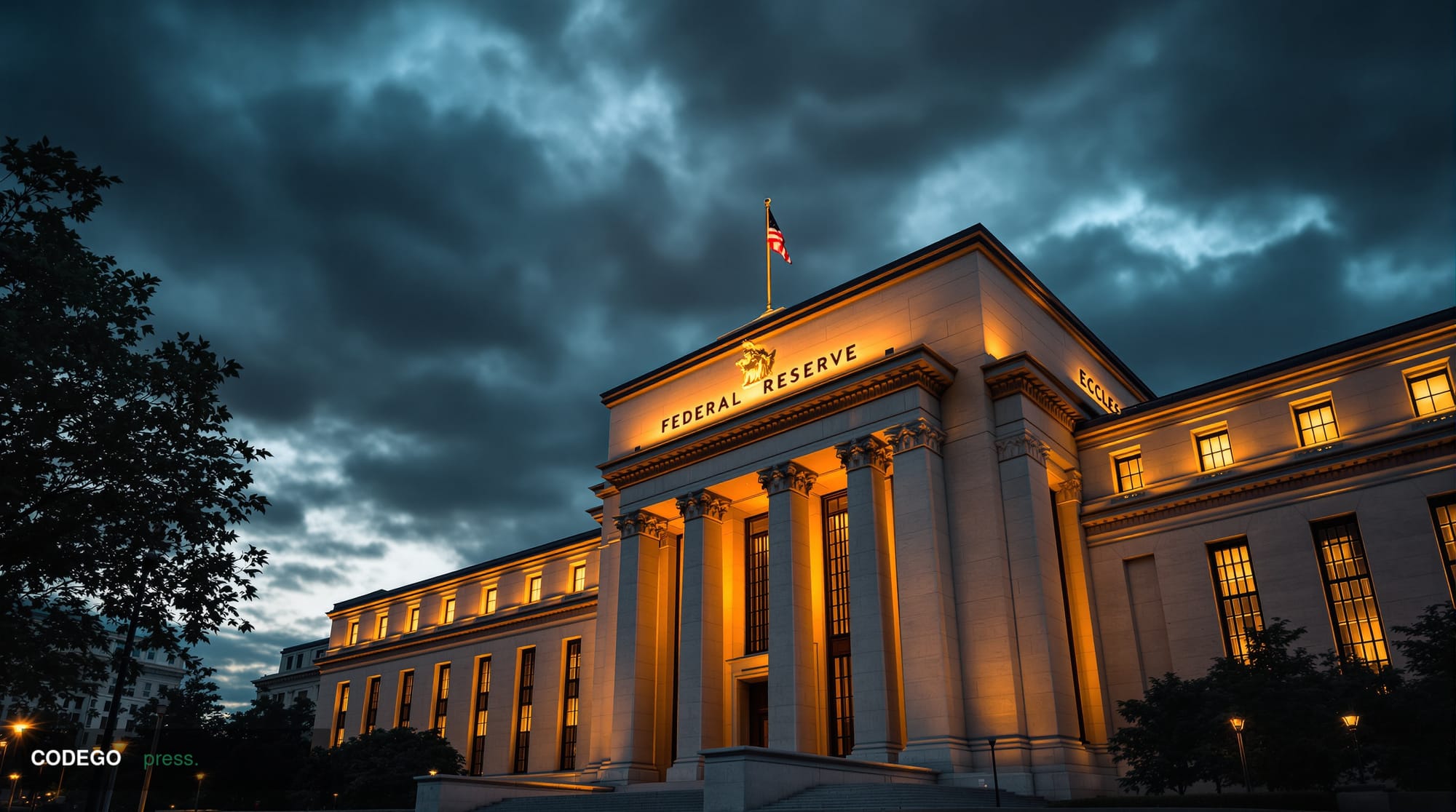
The Federal Reserve has delivered a stark warning about the perils of financial deregulation, with Vice Chair for Supervision Michael Barr cautioning that loosening banking oversight could set the stage for the next major financial crisis. His pointed remarks underscore growing tensions between regulatory hawks and those advocating for reduced banking supervision in an era of evolving financial landscapes.
Barr's intervention comes at a critical juncture for the banking sector, where policymakers face mounting pressure to balance innovation with stability. The Fed official specifically highlighted how deregulation risks exposing hidden vulnerabilities within the financial system, creating conditions that could potentially destabilize the broader economy. This assessment directly challenges ongoing political and industry efforts to roll back post-2008 financial reforms.
The warning carries particular weight given Barr's role as the Fed's top banking supervisor, responsible for overseeing the nation's largest financial institutions. His concerns echo the systemic risks that emerged during previous financial crises, when inadequate oversight allowed dangerous practices to proliferate unchecked across major banks. The parallels to past crises serve as a sobering reminder of how quickly financial vulnerabilities can cascade through interconnected markets.
Central to Barr's argument is the concept of hidden vulnerabilities—risks that may not be immediately apparent but could prove catastrophic under stress. These blind spots often emerge when regulatory frameworks fail to keep pace with evolving banking practices and market conditions. The Fed's supervisory experience suggests that seemingly stable institutions can harbor significant weaknesses that only surface during periods of economic turbulence.
The timing of this warning reflects broader debates within financial policy circles about the appropriate level of banking regulation. While some argue that excessive oversight stifles innovation and economic growth, Barr's position emphasizes that prudent supervision remains essential for maintaining systemic stability. This philosophical divide has shaped regulatory policy for over a decade, with alternating administrations taking markedly different approaches to financial oversight.
Barr's call for cautious oversight also addresses the rapid pace of change in modern banking, where technological innovation and evolving business models can outpace traditional regulatory frameworks. The integration of digital assets, fintech partnerships, and new payment systems has created additional complexity that supervisors must navigate without compromising safety and soundness principles.
The Fed official's emphasis on learning from past financial crises reflects institutional memory of how regulatory gaps contributed to previous systemic failures. The 2008 financial crisis demonstrated how interconnected risks could amplify across the banking system when oversight mechanisms proved inadequate. Similarly, earlier banking crises throughout American history have repeatedly shown the costs of insufficient supervision during periods of rapid financial innovation.
For banking institutions, Barr's warning signals that the Fed remains committed to robust supervisory practices despite external pressures for deregulation. This stance suggests that major banks should expect continued scrutiny of their risk management practices, capital adequacy, and operational resilience. The message also reinforces the Fed's view that preventive supervision is more effective than reactive crisis management.
The broader implications extend beyond traditional banking to encompass the entire financial ecosystem, including emerging sectors like cryptocurrency and fintech. As these industries mature and seek greater integration with traditional finance, Barr's cautionary approach suggests regulators will maintain heightened vigilance over systemic risk factors regardless of their source or technological sophistication.
Written by the editorial team — independent journalism powered by Codego Press.