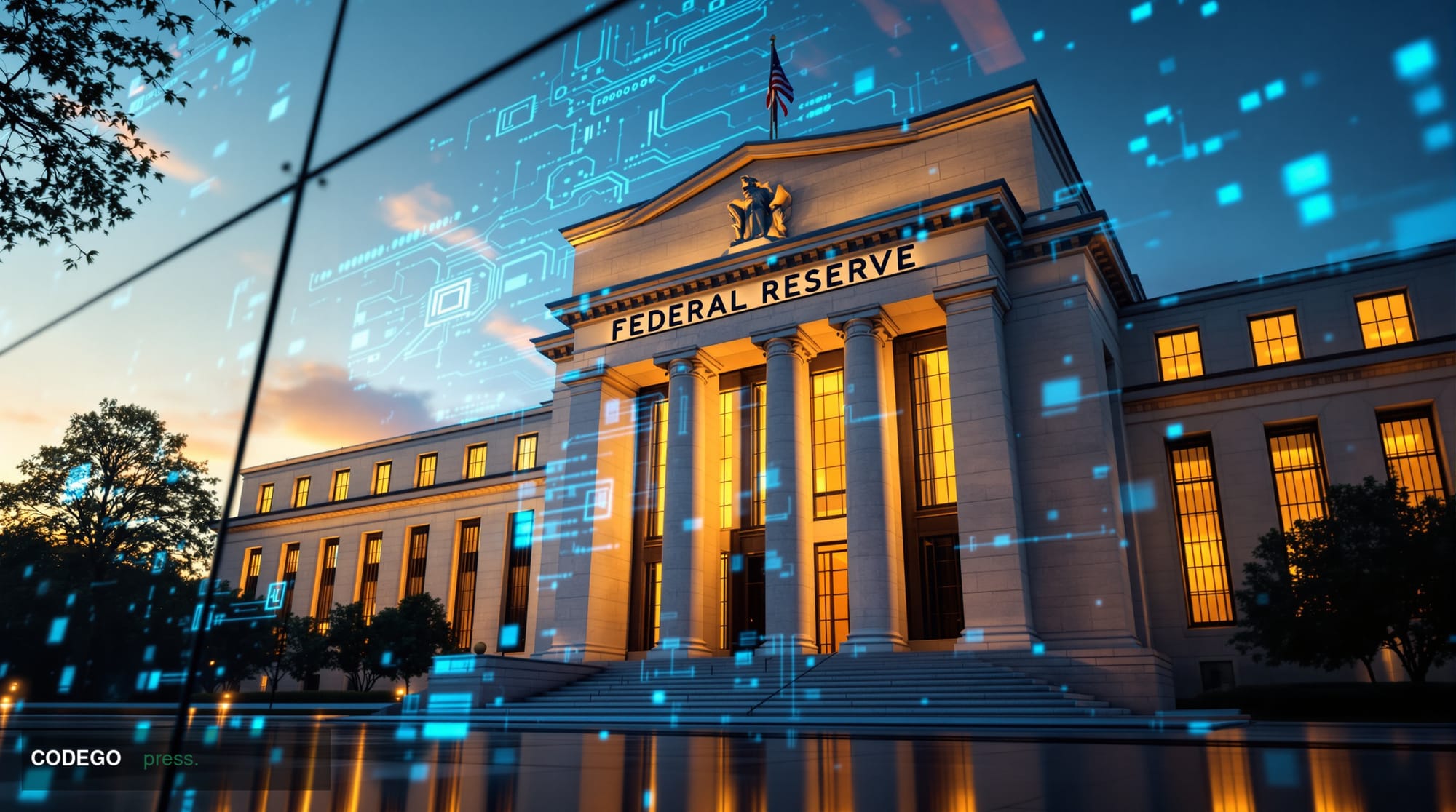
The Federal Reserve is grappling with artificial intelligence's transformative potential while remaining vigilant about its risks to financial stability, according to a senior central bank official's recent policy address that underscores the complexity of regulating emerging technologies in the financial sector.
Lisa D Cook, Member of the Board of Governors of the Federal Reserve System, delivered a comprehensive assessment of artificial intelligence's economic implications during a May 27 speech at Stanford University's Institute for Economic Policy Research. Her remarks, published by the Bank for International Settlements on June 3, signal the central bank's evolving approach to one of the most consequential technological shifts facing modern finance.
Cook's dual focus on opportunities and risks reflects the Federal Reserve's nuanced position as it navigates the intersection of monetary policy and technological innovation. The timing of her Stanford address places the Fed's thinking at a critical juncture when financial institutions are rapidly deploying AI systems for everything from credit decisions to trading algorithms, while regulators worldwide struggle to establish appropriate oversight frameworks.
The choice of Stanford as the venue for these remarks carries particular significance, given Silicon Valley's role as the epicenter of AI development and the university's influence in shaping technology policy discourse. By addressing the Stanford Institute for Economic Policy Research, Cook positioned the Federal Reserve's perspective within the broader academic and policy conversations that increasingly shape regulatory approaches to emerging technologies.
Regulatory Implications for Financial Innovation
Cook's emphasis on both the promise and perils of artificial intelligence suggests the Federal Reserve is pursuing a balanced regulatory philosophy that avoids stifling innovation while maintaining financial system integrity. This approach aligns with broader trends among global central banks, which are increasingly recognizing that overly restrictive policies could handicap their domestic financial sectors in an intensely competitive global landscape.
The Federal Reserve's attention to AI risks likely encompasses concerns about algorithmic bias in lending decisions, systemic risks from correlated AI-driven trading strategies, and operational vulnerabilities in AI-dependent financial infrastructure. These considerations have become more pressing as major banks and fintech companies integrate machine learning models into core business processes, potentially amplifying both efficiency gains and systemic vulnerabilities.
For financial institutions, Cook's remarks signal that the Federal Reserve expects continued innovation while demanding robust risk management practices. Banks deploying AI systems will likely face heightened scrutiny regarding model governance, data quality, and the explainability of automated decisions, particularly in consumer-facing applications where regulatory compliance is paramount.
Broader Economic Transformation
The Federal Reserve's focus on AI's economic implications extends beyond financial services to encompass broader questions about productivity, employment, and monetary policy transmission mechanisms. As AI technologies reshape labor markets and business models across sectors, central banks must consider how these changes affect traditional economic relationships that underpin policy decisions.
Cook's Stanford address comes as policymakers grapple with AI's potential to accelerate productivity growth while potentially exacerbating inequality and labor market disruption. The Federal Reserve's dual mandate to promote maximum employment and price stability requires careful consideration of how artificial intelligence might alter the dynamics between inflation, unemployment, and economic growth.
The publication of Cook's remarks through the Bank for International Settlements also highlights the international coordination dimensions of AI governance. As financial markets become increasingly interconnected and AI systems operate across borders, central banks must collaborate on standards and practices that ensure global financial stability while allowing for national policy flexibility.
Cook's balanced assessment of artificial intelligence's opportunities and risks positions the Federal Reserve as a thoughtful steward of both innovation and stability in an era of rapid technological change. Her Stanford address signals that the central bank recognizes AI's transformative potential while remaining committed to its core mission of maintaining financial system resilience. This nuanced approach will likely shape regulatory frameworks that determine whether artificial intelligence becomes a source of enhanced prosperity or systemic vulnerability in the years ahead.
Written by the editorial team — independent journalism powered by Codego Press.