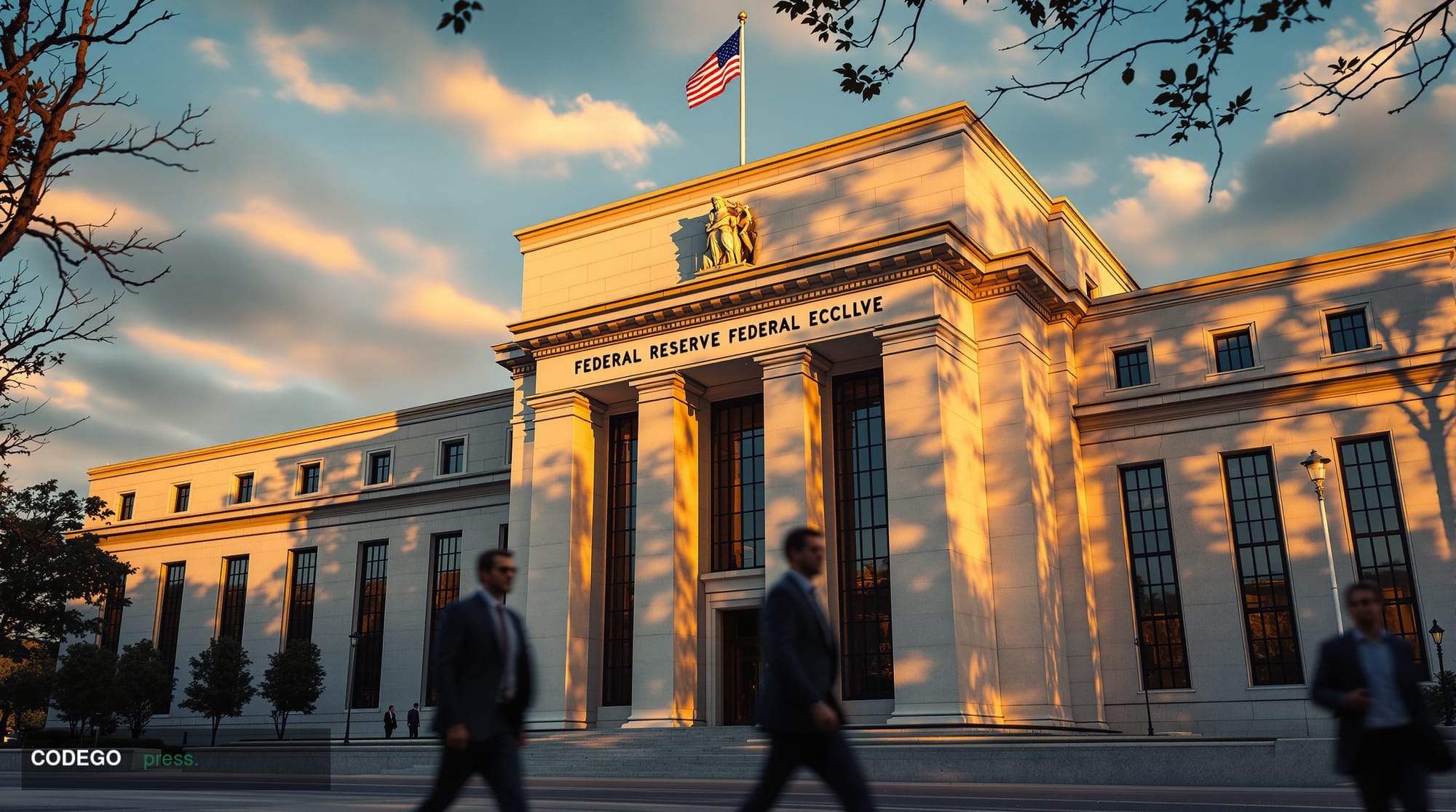
The Federal Reserve faces a critical leadership transition as Jerome Powell assumes a temporary chairmanship role while Senate-confirmed Kevin Warsh prepares to take the helm of America's central bank. This unprecedented handover arrangement underscores the complex governance challenges that emerge during transitions at the world's most influential monetary policy institution.
The interim leadership structure represents more than a simple changing of the guard. Powell's temporary stewardship, coupled with Warsh's pending assumption of full authority, creates a unique period of institutional uncertainty that extends far beyond the marble halls of the Eccles Building. Financial markets, already hypersensitive to Federal Reserve communications and policy signals, now must navigate the additional complexity of interpreting guidance from a transitional leadership framework.
Kevin Warsh's Senate confirmation marks his return to Federal Reserve leadership after previously serving as a Fed governor from 2006 to 2011. His appointment comes at a moment when central banking faces unprecedented challenges, from managing post-pandemic economic recovery to addressing persistent inflationary pressures and evolving digital currency landscapes. Warsh's previous experience during the 2008 financial crisis provides relevant institutional knowledge, yet the current economic environment presents distinct complexities that will test any incoming Fed chair.
The governance implications of this transition arrangement extend beyond immediate policy considerations. Central bank independence relies heavily on clear leadership structures and unambiguous authority chains. When transitions create temporary arrangements, market participants inevitably question whether policy continuity can be maintained and whether emergency decision-making capabilities remain intact. These concerns amplify during periods of economic volatility, when swift Federal Reserve action often proves crucial for market stability.
Market uncertainties during Fed leadership transitions historically manifest in various ways, from increased bond yield volatility to heightened currency fluctuations. Institutional investors and corporate treasurers must now factor transition-related policy risks into their strategic planning, potentially leading to more conservative positioning until leadership clarity emerges. The temporary nature of Powell's current role adds another layer of complexity to an already intricate monetary policy environment.
The timing of this leadership change coincides with ongoing debates about Federal Reserve policy direction and institutional reform. Warsh's eventual assumption of the chairmanship will likely bring fresh perspectives on issues ranging from interest rate policy to regulatory approaches for emerging financial technologies. However, the interim period under Powell's temporary leadership may limit the scope of significant policy initiatives, as markets typically expect continuity rather than innovation during transitional phases.
From an institutional perspective, this transition highlights broader questions about Federal Reserve governance structures and succession planning. While the Federal Reserve Act provides frameworks for leadership changes, the practical challenges of maintaining policy credibility and market confidence during transitions remain significant. The current arrangement, with Powell serving temporarily before Warsh assumes full authority, offers a case study in how America's central bank manages leadership continuity during uncertain times.
The implications extend beyond domestic monetary policy to international financial relationships. Global central banks closely monitor Federal Reserve leadership transitions, as American monetary policy decisions ripple through international markets and influence global capital flows. The temporary nature of current arrangements may prompt increased coordination efforts with international counterparts to ensure continued financial system stability during the transition period.
Written by the editorial team — independent journalism powered by Codego Press.