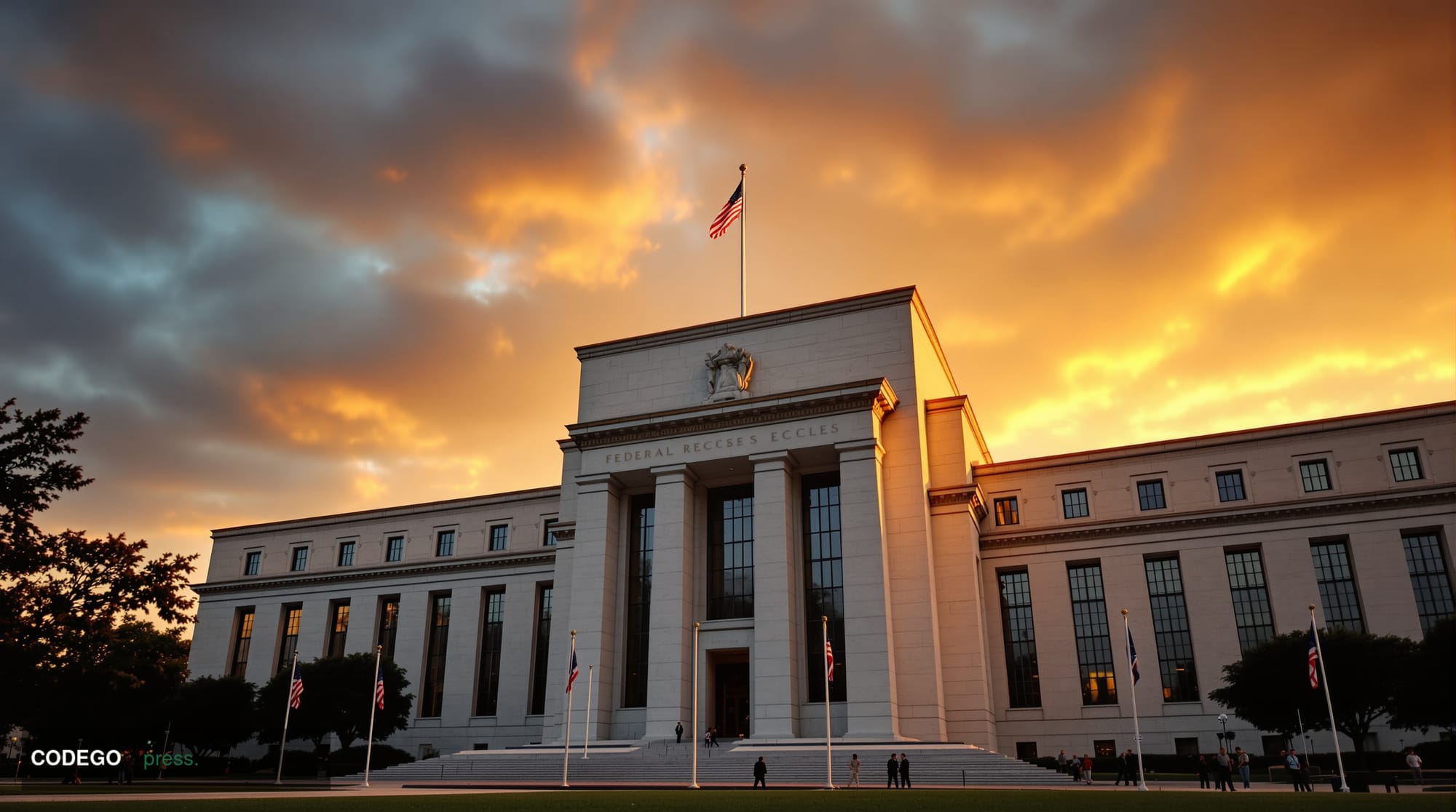
Behind the apparent decisiveness of a 10–2 vote to hold interest rates in October, Federal Reserve policymakers were far more conflicted than the outcome suggested. Minutes from the Federal Open Market Committee's October meeting, released this week, reveal that officials characterized the decision to pause as a "close call" — language that signals the internal debate over monetary tightening remains very much alive and that a December rate hike is now firmly in play.
The disclosure reframes what markets had initially absorbed as a relatively comfortable hold. A 10–2 majority voting to keep rates unchanged might ordinarily suggest broad consensus within the committee. The minutes, however, paint a more fractured picture: a meaningful contingent of officials harbored genuine appetite for an immediate rate increase, stopping short only after deliberation that left the question unresolved rather than settled. The two dissenting votes, it now appears, were the visible tip of a considerably larger iceberg of hawkish sentiment.
The Fed's communications strategy has long relied on vote tallies as a primary signal to markets. When a supermajority votes one way, investors typically interpret that as institutional conviction. The October minutes complicate that reading considerably. If a hold that passed 10–2 was still described internally as a "close call," it raises legitimate questions about how reliably the numerical vote translates the committee's true policy disposition — and how quickly the balance could tip in either direction as incoming economic data evolves.
Market participants did not wait long to adjust their expectations. Following the release of the minutes, pricing in federal funds futures shifted to reflect a materially higher probability of a rate increase at the Federal Reserve's December policy meeting. The move underscores the sensitivity of asset prices to nuance in Fed communication: not just what the committee decides, but how members describe their deliberative process, can move markets with considerable force. For bond traders, equity investors, and digital asset participants alike, the distinction between a decisive hold and a reluctant one carries real portfolio implications.
The hawkish undertone embedded in the minutes arrives at a delicate juncture. After an extended tightening cycle that reshaped global capital flows and credit conditions, any renewed push higher on rates would ripple across borrowing costs for consumers, corporations, and governments. Mortgage rates, corporate bond spreads, and emerging-market debt dynamics all sit downstream of the Fed's decisions. The mere signal that another hike is being seriously contemplated is sufficient to tighten financial conditions ahead of any formal action — a mechanism the Fed itself has used deliberately in the past.
For the digital assets sector, the minutes carry particular weight. Cryptocurrencies and risk assets broadly have remained sensitive to the interest rate environment, with tighter monetary conditions historically correlating with capital rotation away from higher-risk positions. If markets continue pricing in a December hike with increasing confidence, liquidity conditions in crypto markets could face renewed headwinds even before the FOMC convenes again. Traders in Bitcoin and other digital assets will be watching the December meeting with the same intensity as fixed-income desks on Wall Street.
The two officials who dissented from the October hold — voting instead for an immediate increase — now appear less like outliers and more like the leading edge of a broader committee movement. Whether that movement crystallizes into a December hike will depend heavily on the inflation and labor market data scheduled for release before the next meeting. Any upside surprise in core inflation figures or further resilience in employment could tip the remaining fence-sitters toward action, converting October's "close call" into December's hike.
What This Means for Markets and Policy Watchers
The October FOMC minutes serve as a reminder that central bank votes are summaries, not complete accounts, of policy deliberation. The gap between a 10–2 vote and a "close call" is not a contradiction — it is a window into the genuine uncertainty that defines policymaking in a complex economic environment. For investors, the operative lesson is that the Fed's next move remains genuinely data-dependent, and that the market consensus around any single outcome should be held with appropriate humility. December is live. The minutes have made certain of that.
Written by the editorial team — independent journalism powered by Codego Press.