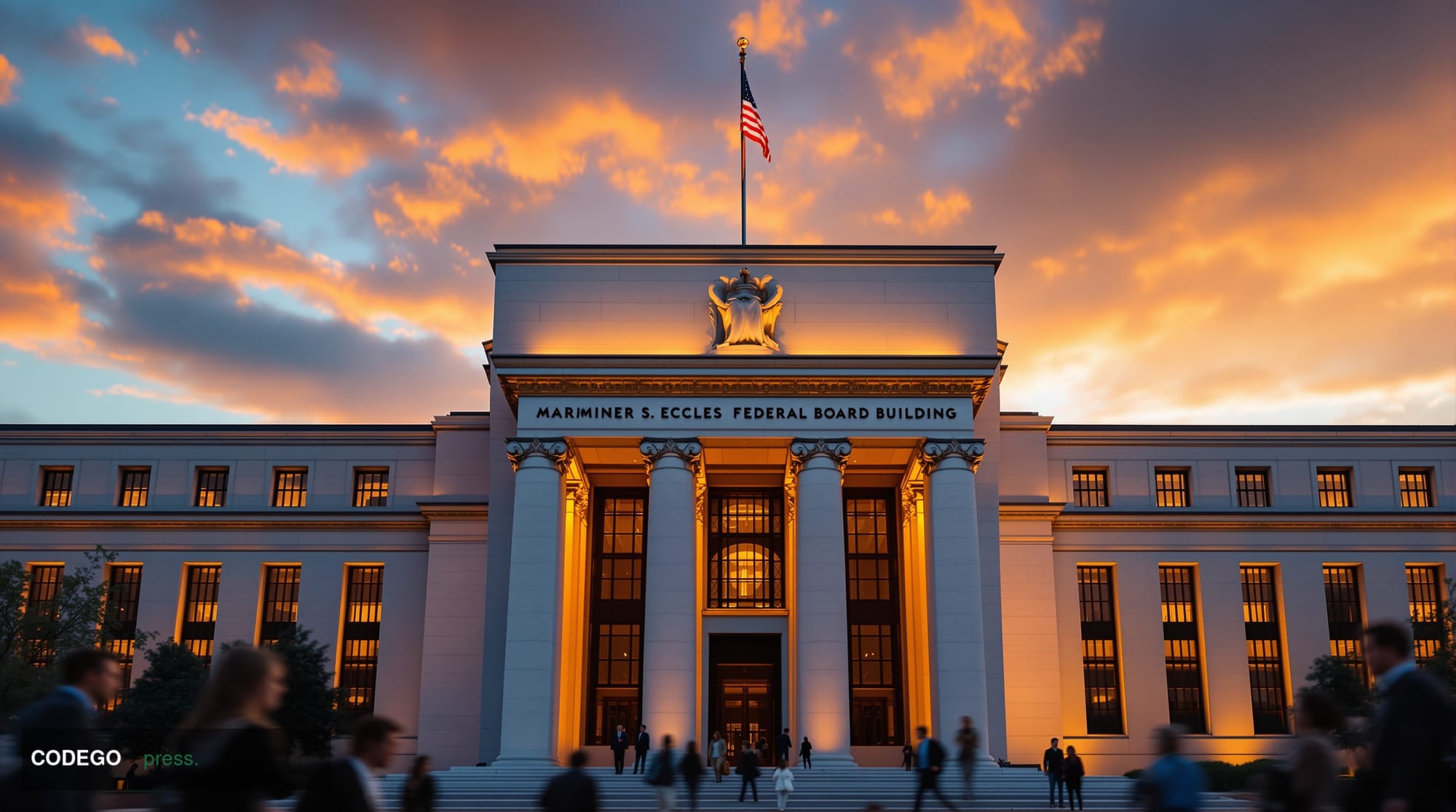
A contrarian analyst prediction has emerged challenging the prevailing market consensus on Federal Reserve monetary policy, suggesting that rate cuts may be on the horizon despite widespread expectations of continued tightening. With the current Federal Funds target rate positioned between 350 and 375 basis points, traders are broadly anticipating at least a 25 basis point increase by December 2026, yet one analyst believes the opposite trajectory awaits under potential Fed leadership.
The prediction centers on Kevin Warsh, whose monetary policy approach appears to diverge significantly from current market projections. While conventional wisdom and trader positioning suggest the Federal Reserve will maintain its hawkish stance through the end of 2026, this analyst's assessment points toward a more dovish pivot that could reshape financial market dynamics across multiple asset classes.
Current market positioning reflects broad consensus around continued monetary tightening, with the Federal Funds rate sitting at historically elevated levels between 3.50% and 3.75%. This rate environment represents a significant shift from the ultra-low rate regime that characterized much of the post-2008 financial crisis era. Traders have positioned themselves accordingly, with derivatives markets pricing in at minimum a quarter-point rate increase for December 2026.
The divergence between analyst prediction and market consensus highlights the inherent uncertainty surrounding monetary policy decisions in an evolving economic landscape. Rate cut expectations would typically emerge amid concerns about economic growth, employment trends, or deflationary pressures, yet current trader positioning suggests market participants see continued inflationary risks requiring further policy tightening.
Warsh's potential approach to monetary policy has drawn attention given his previous experience and stated views on central banking. His perspective on rate policy could signal a fundamental shift in how the Fed balances inflation control against economic growth concerns. The analyst's prediction suggests this balance may tip toward supporting economic activity rather than continuing the current restrictive monetary stance.
The implications of such a policy reversal would extend far beyond traditional banking and finance sectors. Rate cuts typically support asset valuations across equity and fixed income markets, while also influencing currency dynamics and international capital flows. For financial institutions, lower rates generally compress net interest margins but can reduce credit risk as borrowing costs decline for consumers and businesses.
Market participants face a challenging environment when analyst predictions diverge so sharply from consensus expectations. The 25 basis point increase currently priced into December 2026 derivatives reflects substantial positioning that could face significant unwinding if rate cuts materialize instead. Such positioning mismatches have historically created volatility spikes and profit opportunities for contrarian investors willing to bet against market consensus.
This monetary policy debate unfolds against a backdrop of ongoing economic uncertainty, where traditional relationships between inflation, employment, and growth continue evolving. The analyst's prediction of rate cuts under Warsh suggests a reading of economic conditions that prioritizes growth support over inflation control, representing a potentially significant shift in Fed priorities that could reshape market dynamics well beyond the December 2026 timeframe currently under discussion.
Written by the editorial team — independent journalism powered by Codego Press.