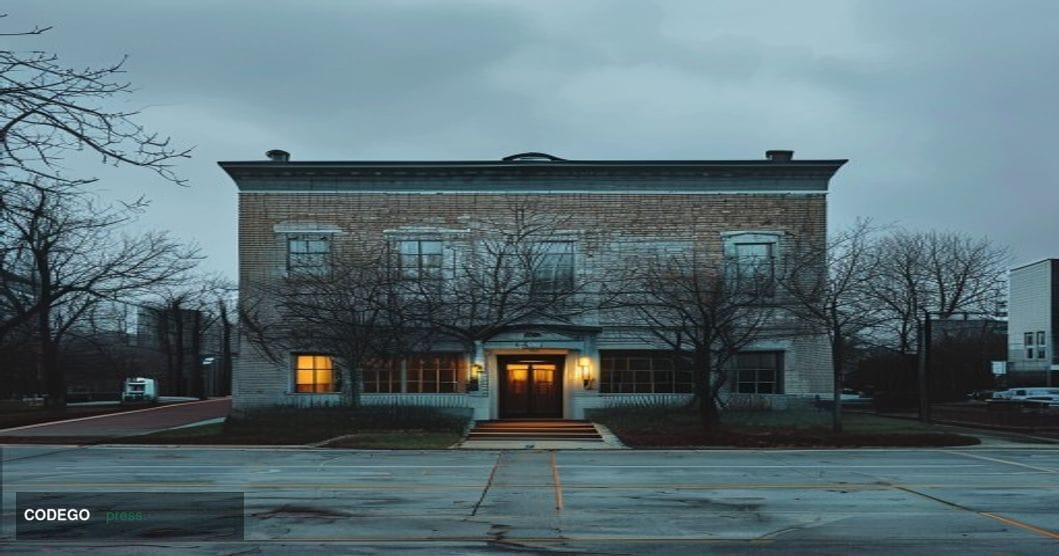
A small community lender in suburban Kansas is facing its most serious regulatory reckoning yet. The Federal Reserve has formally sanctioned Lenexa, Kansas-based Small Business Bank for the third time since 2023, ordering the institution to confront its status as "significantly undercapitalized" — one of the most severe designations available under United States banking law — within a 30-day window. The action signals an accelerating deterioration at a lender that has now drawn repeated federal scrutiny over a span of roughly three years, raising urgent questions about its viability and the adequacy of its prior remediation efforts.
A Pattern of Regulatory Failure
The word "third" carries enormous weight in banking supervision. Regulators do not issue repeat enforcement actions lightly. Each successive sanction against Small Business Bank represents not merely a fresh citation but an implicit indictment of the institution's failure to meaningfully address the deficiencies identified in prior rounds of oversight. When the Federal Reserve returns to the same institution for a third time within approximately three years, it is transmitting a clear message to bank management, its board of directors, and the broader market: corrective promises have not translated into corrective reality.
The designation of "significantly undercapitalized" is itself a term of legal and supervisory precision under the Federal Deposit Insurance Corporation (FDIC) Improvement Act's Prompt Corrective Action (PCA) framework. Banks falling into this category face a suite of mandatory and discretionary restrictions, from prohibitions on accepting brokered deposits to limitations on asset growth. The framework is explicitly designed to force rapid remediation before a bank's capital position deteriorates further and taxpayer-backed deposit insurance funds are placed at greater risk. A 30-day deadline to submit a credible capital restoration plan is not a request — it is a legal compulsion.
The Stakes for a Small Lender
Small Business Bank's situation illustrates the acute vulnerability that community and small commercial lenders face when capital buffers erode. Unlike their large systemically important counterparts, small institutions have limited avenues for rapid capital replenishment. They cannot easily tap public equity markets, and attracting private investment into a bank already flagged three times by the Federal Reserve is a formidable challenge. Their balance sheets typically lack the diversification that allows larger banks to absorb losses across asset classes while maintaining adequate ratios.
Lenexa, situated in Johnson County — one of the wealthiest counties in Kansas and part of the greater Kansas City metropolitan area — is not an economically depressed market. That geographic context makes Small Business Bank's capital distress appear all the more structural rather than purely cyclical. The lender's repeated regulatory encounters suggest internal governance, risk management, or lending quality issues that have persisted across multiple supervisory cycles, rather than a single adverse economic shock that a well-capitalized institution might absorb and survive.
What Comes Next
Under the Prompt Corrective Action framework, a significantly undercapitalized institution that fails to submit or implement an acceptable capital restoration plan faces escalating consequences — including the possibility of receivership or forced merger. The Federal Reserve, in coordination with the institution's primary federal regulator, retains broad authority to remove officers and directors, restrict transactions with affiliates, and ultimately place a failing bank into FDIC receivership if capital cannot be restored within the mandated timeframes.
The 30-day deadline imposed on Small Business Bank effectively places the institution at a critical fork. Management must either demonstrate a credible and immediate path to recapitalization — through retained earnings, new equity investment, asset sales, or a merger with a stronger acquirer — or face the prospect of more drastic supervisory intervention. Given that the bank has now exhausted two prior opportunities to satisfy the Federal Reserve's concerns, the margin for further regulatory patience appears vanishingly thin.
What This Means for the Community Banking Sector
Small Business Bank's trajectory serves as a cautionary case study for the hundreds of small community lenders across the United States navigating an environment of elevated interest rates, compressed net interest margins, and evolving credit quality pressures. Regulators have made clear — through public enforcement actions like this one — that capital adequacy is non-negotiable, and that supervisory forbearance has its limits. For depositors, counterparties, and the small businesses this Lenexa lender was established to serve, the Federal Reserve's third action in roughly three years is a stark signal that the institution's future remains deeply uncertain. The next 30 days will be determinative.
Written by the editorial team — independent journalism powered by Codego Press.