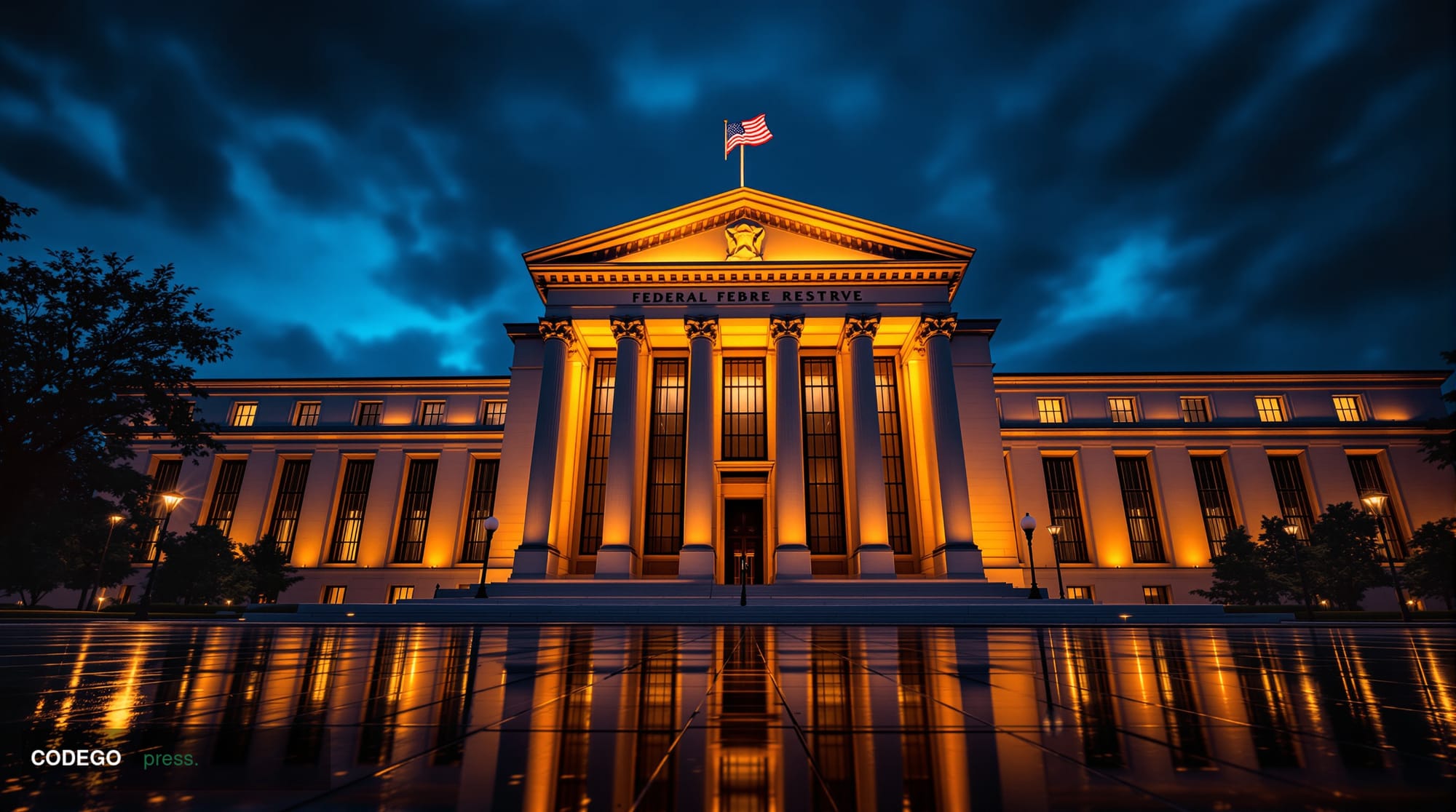
The Federal Reserve finds itself at a crossroads, as newly released meeting minutes lay bare a significant and consequential rift among its policymakers over the direction of interest rate policy. The disclosure of internal division at the world's most closely watched central bank has sent a clear signal to markets: the path forward on monetary tightening is anything but settled, and the uncertainty embedded in that disagreement carries real implications for financial stability across the global economy.
For months, investors and analysts had grown accustomed to parsing the Fed's public communications for subtle signals — the carefully worded statements, the calibrated press conference language, the deliberate cadence of dot-plot revisions. The release of these minutes strips away that veneer of institutional cohesion. What emerges is a body of policymakers genuinely divided on one of the most consequential decisions in contemporary monetary policy: whether to continue raising borrowing costs in an environment where the economic signals remain stubbornly mixed.
The significance of this revealed division cannot be overstated. When the Fed speaks with one voice, markets can price risk with a degree of confidence. When the minutes reveal genuine disagreement among voting and non-voting members alike, that pricing mechanism is disrupted. Traders, portfolio managers, and corporate treasurers who had anchored their forward guidance to a presumed Fed consensus must now reprice their assumptions — and that repricing process is rarely smooth or orderly. Market expectations, already fragile in a post-tightening cycle environment, face a renewed challenge in calibrating the probability of future rate moves.
The debate inside the Federal Open Market Committee (FOMC) reflects a broader tension that has defined this monetary cycle: the competing imperatives of fighting residual inflationary pressure on one hand and avoiding unnecessary damage to credit conditions, labor markets, and economic growth on the other. Hawks within the committee remain concerned that premature easing — or even a prolonged pause — risks allowing inflation to re-entrench at levels inconsistent with the Fed's two percent mandate. Doves, meanwhile, point to mounting evidence that the full restrictive effects of prior rate hikes have yet to fully propagate through the economy, arguing that further tightening risks tipping a slowing economy into contraction.
Neither camp is operating in bad faith. The data itself is genuinely ambiguous, and the lag effects of monetary policy mean that the committee is, to a degree, flying partially blind. Unemployment figures, consumer spending data, and credit conditions can simultaneously point in contradictory directions — and in such an environment, reasonable policymakers will reach different conclusions. That is precisely what the minutes appear to show. The division is not a sign of dysfunction; it is a sign of how genuinely difficult the current economic juncture has become.
What is more troubling, however, is the downstream effect on financial stability. Central bank credibility is itself a monetary policy tool — arguably one of the most powerful available. When the Fed signals uncertainty, it can inadvertently amplify volatility in bond markets, equity valuations, and currency pairs. Leveraged participants across the financial system, from regional banks managing duration risk to hedge funds running rate-sensitive strategies, recalibrate their exposures in response to shifting policy signals. The cumulative effect of that recalibration, conducted simultaneously by thousands of market participants, can generate instability that feeds back into the very economic conditions the Fed is trying to manage.
This dynamic is particularly acute in the current environment, where the transmission mechanisms between Fed policy and broader financial conditions have been complicated by structural changes in banking intermediation, the growth of private credit markets, and the persistent influence of global capital flows. The Bank for International Settlements and the Financial Stability Board have both flagged in recent assessments that periods of central bank policy uncertainty tend to correlate with elevated systemic risk — a warning that the Fed's own minutes now appear to validate in real time.
What This Means for Markets and Policy
The practical consequences for market participants are immediate and multidirectional. Fixed income traders will likely widen the range of scenarios they price into the yield curve, pushing up term premiums as the dispersion of outcomes around Fed policy expands. Equity markets, which had begun to discount a more stable rate environment, may face renewed headwinds if the uncertainty translates into higher-for-longer borrowing costs or prolonged policy ambiguity. For emerging market economies tethered to dollar funding conditions, Fed indecision can be particularly damaging, as currency and sovereign debt markets respond sharply to shifts in U.S. rate expectations.
Ultimately, the release of these minutes serves as a sobering reminder that monetary policy in a complex, interconnected global economy is not a precise science. The Fed's internal debate is legitimate and arguably healthy — policymakers should be stress-testing their assumptions. But the disclosure of that division demands that every stakeholder in the financial system — from institutional investors to corporate borrowers to retail savers — widen their planning horizons and resist the temptation to anchor strategy to a single assumed rate path. The Fed itself has not yet decided. Neither should anyone else.
Written by the editorial team — independent journalism powered by Codego Press.