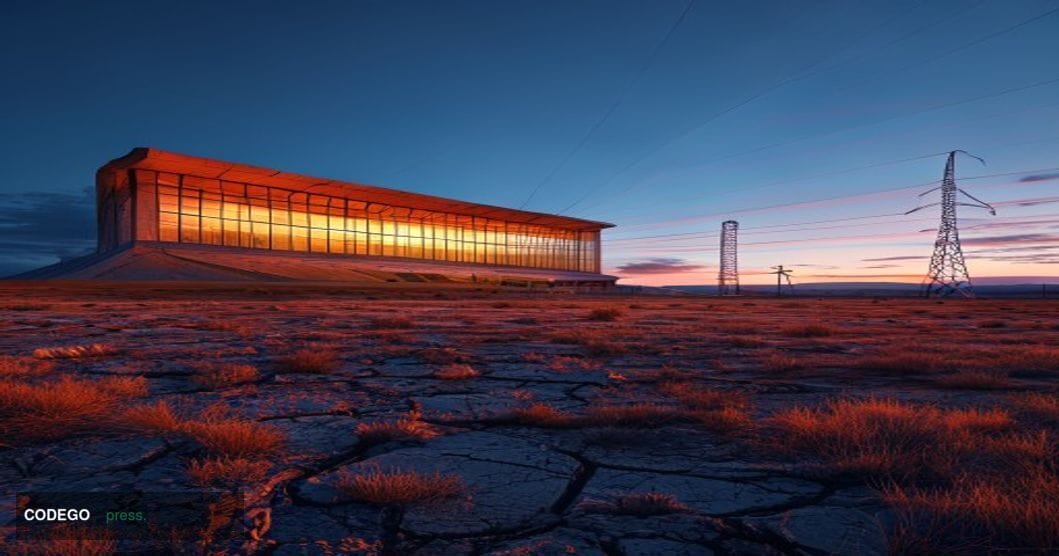
A football stadium bearing a crypto firm's name is, on its surface, a marketing play — the kind of splashy brand-visibility move that defined the last cycle's excesses, from arena renamings in Miami to Los Angeles. But when Galaxy, the Nasdaq-listed digital-asset firm, announced a 15-year, crypto-native naming rights agreement with Texas Tech University to rebrand the Red Raiders' home as "Galaxy Stadium," the executives behind the deal made little effort to hide that the scoreboard is only part of the story. The bigger wager is on the land, the sun, and the electricity underneath West Texas's wide-open skies.
The deal transforms one of college football's most distinctive venues — the roaring home of the Red Raiders in Lubbock, Texas — into a marquee billboard for a digital-asset business that has spent years positioning itself as an institutional-grade player across trading, lending, asset management, and Bitcoin mining. Fifteen years is an unusually long commitment for any naming rights agreement in professional or collegiate sports, a duration that signals Galaxy is not merely buying impressions on a Saturday afternoon; it is anchoring itself, structurally, to a specific geography for the better part of two decades.
West Texas as Infrastructure, Not Backdrop
To understand why that geography matters, one has to look past the end zones. West Texas offers a convergence of conditions that are close to ideal for energy-intensive digital-asset operations: vast tracts of inexpensive land, access to some of the cheapest electricity in the continental United States, and a rapidly expanding renewable energy corridor driven by wind and solar installations across the Permian Basin and its surrounds. For a company whose mining and compute operations consume electricity at industrial scale, the ability to secure favorable power agreements in a region with structural energy surplus is not a secondary consideration — it is the primary business logic.
The framing of this as a "crypto-native" deal is deliberate and worth unpacking. Rather than a conventional cash-for-branding transaction, the structure reportedly reflects Galaxy's broader operating model — one that integrates financial infrastructure, compute capacity, and energy sourcing as interlocking components. Describing a stadium naming deal as "crypto-native" implies that the university relationship and the regional presence it confers are designed to serve that integrated model, potentially facilitating conversations with local utilities, regulators, and landowners in ways that a purely financial transaction would not.
The Institutional Maturation of Crypto Branding
There is a meaningful distinction between where Galaxy is placing its name and where previous crypto firms planted flags during the 2021 and 2022 bull market. Those deals — concentrated in premium coastal and entertainment markets — were driven primarily by retail consumer awareness campaigns at a moment when exchanges and lending platforms were competing for retail deposit flows. Galaxy's target audience has always skewed institutional: asset managers, family offices, sovereign wealth vehicles, and corporate treasury departments. Lubbock, Texas is not a message to retail crypto enthusiasts; it is a message to energy markets, infrastructure investors, and the broader West Texas business community that Galaxy intends to be a long-term, rooted participant in the region's economic fabric.
The 15-year tenure also carries an implicit signal about Galaxy's confidence in the durability of the digital-asset industry itself. Short-term naming deals can be unwound quietly when market conditions deteriorate; a decade-and-a-half commitment made under a public company's balance sheet scrutiny reflects a materially different risk calculus. Galaxy's Nasdaq listing means the deal's financial terms and strategic rationale will be visible to institutional shareholders and analysts, adding a layer of accountability that the looser corporate structures of the prior cycle rarely demanded.
What This Means for the Industry
The Galaxy-Texas Tech arrangement may represent an emerging template for how mature digital-asset firms embed themselves into regional economies: not through consumer-facing brand splashes in media capitals, but through long-duration infrastructure commitments in energy-rich corridors where the operational dividend justifies the marketing expenditure. If cheap West Texas power and open land are genuinely central to the deal's thesis — as Galaxy's own framing strongly suggests — then the stadium naming is less an advertisement and more a declaration of operational intent backed by a 15-year lease on regional credibility.
For Texas Tech and the Lubbock community, the arrangement brings naming revenue and association with a publicly traded, institutionally recognized digital-asset firm at a moment when the sector's legitimacy is arguably higher than at any prior point in its history. For Galaxy, it converts a sports sponsorship budget into something with strategic depth: a durable footprint in one of North America's most compelling energy markets, wrapped in the cultural resonance of Red Raiders football. Whether the stadium lights up on autumn Saturdays or the server racks hum through summer nights, the bet is the same — that West Texas has more to offer than nostalgia, and that 15 years is enough time to prove it.
Written by the editorial team — independent journalism powered by Codego Press.