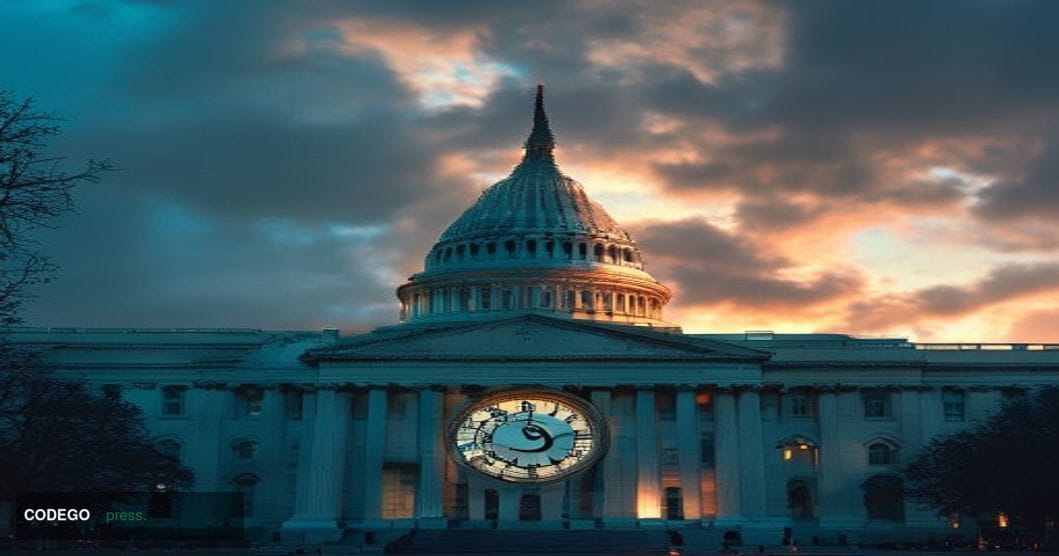
A congressionally mandated deadline has come and gone. July 18, 2026 — exactly one year after President Biden signed the Guiding and Establishing National Innovation for US Stablecoins (GENIUS) Act into law — passed without federal banking and financial regulators delivering the finalized implementing rules the statute explicitly required. The lapse is not merely an administrative footnote: it leaves the United States stablecoin market operating under an incomplete regulatory framework at a moment when digital dollar-pegged assets have grown into a multitrillion-dollar segment of global financial infrastructure.
The GENIUS Act, enacted on July 18, 2025, was heralded as a landmark piece of legislation — the first comprehensive federal framework specifically designed to govern the issuance and oversight of payment stablecoins in the United States. Congress built a one-year implementation window into the statute, an unusually generous timeline intended to give regulators sufficient runway to craft the technical rules governing reserve requirements, issuer licensing, consumer protections, and interoperability standards. That window has now closed with the rulebook still unfinished.
The agencies responsible for delivering those rules — a coalition that encompasses federal banking supervisors and financial regulators — have offered no unified public explanation for the delay as of the deadline date. The silence itself is notable. In Washington's regulatory calendar, missed statutory deadlines of this magnitude typically signal one of three conditions: genuine technical complexity that defied the allotted timeline, inter-agency disagreement over jurisdictional scope or substantive policy choices, or political headwinds that slowed the rulemaking machinery from the inside. Given the contested nature of stablecoin oversight — with the Federal Reserve, the Office of the Comptroller of the Currency, the Federal Deposit Insurance Corporation, and the Securities and Exchange Commission each holding stakes in how the final rules are written — the most plausible explanation involves a combination of all three.
For the stablecoin industry, the practical consequences of this regulatory vacuum are immediate and material. Issuers who structured their business planning around the GENIUS Act's promised framework now face continued uncertainty over reserve composition rules, audit and attestation requirements, and the precise licensing pathway for non-bank stablecoin issuers. Institutional participants who had been awaiting regulatory clarity before committing capital to stablecoin-integrated payment rails find themselves in the same limbo they occupied before the law was passed. The GENIUS Act was supposed to resolve these ambiguities; instead, the deadline's passage without finalized rules has in some respects deepened them.
The geopolitical dimension compounds the domestic stakes. Bank for International Settlements research and commentary from senior officials at the European Central Bank have repeatedly flagged the dollar-denominated stablecoin market as a structural feature of global liquidity with systemic implications. The European Union completed its own European Banking Authority-supervised Markets in Crypto-Assets (MiCA) framework ahead of schedule, and jurisdictions from Singapore to the United Arab Emirates have moved to establish licensing regimes for stablecoin issuers. Washington's failure to meet its own self-imposed implementation deadline hands rivals a credibility argument that the United States, despite legislating first on stablecoins at the federal level, cannot translate legislation into operational regulation with predictable efficiency.
There is a broader institutional credibility question embedded in this episode. When Congress writes a statutory deadline into legislation, it is making a public commitment about the pace and seriousness of regulatory action. Agencies that allow those deadlines to slip — regardless of the technical justifications — erode a form of institutional trust that is difficult to rebuild. Markets, particularly nascent digital asset markets still calibrating their relationship with formal regulation, are acutely sensitive to signals about whether regulators can be relied upon to deliver what the law demands on the schedule the law prescribes.
It would be premature to declare the GENIUS Act framework a failure. Rulemaking processes frequently extend beyond initial deadlines, and the statute's underlying legal architecture remains intact. Regulators retain the authority — and the obligation — to complete the implementing regulations, and the industry's expectation is that finalized rules will eventually emerge. But the terms of the conversation have shifted. The question is no longer whether the United States will have a federal stablecoin framework, but whether regulators can demonstrate the institutional discipline to deliver one within a timeframe that preserves the country's competitive and supervisory leadership in digital finance.
What this means: Every additional month without finalized GENIUS Act rules is a month in which stablecoin issuers operate under incomplete federal guidance, institutional adoption is deferred, and foreign regulatory regimes accumulate the advantage of clarity. The deadline's passage is a warning signal, not a fatal blow — but it demands an urgent and transparent response from the agencies responsible for completing what Congress mandated a year ago.
Written by the editorial team — independent journalism powered by Codego Press.