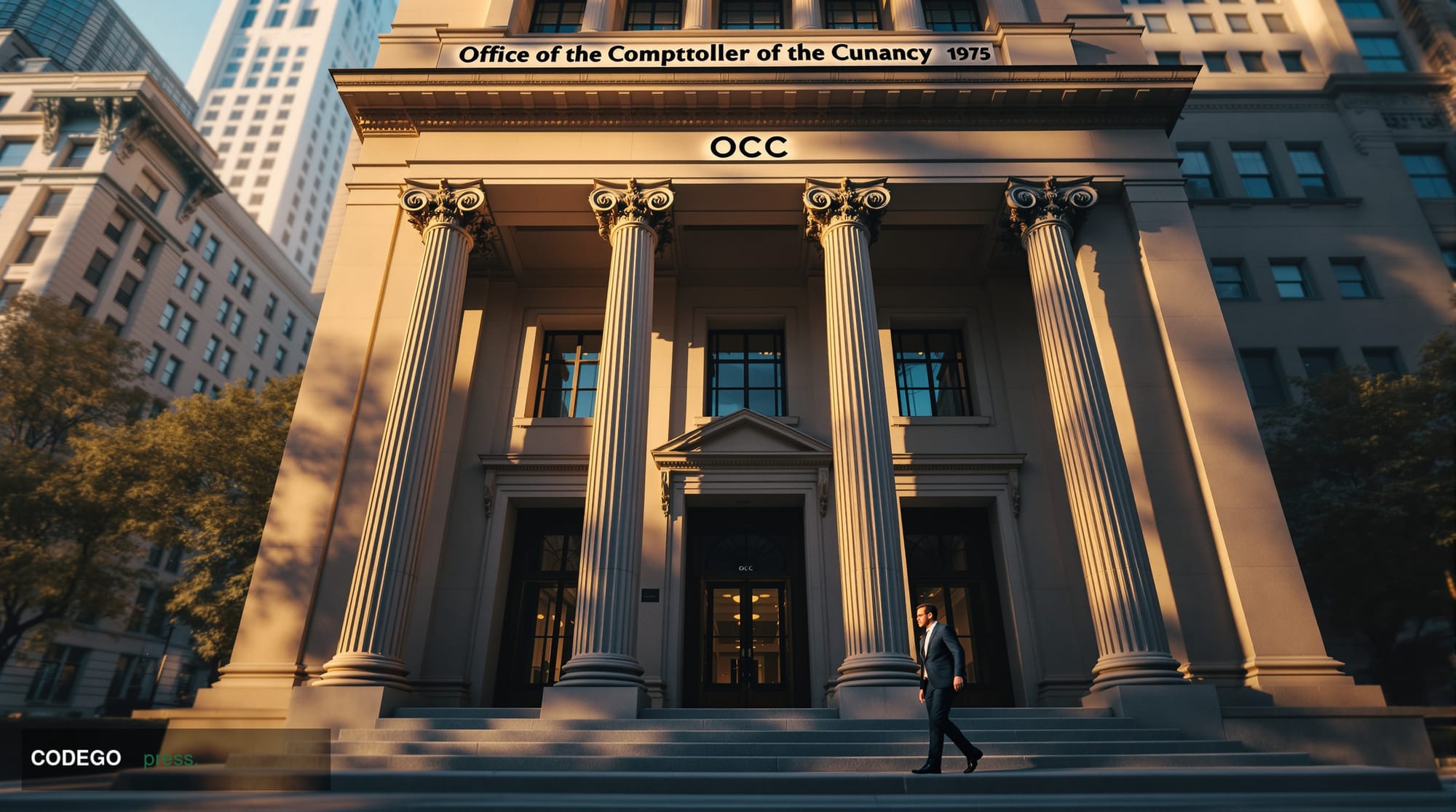
The German fintech sector's ambitious push into American banking markets gained significant momentum this week as Augustus, the newly rebranded financial services firm formerly known as Ivy, secured conditional approval from the Office of the Comptroller of the Currency (OCC) to establish a full-service national bank in the United States.
The dual announcement on Monday represents a strategic inflection point for the German company, which chose to rebrand alongside its regulatory milestone. The timing suggests Augustus views the name change as integral to its American banking ambitions, potentially seeking to establish a distinct brand identity for U.S. consumers while distancing itself from any legacy perceptions associated with the Ivy moniker.
Augustus's conditional OCC approval places it within a select group of international fintech companies that have successfully navigated the complex American banking regulatory landscape. The OCC's conditional approval process typically involves rigorous capital adequacy assessments, operational readiness evaluations, and comprehensive risk management reviews. For Augustus, meeting these preliminary requirements signals substantial progress in what is often a multi-year journey toward full banking operations.
The significance of securing an American national banking charter cannot be overstated for European fintech companies seeking to compete in the world's largest financial services market. Unlike state banking licenses, national charters provide broader operational flexibility and the ability to serve customers across all fifty states without navigating a patchwork of individual state regulatory frameworks. This regulatory efficiency becomes particularly valuable for digital-first institutions that aim to scale rapidly across geographic boundaries.
Augustus's pursuit of American banking status reflects broader trends within the German fintech ecosystem, where companies increasingly view international expansion as essential for achieving scale in a fragmented European market. The conditional approval also comes at a time when American regulators have shown greater receptivity to international fintech applications, provided applicants demonstrate robust compliance frameworks and adequate capital backing.
The rebranding from Ivy to Augustus may also reflect strategic considerations beyond mere marketing preferences. Financial services companies entering new markets often adopt names that resonate with local audiences while avoiding potential trademark conflicts or negative associations. The Augustus name carries historical gravitas that may appeal to American consumers seeking stability in their banking relationships, particularly important for a foreign entrant establishing credibility in competitive U.S. markets.
For the broader fintech industry, Augustus's progress represents both validation and intensified competition. The company's ability to secure conditional OCC approval demonstrates that well-capitalized international players can successfully navigate American regulatory requirements, potentially encouraging other European fintechs to pursue similar strategies. However, conditional approval represents only the beginning of Augustus's regulatory journey, with final approval dependent on meeting additional operational and compliance milestones.
The implications extend beyond Augustus itself to the evolving competitive dynamics within American digital banking. As traditional banks face increasing pressure from domestic fintech challengers, the entry of well-funded international competitors adds another layer of complexity to market positioning. Augustus will need to differentiate its value proposition not only against established American banks but also against domestic fintech companies that possess inherent advantages in understanding local consumer preferences and regulatory nuances.
What this means for the financial services landscape is a continued blurring of geographic boundaries in banking competition. Augustus's conditional approval signals that American regulators recognize the benefits of international competition in driving innovation and consumer choice. For consumers, this trend promises expanded options and potentially enhanced service offerings as global fintech companies bring diverse approaches to American markets. The success or failure of Augustus's banking venture will likely influence other international firms considering similar expansion strategies, making the company's execution in the coming months a closely watched indicator of cross-border fintech viability.
Written by the editorial team — independent journalism powered by Codego Press.