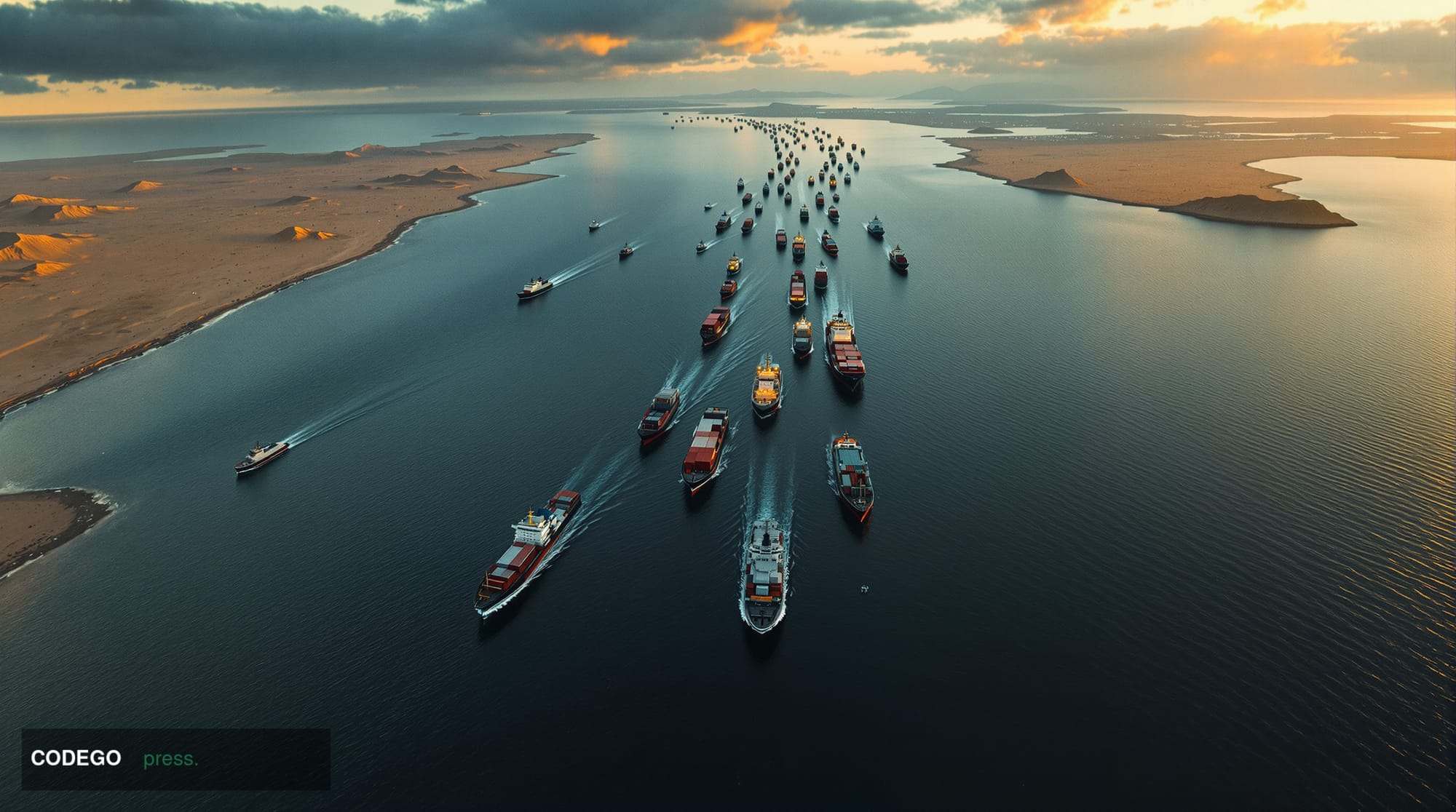
The escalating crisis in the Strait of Hormuz has evolved from a regional maritime dispute into a full-scale stress test of the global financial system's anti-money laundering infrastructure. As the United States enforces a blockade targeting Iranian port traffic, financial institutions worldwide are discovering that their compliance frameworks—built for predictable trade patterns—are woefully inadequate for navigating geopolitical chaos.
The immediate impact extends far beyond shipping delays. Financial institutions, particularly fintechs providing trade finance and insurance services, are grappling with a fundamental breakdown in the data integrity that underpins modern Financial Conduct Authority and Office of Foreign Assets Control compliance protocols. When vessels reroute or retreat under security constraints, their historical movement patterns—the foundation of automated risk assessment—disintegrate entirely.
Becki LaPorte, Principal of AML Strategy and Innovation at FinScan, characterizes this disruption as a catalyst for Trade-Based Money Laundering. "The disruption is creating a surge in trade-based money laundering risk, as rerouted shipments, volatile pricing, and rapidly changing documentation make it significantly harder for banks and insurers to distinguish legitimate trade from sanctioned or illicit activity embedded within global supply chains," LaPorte warns.
The False Positive Crisis
The technical challenge facing compliance teams is twofold: automated monitoring systems are generating thousands of false positives while simultaneously missing genuine sanctions evasion attempts. This occurs because machine learning algorithms trained on stable shipping routes cannot adapt quickly enough to the chaos of vessels turning back, switching destinations, or disappearing from tracking systems entirely. The "graying" of legitimate trade data means that previously reliable indicators of suspicious activity have become meaningless.
For fintech companies operating in trade finance, this represents an existential challenge to their business models. Underwriting processes that once relied on algorithmic risk assessment must now incorporate real-time geopolitical analysis. What was previously automated decision-making has become a manual, labor-intensive process requiring constant human oversight.
Ghost Fleets and Dark Activity
The blockade has exposed critical vulnerabilities in vessel tracking and ownership verification. Financial institutions must now contend with "ghost fleets"—ships that may have interacted with sanctioned Iranian ports during the crisis—while monitoring for "dark activity" where vessels deliberately disable their Automatic Identification System transponders to avoid detection. This creates blind spots in the supply chain that traditional compliance frameworks cannot address.
The regulatory implications extend well beyond the immediate crisis. Even when the strait eventually reopens, the backlog of delayed shipments and weeks of opaque maritime activity will require intensive scrutiny from regulators. Financial institutions can expect months of enhanced oversight as authorities work to unravel the complex web of rerouted transactions and altered documentation generated during the blockade.
Adaptation Strategies for Survival
Financial institutions that hope to navigate this crisis must fundamentally reimagine their compliance infrastructure. This includes moving beyond basic Know Your Customer protocols to implement artificial intelligence-driven document verification systems capable of detecting anomalies in bills of lading and invoices that may conceal Iranian origins. Real-time integration of AIS data into anti-money laundering workflows has become essential for monitoring vessel movements and identifying suspicious patterns.
The crisis has also highlighted the need for dynamic risk assessment capabilities that can update compliance scores instantly as geopolitical boundaries shift. Traditional static compliance models, which assume stable trade relationships and predictable shipping routes, have proven inadequate for managing sanctions risk in an era of rapid geopolitical change.
Beyond the Immediate Crisis
LaPorte emphasizes that the Hormuz crisis represents more than a temporary disruption—it signals the emergence of a new operating environment where geopolitical shocks can instantly overwhelm established compliance frameworks. The regulatory fragmentation created by conflicting sanctions expectations across different jurisdictions adds another layer of complexity for global financial institutions.
Financial institutions must now conduct "what-if" stress testing scenarios on their current portfolios to understand how prolonged blockades or similar crises would impact both liquidity and compliance overhead. The assumption that global trade operates within consistent regulatory parameters—the foundation of modern compliance systems—has been fundamentally challenged.
The fintechs that emerge stronger from this crisis will be those that can maintain technical rigor while adapting to the breakdown of traditional compliance certainties. As geopolitical tensions continue to reshape global trade routes, the ability to manage sanctions risk in real-time has become a core competitive advantage rather than a regulatory afterthought.
Written by the editorial team — independent journalism powered by Codego Press.