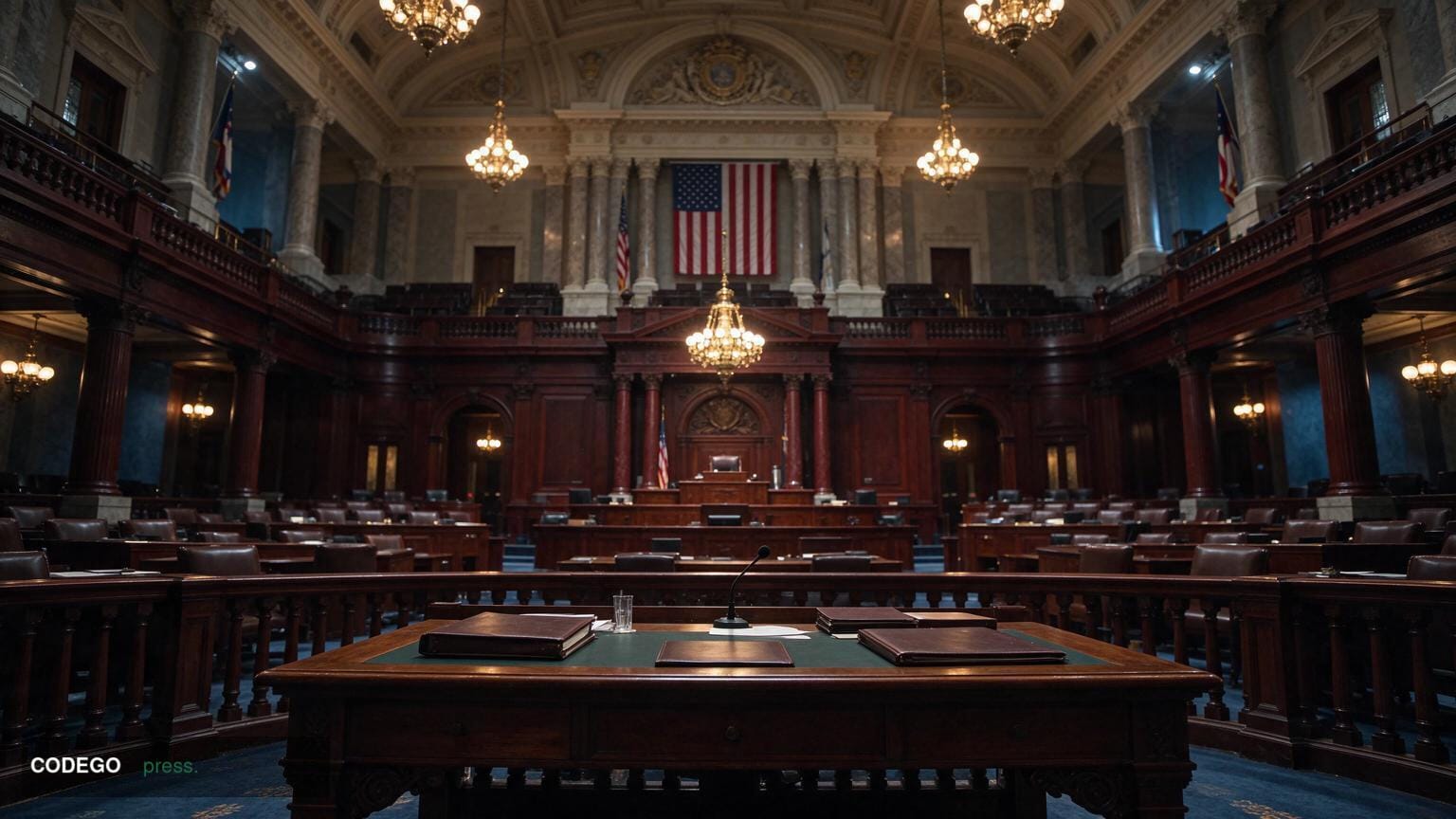
On November 19, 2026, two House Democrats took direct aim at one of the fastest-growing — and least-regulated — corners of financial markets. Representatives Sean Casten of Illinois and Ted Lieu of California introduced the Policing Insider Trading in Prediction Markets Act of 2026, a measure that would establish a formal whistleblower program within the Department of Justice specifically designed to surface and prosecute instances of insider trading and fraud occurring on prediction market platforms. The move signals that Congress is no longer willing to treat the prediction market sector as a regulatory afterthought — and that the political appetite for oversight of these platforms is growing on Capitol Hill.
Prediction Markets and the Enforcement Gap
Prediction markets — platforms where participants place bets on the outcomes of real-world events, from elections and economic indicators to geopolitical developments — have expanded rapidly in recent years, drawing in retail participants, institutional actors, and significant volumes of capital. Yet the regulatory framework governing them remains fragmented at best. Unlike equity or derivatives markets, where the Securities and Exchange Commission and the Commodity Futures Trading Commission maintain established surveillance, reporting, and enforcement mechanisms, prediction markets operate in a liminal space — one where bad actors can potentially exploit material non-public information with considerably less risk of detection or prosecution.
It is precisely this enforcement gap that the Casten-Lieu bill seeks to close. By embedding a dedicated whistleblower mechanism within the DOJ, the legislation would create a structured channel through which insiders — platform employees, market participants, or affiliated parties — could report suspected manipulation or fraud in exchange for legal protections. The design logic mirrors that of existing whistleblower frameworks at the SEC and the CFTC, both of which have demonstrated that confidential reporting mechanisms can be among the most cost-effective tools in a regulator's enforcement arsenal, often surfacing misconduct that surveillance algorithms and periodic audits simply cannot detect.
Why DOJ, and Why Now
The choice to route the proposed whistleblower program through the Department of Justice rather than an existing financial regulator is deliberate and strategically significant. Prediction market platforms do not neatly fit within the jurisdictional mandates of the SEC or CFTC, creating uncertainty about which agency would have primary enforcement authority over alleged fraud. By anchoring the program at the DOJ, Casten and Lieu sidestep that jurisdictional ambiguity and ensure that potential criminal conduct — not merely civil infractions — can be pursued with the full prosecutorial weight of the federal government.
The timing of the bill is equally telling. Prediction markets attracted extraordinary public attention during the 2026 election cycle, with platforms registering unprecedented traffic and wagering volumes as voters and market participants alike turned to contract prices as real-time gauges of electoral probability. That surge in mainstream visibility also brought heightened scrutiny, with concerns raised in policy and media circles about whether participants with privileged access to polling data, campaign internals, or other non-public information could profit illegally by trading on that knowledge ahead of public disclosure.
Legislative Context and the Road Ahead
The Policing Insider Trading in Prediction Markets Act of 2026 enters a legislative environment that has been slow to build consensus around prediction market regulation. Industry stakeholders have historically resisted aggressive oversight, arguing that prediction markets perform a valuable price-discovery function and that over-regulation risks pushing activity offshore or into less transparent venues. Those arguments will almost certainly resurface in committee debates if the bill advances.
Nevertheless, the Casten-Lieu bill reflects a broader Democratic caucus concern that the financial integrity of these markets cannot be guaranteed without meaningful enforcement infrastructure. Whistleblower programs are politically durable precisely because they are cost-efficient — they impose minimal burdens on compliant participants while creating substantial deterrence for would-be fraudsters. For a caucus currently in the minority in the House, introducing targeted, technically specific legislation also serves a signaling function: it establishes a legislative record and forces the majority to take a public position on prediction market accountability.
What This Means for the Industry
For prediction market platforms and the broader ecosystem of participants operating within them, the Casten-Lieu bill is an unmistakable signal that the period of regulatory ambiguity is narrowing. Even if this particular piece of legislation does not advance in the current Congress, it articulates a framework — DOJ-anchored enforcement, whistleblower protections, explicit targeting of insider trading — that future lawmakers and regulators are likely to reference. Platforms that proactively invest in internal compliance infrastructure, market surveillance capabilities, and robust conflict-of-interest policies will be better positioned to navigate whatever regulatory environment ultimately emerges. Those that treat the current ambiguity as a permanent condition do so at considerable risk. The introduction of the Policing Insider Trading in Prediction Markets Act of 2026 is not an isolated event; it is a marker of the direction financial regulation is moving, and the prediction market sector would be unwise to ignore it.
Written by the editorial team — independent journalism powered by Codego Press.