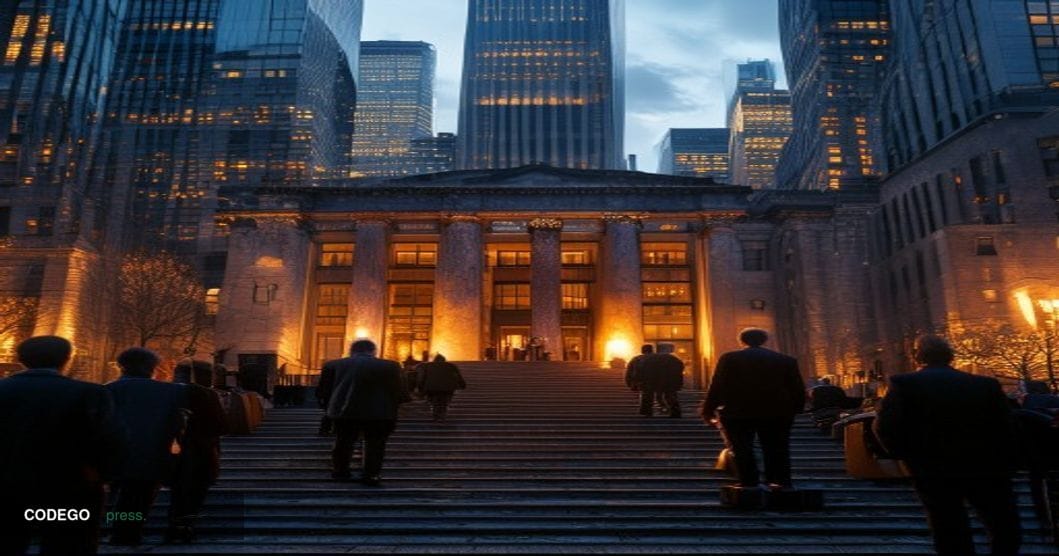
The United States House of Representatives is preparing to hold a formal hearing on the Digital Asset Market Clarity Act this Friday in New York City — a development that carries substantial implications for the future of cryptocurrency regulation in the world's largest economy. The session, taking place ahead of a Congressional recess, is being watched closely by industry participants, legal scholars, and institutional investors who have long pressed lawmakers for a coherent federal framework governing digital asset markets.
The choice of New York City as the venue is itself a signal of intent. As the undisputed global capital of finance and home to the largest concentration of institutional crypto activity in the United States, holding the hearing in Manhattan places legislators directly within the ecosystem they seek to regulate. It also puts Congress in proximity to the exchanges, asset managers, venture funds, and legal firms that will be most immediately affected by whatever legislative architecture emerges from this process.
The House Financial Services Committee and its digital assets subcommittee have spent months navigating the complex jurisdictional question that has paralyzed crypto legislation for years: namely, whether digital assets should fall under the regulatory purview of the Securities and Exchange Commission or the Commodity Futures Trading Commission. The Digital Asset Market Clarity Act is widely understood to be an attempt to resolve that impasse by establishing clearer definitional boundaries between securities and commodities in the context of digital tokens — a distinction that has triggered years of costly litigation and regulatory uncertainty.
The stakes of this hearing extend well beyond the procedural. Legislative hearings of this nature serve multiple functions simultaneously: they create a public record, allow expert testimony to shape the legislative text, and — perhaps most critically in an election-sensitive environment — they signal political will. A substantive hearing held just before a Congressional recess carries added weight, as it can either catalyze or stall momentum depending on the tenor of debate and the cohesion of the witnesses assembled.
Market confidence has historically tracked closely with signals of regulatory clarity. Periods of enforcement-led ambiguity — in which regulators pursue legal action against exchanges and token issuers without offering prospective guidance — have suppressed institutional participation and driven capital offshore. The Digital Asset Market Clarity Act, if it advances from hearing to markup to a floor vote, could fundamentally alter that dynamic. Institutional desks at firms currently constrained by compliance uncertainty would gain the definitional footing they need to expand digital asset exposure without fear of retroactive regulatory action.
The timing before recess is a double-edged consideration. On one hand, a strong hearing can generate bipartisan pressure to move legislation before lawmakers disperse, concentrating focus and accelerating committee action. On the other hand, unresolved disagreements surfaced during testimony can allow opposition to calcify over the break, making post-recess progress harder to achieve. The quality of witness selection, the depth of member engagement, and the degree of bipartisan coordination heading into Friday's session will all determine which dynamic prevails.
It is worth noting the broader legislative context in which this hearing occurs. Congress has in recent sessions come closer than ever before to passing comprehensive digital asset market structure legislation, with several competing frameworks debated across both chambers. The Digital Asset Market Clarity Act represents one of the more ambitious efforts to provide a unified statutory foundation — and a hearing of this profile, held in New York rather than Washington, suggests its proponents are deliberately reaching beyond Capitol Hill to build broader coalition support among financial industry stakeholders.
What This Means
For practitioners across banking, asset management, and financial technology, Friday's hearing is a legislative moment worth monitoring in real time. If the session produces consensus testimony from credible industry and academic witnesses, it strengthens the case for the Act advancing through committee before year-end. Regulatory clarity at the federal level would reduce compliance costs, unlock institutional capital flows, and provide a stable foundation for product development across the digital asset ecosystem. The hearing does not guarantee legislation, but in a policy environment where momentum is fragile and windows are narrow, a well-executed session in America's financial capital could prove to be the catalyst the market has been waiting for.
Written by the editorial team — independent journalism powered by Codego Press.