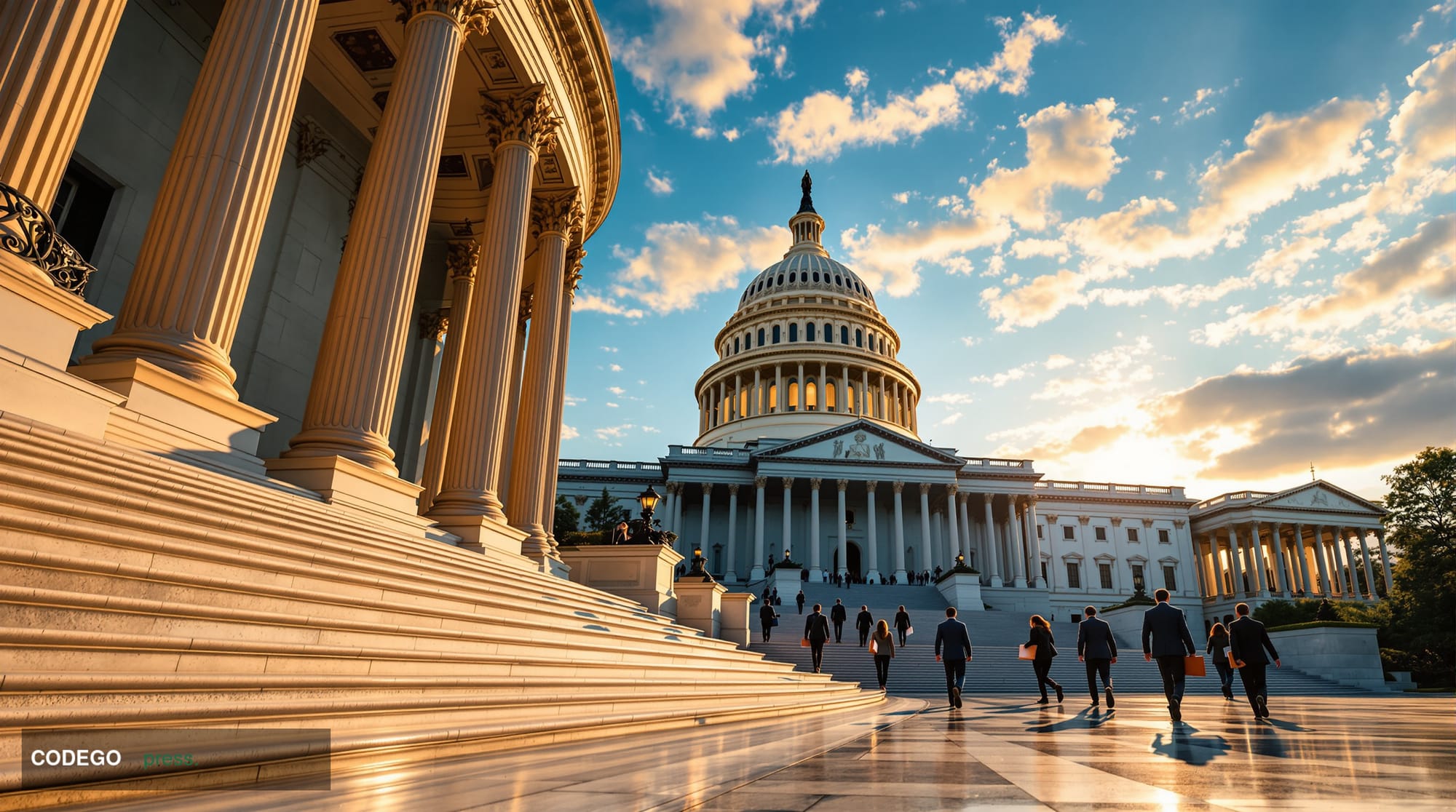
The Digital Asset Tax Certainty Act (H.R. 10357) cleared the House Ways and Means Committee this week, marking one of the most consequential legislative advances for the cryptocurrency industry in years. The bill, which seeks to clarify the tax treatment of digital asset mining and staking while establishing parity with traditional financial instruments, drew immediate commentary from the Crypto Council for Innovation — a signal of how closely the industry is watching this legislation move through Congress.
For an industry that has long operated under a fog of regulatory ambiguity, the committee's approval of H.R. 10357 represents something tangible: a formal legislative mechanism to answer questions that neither the Internal Revenue Service nor prior Congresses have resolved with any meaningful precision. The bill's architects argue that without clear rules governing how miners and stakers are taxed on rewards, participants in these foundational blockchain activities face an asymmetric burden compared with investors in conventional asset classes — an imbalance the legislation explicitly aims to correct.
The Core Problem: Tax Ambiguity as a Market Distortion
Mining and staking are not peripheral activities in the digital asset ecosystem — they are structural. Proof-of-work miners secure blockchain networks by expending computational resources, while proof-of-stake validators lock up capital to confirm transactions. Both activities generate rewards, and both have occupied a contested space in U.S. tax law. Are those rewards ordinary income at receipt? Capital gains upon disposal? A return of capital? The absence of a codified answer has not merely inconvenienced accountants; it has materially shaped where capital flows, where infrastructure is built, and where talent migrates.
H.R. 10357 attempts to resolve that ambiguity legislatively, placing the tax treatment of these activities on a clear statutory footing. By creating parity with the treatment of traditional financial assets, the bill signals a philosophical shift: digital assets are not a curiosity to be managed through ad hoc guidance but a mature asset class warranting rules-based treatment comparable to equities, bonds, and other regulated instruments. That framing matters both for domestic operators and for the international competitiveness argument that industry advocates have pressed persistently in Washington.
Industry Response and the Crypto Council's Position
The Crypto Council for Innovation's decision to comment publicly on the legislation underscores the bill's stakes. The Council, which represents a broad coalition of digital asset companies and institutional participants, has consistently argued that regulatory and tax clarity is a prerequisite for responsible industry growth — not an obstacle to it. Its engagement with H.R. 10357 reflects a calculated judgment that this particular legislation, if enacted, could remove meaningful tax barriers to the everyday use of digital assets, expanding the practical utility of crypto beyond speculative holding.
Removing those barriers matters at a transactional level. One of the persistent frustrations for proponents of digital asset adoption has been the tax event triggered by ordinary usage — spending, exchanging, or receiving crypto in the course of normal commerce creates reportable transactions that impose compliance costs disproportionate to the economic activity involved. While H.R. 10357's primary focus is mining and staking clarity and traditional-asset parity, the broader legislative intent — reducing tax friction — speaks directly to this issue. Any reduction in that friction makes the case for digital assets as a medium of exchange considerably stronger.
Committee Passage: A Meaningful but Incomplete Victory
Passage through the House Ways and Means Committee is a significant procedural achievement. The committee holds jurisdiction over all tax legislation in the House of Representatives, and winning its approval means H.R. 10357 has survived the scrutiny of members most deeply versed in tax policy mechanics. That is not a trivial filter. Crypto legislation has stalled repeatedly at earlier stages, either through neglect, partisan disagreement, or the sheer complexity of adapting century-old tax code concepts to decentralized networks.
Yet committee approval is not enactment. The bill must still pass the full House, survive the Senate — where companion legislation would need to navigate the Finance Committee — and ultimately be signed into law. Each of those stages carries genuine political risk, and the legislative calendar is rarely kind to specialized policy measures. The cryptocurrency industry has experienced this cycle before: momentum generated in committee, only to dissipate before a floor vote. What is different this time, advocates contend, is a more receptive political environment and a growing recognition among lawmakers that deferring digital asset policy creates its own economic costs.
What This Means for the Market
If H.R. 10357 becomes law, the implications would reach across multiple dimensions of the digital asset market. Mining operations — already sensitive to energy costs, hardware cycles, and network difficulty — would gain a clearer picture of their tax liabilities, enabling more disciplined long-term capital planning. Staking participants, particularly institutional validators who have been cautious about scaling exposure under ambiguous tax rules, would have greater confidence to commit capital. And the broader principle of parity with traditional financial assets would provide a template for future legislative action covering derivatives, lending protocols, and tokenized securities.
The bill's advancement does not resolve every open question in crypto taxation — no single piece of legislation could — but it establishes a directional commitment that the United States intends to govern digital assets through clear, principled rules rather than enforcement-driven ambiguity. For an industry that has spent years arguing that clarity, not prohibition, is all it requires to operate responsibly, the House Ways and Means Committee's approval of H.R. 10357 is at minimum a credible down payment on that promise.
Written by the editorial team — independent journalism powered by Codego Press.