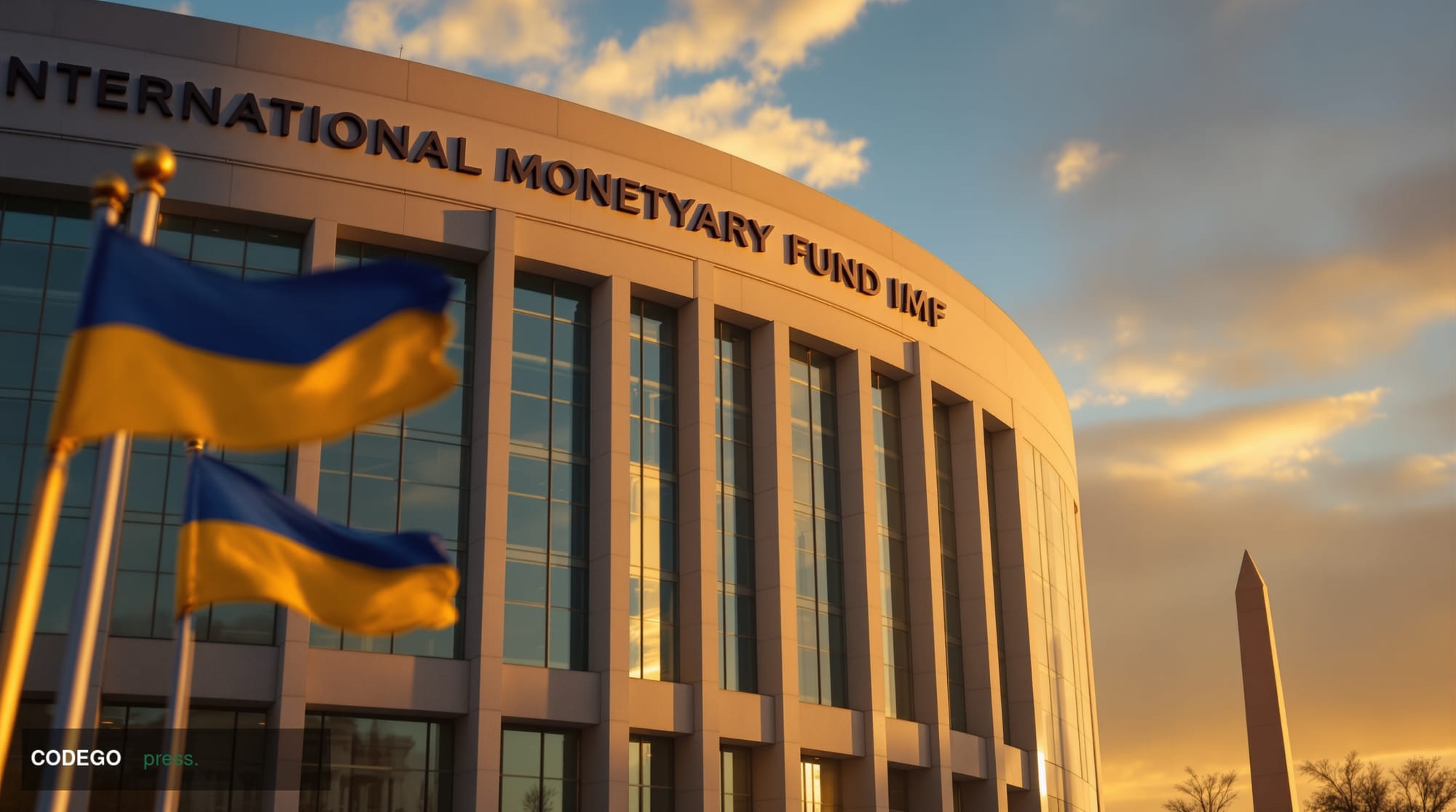
The International Monetary Fund (IMF) has approved an $8.1 billion loan tranche for Ukraine, marking a significant departure from traditional lending protocols by overlooking missed performance benchmarks in recognition of extraordinary geopolitical circumstances. This decision underscores the evolving nature of international financial institutions' crisis response mechanisms and their willingness to prioritize strategic stability over strict conditionality frameworks.
The loan approval represents a watershed moment in multilateral lending practices, demonstrating how global financial architecture adapts during periods of acute geopolitical stress. Ukraine's inability to meet certain predetermined benchmarks would typically trigger automatic review procedures or conditional delays in standard IMF programming. However, the Fund's decision to proceed with disbursement signals a pragmatic acknowledgment that conventional metrics may prove inadequate when evaluating countries operating under extraordinary wartime conditions.
This $8.1 billion injection forms part of Ukraine's broader Extended Fund Facility program, designed to maintain macroeconomic stability while the country navigates unprecedented fiscal pressures. The IMF's flexibility reflects growing recognition that rigid adherence to peacetime economic benchmarks could prove counterproductive when applied to economies disrupted by military conflict. Traditional measures of fiscal performance, structural reform implementation, and monetary policy effectiveness become significantly more challenging to achieve and assess under wartime conditions.
The decision carries profound implications for global economic stability, extending well beyond Ukraine's immediate financial needs. By establishing precedent for benchmark flexibility during geopolitical crises, the IMF potentially recalibrates expectations for similar situations worldwide. This approach suggests international financial institutions are evolving their crisis response frameworks to balance institutional credibility with real-world operational constraints faced by member countries during extraordinary circumstances.
From a broader monetary policy perspective, the loan approval reinforces the IMF's role as a crisis lender of last resort while simultaneously testing the boundaries of conditional lending. The Fund's willingness to prioritize strategic considerations over technical compliance creates new parameters for how international financial support operates during periods of systemic risk. This flexibility mechanism could prove crucial for maintaining global financial stability when traditional assessment criteria become impractical or counterproductive.
The approval also highlights the interconnected nature of geopolitical stability and international financial architecture. Ukraine's economic performance directly impacts regional stability, energy markets, and global supply chains, making the country's financial health a matter of international concern beyond traditional debtor-creditor relationships. The IMF's recognition of these broader implications demonstrates sophisticated understanding of how localized conflicts can generate systemic risks requiring unconventional policy responses.
Market implications extend beyond immediate liquidity provision to Ukraine's economy. The decision signals to international investors and rating agencies that multilateral institutions remain committed to supporting strategically important economies even when traditional performance metrics suggest heightened risk. This commitment could influence sovereign bond pricing, currency stability, and broader investment flows to emerging markets facing similar challenges.
The $8.1 billion disbursement establishes important precedent for how international financial institutions balance institutional integrity with crisis response effectiveness. As geopolitical tensions continue reshaping global economic relationships, the IMF's flexibility in Ukraine's case may become a template for future crisis lending decisions, fundamentally altering the landscape of multilateral financial support during periods of extraordinary stress.
Written by the editorial team — independent journalism powered by Codego Press.