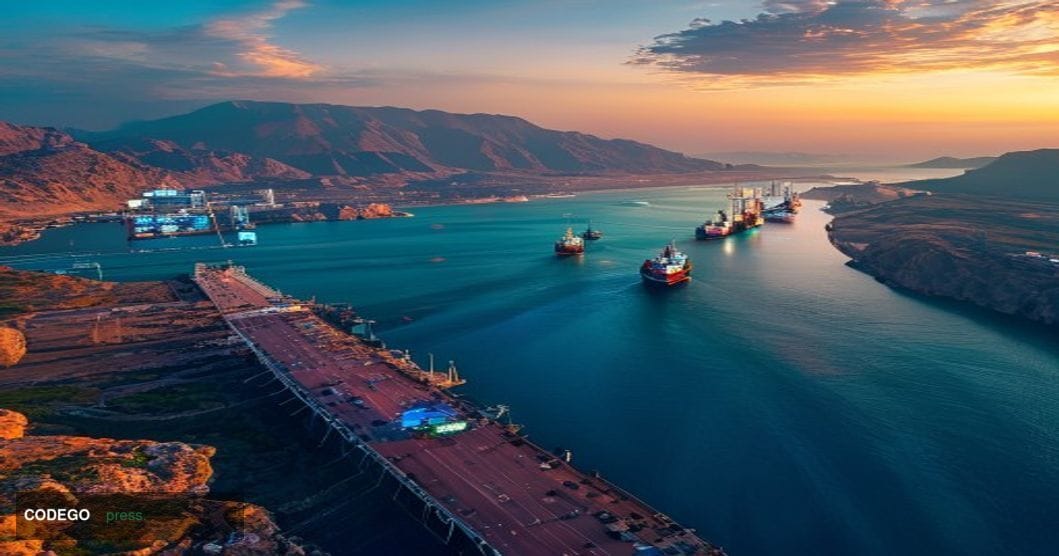
Iran has unveiled a groundbreaking cryptocurrency-based insurance platform that positions the Islamic Republic at the forefront of sanctioned nations leveraging digital assets to circumvent traditional financial systems. Hormuz Safe, a state-backed Bitcoin-settled maritime insurance platform, targets cargo vessels transiting the strategically vital Strait of Hormuz, offering instant digital coverage paid for in cryptocurrency.
The initiative, backed by Iran's Ministry of Transportation, represents a calculated attempt to capture billions in potential revenue from sanctioned shippers who face limited options in conventional insurance markets. By accepting Bitcoin payments for maritime coverage, Iran is creating an alternative ecosystem that bypasses traditional banking channels while serving vessels that struggle to secure coverage through established Lloyd's of London syndicates or major international insurers.
The Strait of Hormuz carries approximately one-fifth of global petroleum liquids and serves as the primary export route for crude oil from Saudi Arabia, Iraq, the United Arab Emirates, Kuwait, and Iran itself. This narrow waterway, measuring just 21 miles at its narrowest point, represents one of the world's most critical energy chokepoints. Any disruption to shipping through these waters can trigger immediate spikes in global energy prices, making reliable insurance coverage essential for vessel operators.
Traditional maritime insurers have increasingly withdrawn coverage from vessels trading with sanctioned entities or operating in politically sensitive regions, creating a significant gap in the market. Iran's cryptocurrency-based approach directly addresses this void, offering sanctioned shippers immediate access to coverage while generating revenue streams that remain outside the reach of Western financial sanctions.
The platform's Bitcoin settlement mechanism represents a sophisticated evolution in sanctions evasion techniques. Unlike previous attempts to circumvent financial restrictions through barter systems or alternative currencies, Hormuz Safe leverages the decentralized nature of cryptocurrency to create a genuine alternative to dollar-denominated insurance products. This approach allows Iran to collect premiums in a globally recognized digital asset while providing coverage that can be verified and settled without traditional banking intermediaries.
The timing of this launch reflects Iran's growing confidence in cryptocurrency adoption as a tool of economic statecraft. The country has increasingly embraced digital assets as a means of reducing dependence on the traditional financial system, particularly as sanctions have tightened around its energy sector. By positioning itself as a service provider rather than merely a sanctions target, Iran is attempting to transform its exclusion from global markets into a competitive advantage.
The broader implications extend beyond maritime insurance into the fundamental structure of global trade finance. If successful, Hormuz Safe could establish a precedent for other sanctioned nations to develop parallel financial systems using cryptocurrency infrastructure. This development challenges the effectiveness of traditional economic sanctions that rely on exclusion from dollar-based financial networks.
For the global shipping industry, Iran's initiative presents both opportunities and risks. While sanctioned shippers gain access to previously unavailable coverage, traditional insurers may face increased competition in a sector where margins are already under pressure. The platform's success could accelerate the adoption of cryptocurrency settlement in maritime commerce, fundamentally altering how international shipping transactions are structured.
The launch of Hormuz Safe represents more than a tactical response to sanctions pressure. It signals Iran's strategic pivot toward cryptocurrency-based financial services as a means of maintaining relevance in global trade networks. As the platform potentially unlocks billions in new revenue while deepening crypto's role in global energy trade, it establishes Iran as an unlikely pioneer in the intersection of digital assets and traditional maritime commerce.
Written by the editorial team — independent journalism powered by Codego Press.