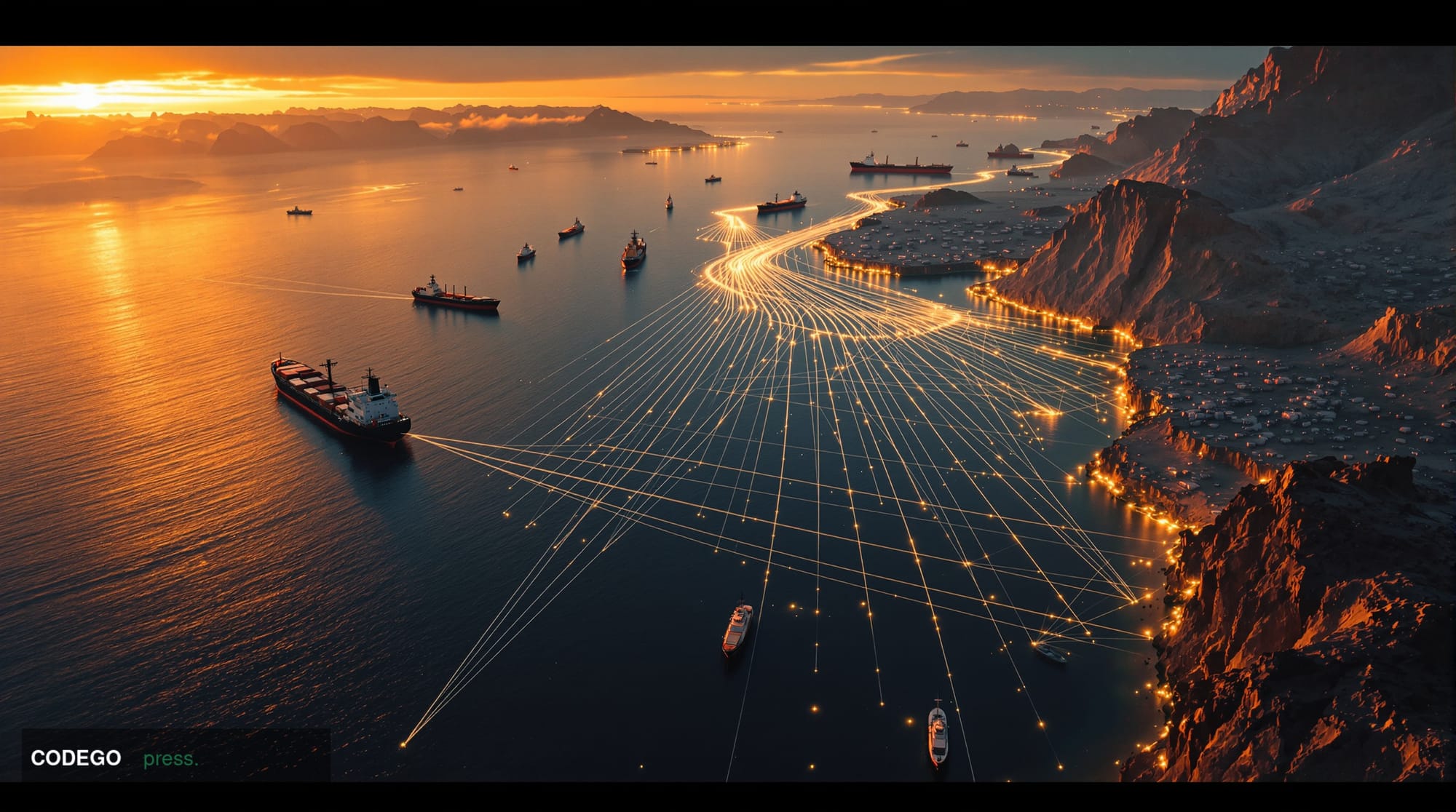
Iran's expanding influence over critical internet infrastructure in the Strait of Hormuz represents a seismic shift in global financial risk calculations, as the Islamic Republic positions itself to potentially control the digital arteries that underpin international banking, shipping, and energy trading systems. This strategic move threatens to introduce unprecedented vulnerabilities into the backbone of global commerce at one of the world's most critical maritime chokepoints.
The implications for financial markets extend far beyond traditional geopolitical concerns. The Strait of Hormuz serves as the primary transit route for approximately one-fifth of global petroleum liquids and carries an estimated 40% of seaborne crude oil shipments. Control over the internet cables that facilitate real-time communication for these massive commodity flows could grant Iran leverage over global energy pricing mechanisms and trading systems that rely on instantaneous data transmission.
For financial institutions, the prospect of Iranian control over these communication channels introduces a new category of operational risk. Major banks and trading houses depend on secure, uninterrupted data flows to execute billions of dollars in energy trades, foreign exchange transactions, and commodity derivatives. Any disruption to these cables could create immediate liquidity crises in energy markets while simultaneously compromising the secure communication protocols that banks use to settle international transactions.
The banking sector's vulnerability becomes particularly acute when considering the concentration of global shipping finance through this narrow waterway. JPMorgan Chase and other major financial institutions that provide trade finance for energy shipments could face severe operational challenges if Iran exercises control over the digital infrastructure that enables their transaction monitoring and settlement systems. The potential for selective disruption of financial communications creates an asymmetric weapon that could be deployed with surgical precision against specific institutions or trading relationships.
Energy markets face equally severe disruptions under this scenario. The global oil pricing system depends on continuous data flows from tanker tracking systems, port management networks, and commodity trading platforms, all of which rely on the submarine cable infrastructure now under Iranian influence. A coordinated disruption could fragment global energy markets, creating information asymmetries that would benefit actors with alternative communication channels while penalizing traditional market participants.
The strategic timing of this development coincides with an already volatile geopolitical landscape where financial institutions are increasingly concerned about cyber warfare and infrastructure vulnerabilities. Central banks, including the European Central Bank, have repeatedly warned about the systemic risks posed by cyberattacks on financial infrastructure. Iranian control over physical internet cables represents an escalation beyond traditional cyber threats, introducing the possibility of sustained, infrastructure-level disruptions that could persist for weeks or months.
For multinational corporations with significant exposure to Middle Eastern operations, this development necessitates immediate reassessment of business continuity planning. Companies in the shipping, energy, and financial sectors must now factor the possibility of Iranian-controlled communication disruptions into their risk management frameworks. This includes developing redundant communication pathways, diversifying digital infrastructure dependencies, and potentially restructuring operations to reduce reliance on Hormuz Strait-dependent data flows.
The broader implications for global financial stability cannot be understated. Should Iran choose to leverage its position over these cables during a geopolitical crisis, the resulting market disruptions could cascade through interconnected financial systems with devastating effect. The concentration of global energy trade through this single maritime corridor, combined with the digital infrastructure that enables its coordination, creates a potential systemic vulnerability that rivals the traditional concerns about physical blockade of the strait itself.
This emerging reality demands urgent attention from financial regulators, central banks, and international institutions responsible for maintaining global financial stability. The intersection of geopolitical tensions, critical infrastructure control, and financial system vulnerabilities in the Strait of Hormuz represents a new paradigm in global risk management that requires coordinated international response and innovative approaches to protecting the digital foundations of global commerce.
Written by the editorial team — independent journalism powered by Codego Press.