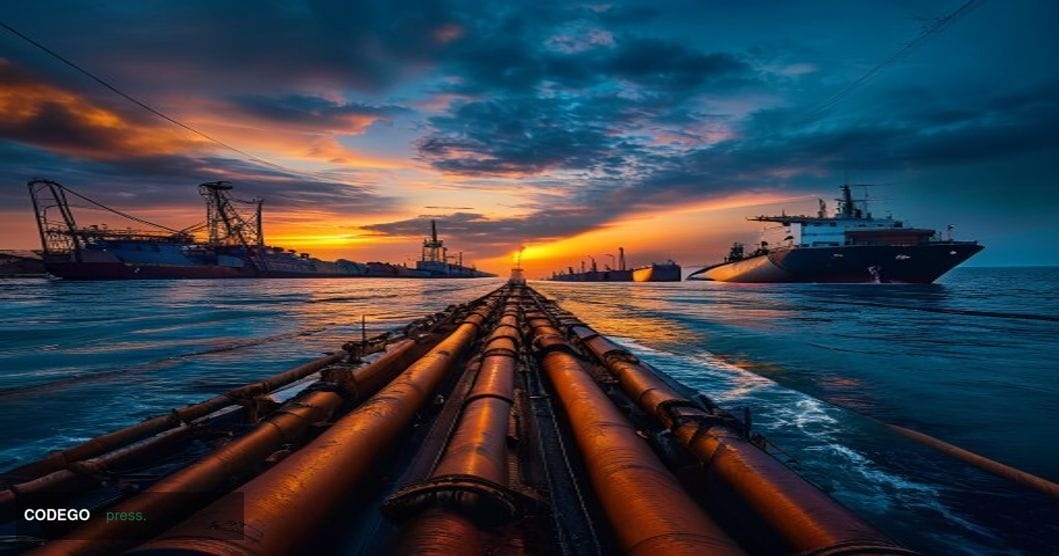
In a development that underscores the razor-thin line between energy diplomacy and geopolitical brinkmanship, Iran shipped approximately 70 million barrels of crude oil to China during a brief window in which the United States temporarily lifted its naval blockade — a fleeting reprieve that has done little to calm nerves in global energy markets. With prediction markets now assigning only a 9.5% probability to full normalization of Strait of Hormuz traffic by August 31, the episode reveals just how precarious the world's most strategically vital shipping corridor remains.
A Window Seized, A Corridor Still Contested
The sheer volume of the transfer — 70 million barrels — signals that both Tehran and Beijing moved swiftly to capitalize on the opening the moment the American blockade was briefly relaxed. At prevailing market prices, a cargo of that magnitude represents billions of dollars in crude petroleum, providing Iran with a substantial injection of hard-currency revenue that years of compounding sanctions have otherwise constrained. For China, the world's largest crude importer, the shipment represents an opportunity to shore up strategic reserves and deepen an energy partnership that Washington views with growing alarm. The transaction illustrates, in the starkest terms, that economic gravity between the two sanctioned-adjacent economies does not simply pause when geopolitical pressure increases — it intensifies the moment any gap appears.
The Hormuz Chokepoint: Markets Remain Deeply Skeptical
Perhaps more telling than the shipment itself is what prediction markets are communicating about the road ahead. A 9.5% implied probability on Strait of Hormuz traffic normalization by the end of August is, by any measure, a near-dismissal of near-term resolution. Prediction markets aggregate the collective judgment of informed participants who are placing real capital behind their assessments, making this figure a meaningful signal rather than mere punditry. The market is effectively pricing the corridor's ongoing disruption as the base case, with full normalization treated as a tail event for the coming weeks.
The Strait of Hormuz is not simply an Iran-China concern. Roughly 20% of the world's traded oil — and a significant share of liquefied natural gas — transits this 33-kilometre-wide passage between the Persian Gulf and the Gulf of Oman. Any sustained disruption sends shockwaves through energy pricing globally, affecting import-dependent economies from Japan and South Korea to Germany and India. The fact that one side of this chokepoint is currently subject to active American naval pressure, and that traffic normalization is given barely a one-in-ten chance within six weeks, is a material risk that energy traders, central bankers, and corporate treasurers cannot afford to treat as background noise.
Washington's Strategic Calculation
The brief lifting of the blockade raises as many questions as it resolves. Was the relaxation a tactical diplomatic signal, a logistical pause, or a calculated test of Iranian and Chinese responsiveness? Whatever the intent, the outcome is unambiguous: Iran used the window to push through one of its largest documented crude shipments to China in recent memory, and the blockade's return means that 70 million barrels may represent the ceiling of accessible Iranian supply for the foreseeable future — unless further negotiations produce a more durable opening.
The episode also speaks to the limits of sanctions architecture in an era of multipolar energy trade. The U.S. Treasury's Office of Foreign Assets Control has long maintained pressure on Iranian oil exports through secondary sanctions, yet China's state-linked importers have demonstrated persistent appetite for discounted Iranian crude, often routed through intermediary jurisdictions and opaque vessel-tracking arrangements. A naval blockade represents an escalation beyond financial sanctions into physical interdiction — a far more combustible tool with correspondingly higher risk of miscalculation.
What This Means for Energy Markets and Global Finance
For financial institutions and energy-sector investors, the 70-million-barrel episode and the 9.5% normalization odds together frame a scenario that demands active risk management rather than passive monitoring. Energy price volatility is likely to remain elevated as long as the Strait of Hormuz operates under constraints, with Brent crude sensitive to any further development along the Iran-U.S. axis. Shipping insurance premiums for tankers transiting the Gulf have already reflected heightened war-risk assessments, and any prolongation of the current standoff will continue to pressure freight costs and supply-chain planning horizons for Asian refiners in particular.
The broader financial signal is that the geopolitical risk premium embedded in global oil pricing is not retreating — it is being recalibrated in real time. When a single brief relaxation of a blockade produces a 70-million-barrel surge in exports, markets learn that the underlying demand and supply pressures are enormous, and that any return to normalcy will be met with similarly intense commercial activity. The structural question — whether the Strait of Hormuz can return to functioning as a neutral transit corridor — remains, as of now, largely unanswered and, according to prediction markets, unlikely to be resolved before September arrives.
Written by the editorial team — independent journalism powered by Codego Press.