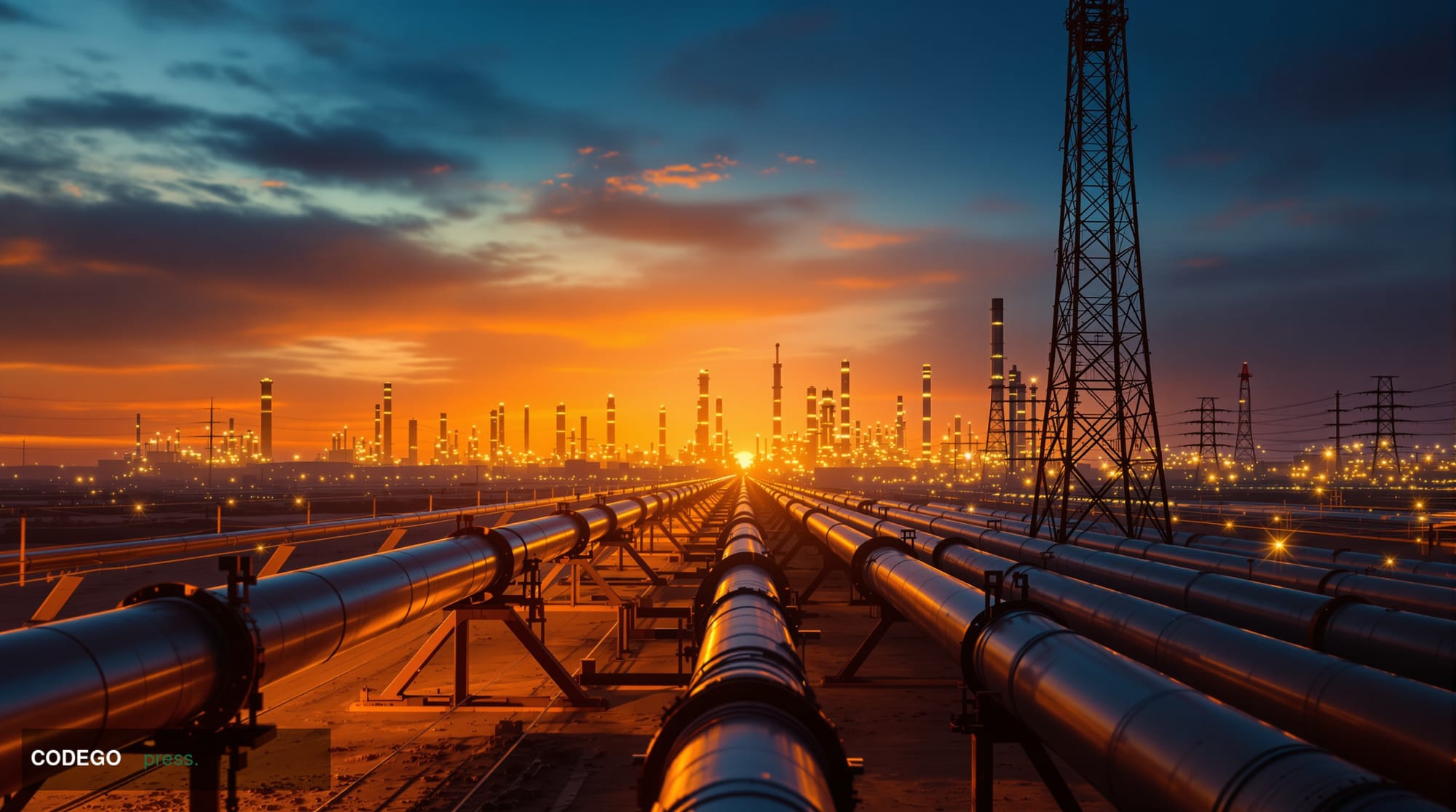
Iran has issued a stark warning that global infrastructure stands at heightened risk of disruption, citing the intensifying triangle of tensions between Tehran, Washington, and Tel Aviv as a central driver of potential instability. The alert, which raises immediate concerns for international relations and economic continuity, arrives at a moment when geopolitical fault lines across the Middle East are already under significant strain — and when the interconnected systems underpinning global commerce, energy supply, and financial networks have rarely been more exposed.
The warning carries weight precisely because of the nature of what is being threatened. Global infrastructure — encompassing energy pipelines, maritime chokepoints, telecommunications networks, and the financial messaging systems that move trillions of dollars across borders daily — does not exist in geopolitical isolation. When a state actor of Iran's regional stature signals that these systems are vulnerable, markets, insurers, logistics operators, and central banks are obligated to treat the statement as a material risk disclosure, not mere diplomatic rhetoric.
The geopolitical backdrop is well established. Relations between the United States and Iran have remained deeply adversarial through successive rounds of sanctions, nuclear diplomacy failures, and proxy conflicts stretching across Iraq, Syria, Yemen, and Lebanon. Israel's posture toward Tehran, shaped by decades of declared existential concern over Iran's nuclear programme and its regional military reach, adds a second axis of pressure. The convergence of these two bilateral tensions into a single tripartite standoff creates a compounding risk environment with few clear off-ramps.
From a financial-sector perspective, the implications extend well beyond the obvious concern for energy markets. The Bank for International Settlements and a range of multilateral institutions have in recent years elevated geopolitical risk to a top-tier systemic concern — on par with credit contagion or liquidity crises — precisely because modern financial infrastructure shares many of the same physical and digital dependencies as civilian and industrial systems. Undersea data cables, satellite communication networks, and cross-border payment rails are all theoretically exposed to the kind of disruption that escalating state tensions can produce, whether through direct action, cyberattack, or the economic fallout of prolonged conflict.
The cryptocurrency and digital-asset sector, which has built much of its core narrative around resilience and censorship resistance, is not immune to these dynamics. Blockchain networks depend on physical internet infrastructure, mining and validation hardware that is subject to supply chains, and fiat on-ramps and off-ramps that are entirely embedded in the traditional financial system. A significant disruption to global infrastructure — even a temporary one affecting key nodes — would reverberate through digital-asset markets with the same disruptive force felt across equities, commodities, and foreign exchange. The promise of decentralisation has limits when the underlying physical layer is at risk.
Iran's posture also has direct implications for the sanctions architecture that has defined its relationship with the global economy for more than a decade. When Tehran raises the spectre of infrastructure vulnerability in the context of tensions with the United States and Israel, it is, at minimum, signalling a willingness to leverage that vulnerability as a negotiating instrument. The European Union's continued interest in maintaining economic diplomacy with Iran — distinct from the harder lines drawn by Washington — means that any escalation carries the additional risk of fracturing Western coalition unity at precisely the moment it is most needed.
For compliance and risk officers across the banking and fintech sectors, this environment demands heightened vigilance. Correspondent banking relationships that route through the Middle East, trade-finance instruments tied to Gulf-region commodity flows, and digital-asset transactions that touch jurisdictions adjacent to the conflict zone all warrant immediate reassessment under updated geopolitical-risk frameworks. The Financial Action Task Force has long flagged Iran as a high-risk jurisdiction for anti-money laundering and counter-terrorism financing purposes; escalating tensions only sharpen the compliance imperative for institutions with any regional exposure.
What This Means
Iran's warning about global infrastructure vulnerability is not an abstraction. It is a signal — directed at adversaries, allies, markets, and multilateral institutions simultaneously — that the cost of continued confrontation may be measured not only in military or diplomatic terms but in the disruption of the physical and digital systems upon which the global economy depends. For financial institutions, payment networks, and digital-asset platforms, the prudent response is to treat this moment as a stress-test prompt: mapping infrastructure dependencies, reviewing geopolitical exposure in risk frameworks, and stress-testing operational continuity plans against scenarios that, until recently, seemed remote. The gap between geopolitical warning and economic consequence has been narrowing for years. Tehran's statement suggests it may be narrower still than markets currently price.
Written by the editorial team — independent journalism powered by Codego Press.