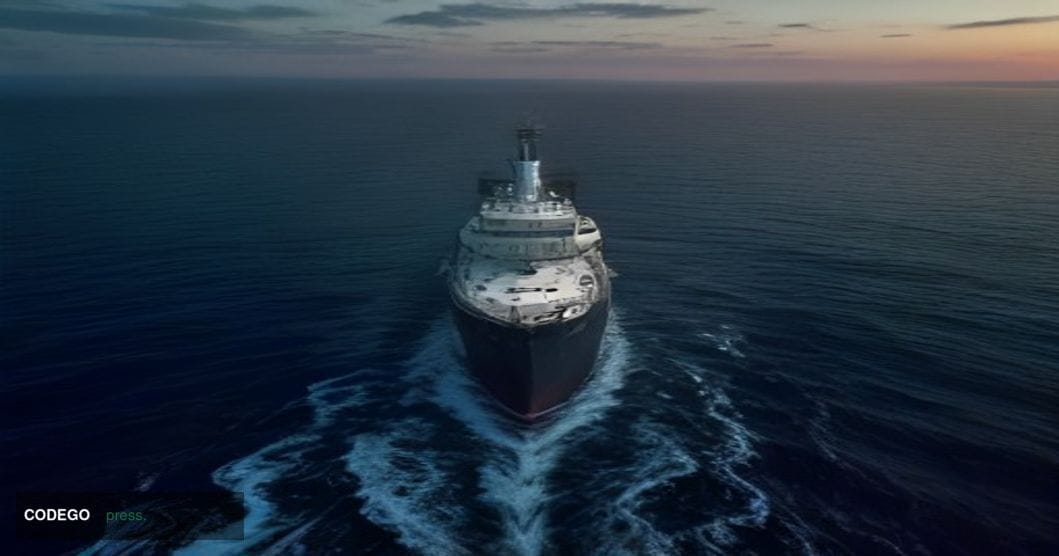
When Italian naval forces intercepted and boarded a Russian-flagged tanker in international waters, the operation crystallized a question that Western governments and financial regulators have struggled to answer for more than two years: how do you enforce an oil price cap and a web of economic sanctions against a country whose maritime operators have become masters of evasion?
The boarding, which took place beyond any nation's territorial jurisdiction, immediately raised thorny questions of international maritime law alongside the more politically charged issue of whether existing sanctions architecture is fit for purpose. Conducting enforcement operations in international waters sits in a legally ambiguous space, one where flag-state authority, freedom of navigation principles, and multilateral sanctions frameworks are frequently in direct tension. That Italy chose to act in this environment signals a notable hardening of resolve among NATO member states willing to move from diplomatic condemnation to physical interdiction.
At the centre of this episode is what analysts now routinely call the shadow fleet — a loosely affiliated armada of ageing tankers operating under flags of convenience, insured through non-Western intermediaries, and owned through chains of shell companies deliberately structured to obscure beneficial ownership. Since Western nations imposed sweeping energy sanctions and an oil price cap coordinated through the G7, Russia has leaned heavily on this grey-market logistics network to keep its crude exports flowing to buyers in Asia, the Middle East, and beyond. The economics of that fleet depend precisely on the difficulty of enforcement: vessels that cannot be tracked, owners who cannot be identified, and transactions that route through jurisdictions beyond the reach of OFAC or OFSI.
The financial architecture underpinning the shadow fleet is arguably as complex as the legal one. Freight payments for sanctioned cargo frequently traverse correspondent banking networks in non-aligned jurisdictions, are settled in currencies outside the dollar system, or — in a growing number of documented cases — make use of cryptocurrency and stablecoin rails that leave fragmented and pseudonymous audit trails. For financial compliance officers at Western banks, the tanker incident serves as a stark reminder that trade-based money laundering and sanctions evasion are not abstract risk-model exercises; they manifest in physical vessels carrying physical barrels of crude, the revenues from which finance a war economy.
From a regulatory standpoint, the Italian operation is likely to accelerate conversations already underway at the Financial Action Task Force (FATF) and within European Union institutions about closing the gaps between maritime law, corporate transparency requirements, and financial sanctions regimes. The EU has progressively tightened its sanctions packages against Russia, and each successive package has attempted to address the shadow fleet problem — blacklisting specific vessels, restricting access to EU ports, and targeting the insurance and brokerage intermediaries that keep ageing tankers seaworthy and commercially viable. Yet enforcement on the water itself has lagged behind the legislative intent.
What makes the Italian boarding particularly significant is its jurisdictional boldness. Halting a vessel in international waters — as opposed to within a port or an exclusive economic zone — requires either a UN Security Council mandate, the consent of the flag state, or a credible legal basis under customary international law. Given that Russia holds veto power at the UN Security Council, multilateral cover of the traditional kind is unavailable. Italy's willingness to proceed regardless suggests a coalition-of-the-willing approach to maritime interdiction may be gaining traction among European naval powers — an approach with profound implications for how sanctions are enforced in the years ahead.
The incident also shines a light on the economic durability of the shadow fleet model. Operators in this space have demonstrated remarkable adaptability: when one registry blacklists a vessel, it re-flags elsewhere; when one insurer withdraws, alternative cover materialises through markets in Dubai, Hong Kong, or Mumbai. Understanding and disrupting this resilience requires the kind of granular financial intelligence — vessel ownership chains, freight payment flows, insurance underwriting trails — that regulators are only beginning to systematically gather and share across borders.
What This Means for Sanctions Enforcement and Financial Compliance
The Italian navy's action in international waters is not merely a naval affairs story. It represents a stress test of the entire Western sanctions architecture and sends a clear signal to compliance professionals, correspondent banks, and maritime insurers that the tolerance for ambiguous relationships with shadow fleet operators is narrowing. Tighter international maritime regulations and deeper cross-border cooperation — between naval commands, financial intelligence units, and corporate registries — now appear not only likely but necessary. For the fintech and banking sector, the message is direct: the financial pipes that sustain the shadow fleet pass through mainstream institutions, and the cost of willful blindness is rising sharply.
Written by the editorial team — independent journalism powered by Codego Press.